
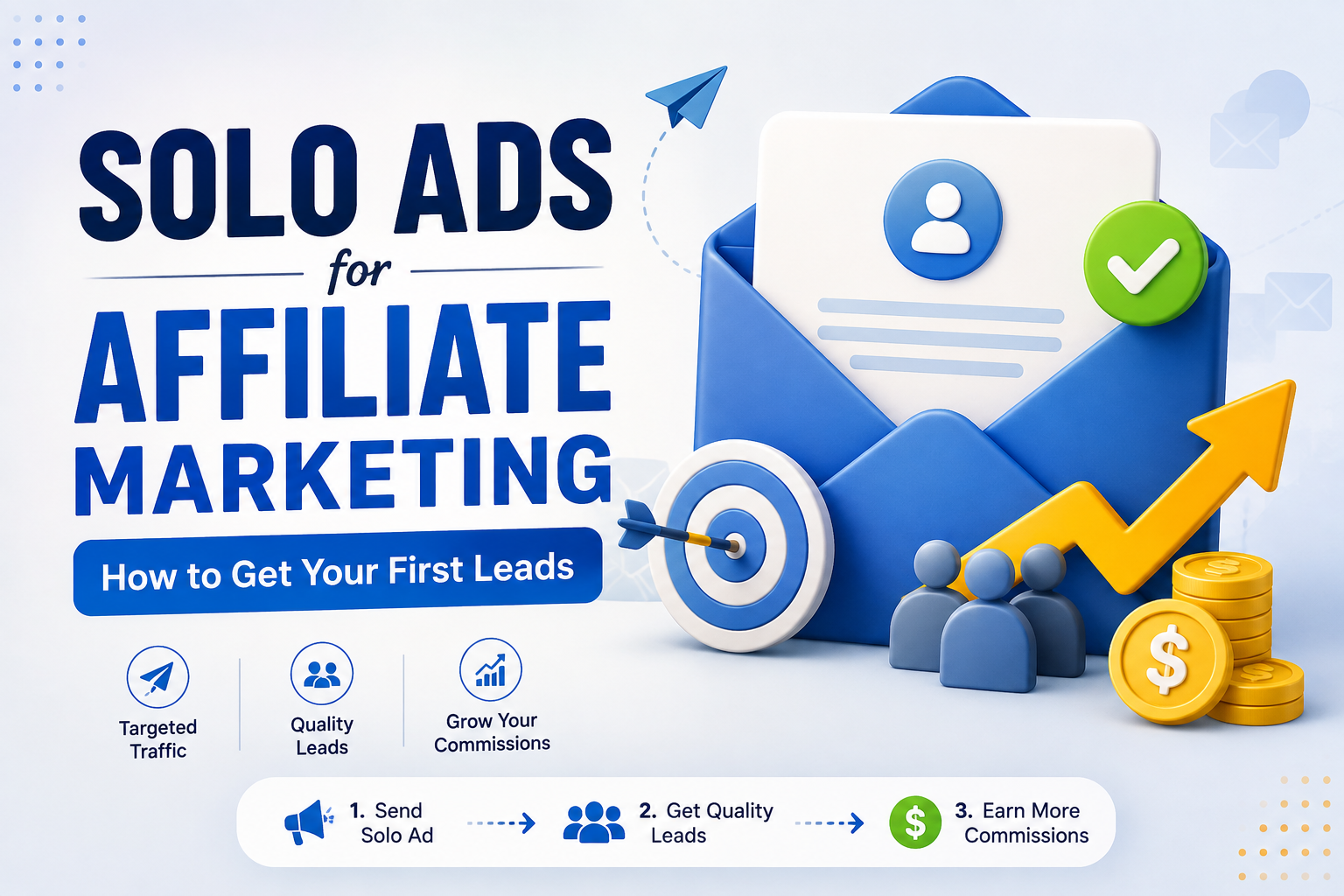
Have you ever wondered if there is a shortcut to building an email list without waiting months for organic growth? Many beginners struggle to find consistent visitors, but solo ads traffic offers a direct path to reaching potential subscribers. By leveraging the established reach of another publisher, you can place your message directly in front of a targeted audience.
This guide focuses on generating your first leads responsibly. We prioritize sustainable growth rather than promising instant riches or guaranteed results. You will learn how to select the right offers, prepare high-converting funnels, and evaluate vendors with confidence. We also cover essential steps like tracking, testing, and campaign optimization to ensure your solo ads for affiliate marketing efforts remain effective.
Key Takeaways
- Understand how paid email-based traffic channels function to build your subscriber base.
- Focus on long-term lead generation strategies instead of chasing quick, unreliable commissions.
- Learn the importance of funnel preparation before launching any paid campaign.
- Master the process of vetting vendors to avoid low-quality traffic sources.
- Implement rigorous tracking and testing to refine your results over time.
Build Your First Lead Campaign
Ready to start building your email list with targeted traffic? Learn how to choose quality vendors, prepare your funnel, and launch your first campaign responsibly.
Set Your First-Lead Goal and Choose a Viable Affiliate Offer
Before you spend a single dollar on traffic, you must define what success looks like for your campaign. Establishing a clear objective helps you measure performance and avoid wasting resources on ineffective solo ads for affiliate marketing. By setting a specific target, such as acquiring your first 100 leads, you create a benchmark for your future growth.
Define the Audience, Problem, and Desired Action
Successful affiliate marketing strategies with solo ads for affiliate marketing start with a deep understanding of who you are trying to reach. You must identify the specific pain points your target audience faces and how your chosen offer provides a genuine solution. Without this clarity, your messaging will fail to resonate with potential subscribers.
Clearly define the action you want users to take once they arrive at your landing page. Whether you want them to sign up for a newsletter or register for a webinar, your goal must be simple and direct. Consider these essential elements when planning your approach:
- Demographics: Know the age, location, and interests of your ideal lead.
- Pain Points: Identify the specific problem that keeps your audience awake at night.
- Call to Action: Ensure your desired outcome is clear and easy to follow.
Evaluate Commission Structure, Cookie Duration, and Conversion Potential
Not all offers are created equal, so you must analyze the economics before committing to solo ads for affiliate marketing. Look for programs that offer a sustainable commission structure, ensuring your efforts remain profitable after accounting for traffic costs. High-ticket items may offer larger payouts, but lower-priced products often convert more frequently.
Check the cookie duration to understand how long you have to earn a commission after a lead clicks your link. A longer window provides more security, especially if the sales cycle is complex. Always prioritize offers with a proven track record of converting cold traffic into paying customers.
Confirm Affiliate Program Rules for Paid Traffic and Email Promotion
Before you launch, review the terms of service for every affiliate program you join. Many companies have strict policies regarding how you can promote their products. You must verify if the merchant allows the following methods:
- Paid Traffic: Confirm if the vendor permits traffic from solo ad providers.
- Email Marketing: Ensure you have permission to include their links in your follow-up sequences.
- Bridge Pages: Check if you are allowed to use a custom landing page before sending traffic to the offer.
Ignoring these rules can lead to account termination and the loss of earned commissions. Always prioritize transparency and compliance to build a long-term, sustainable business.
Understand How Solo Ads for Affiliate Marketing Work
The world of solo ads for affiliate marketing operates on a unique set of principles compared to traditional advertising. Unlike platforms where you bid on keywords or demographic segments, this method relies on direct access to an established email audience. By understanding these mechanics, you can better position your offers for maximum impact.
Learn How Solo Ad Traffic Reaches Your Landing Page
The process of using solo ads for affiliate marketing begins when a vendor sends an email to their list featuring your specific offer. This email contains a unique tracking link that directs interested readers straight to your landing page. Once the visitor arrives, they encounter your opt-in form, where they provide their contact details in exchange for a lead magnet or information.
After the user submits their information, they are redirected to a thank-you page. This page serves as the bridge to your affiliate offer. Simultaneously, the new subscriber enters your automated email sequence, which nurtures the relationship and encourages future engagement.
Compare Solo Ads With Search, Social, and Display Traffic
When you evaluate different traffic sources for solo ads for affiliate marketing, it is helpful to look at how they differ in intent and control. While search traffic often captures high intent, solo ads traffic provides a faster way to test your funnel without waiting for organic rankings. The following table highlights the key differences between these common advertising channels.
| Traffic Source | Primary Intent | Control Level | Delivery Speed |
|---|---|---|---|
| Solo Ads | Curiosity/Interest | High (Vendor Choice) | Immediate |
| Search Ads | Problem-Solving | Very High | Immediate |
| Social Ads | Engagement | High | Immediate |
| Display Ads | Awareness | Moderate | Variable |
Separate Click Volume From Genuine Lead Quality
Many beginners using solo ads for affiliate marketing mistakenly believe that high click volume is the ultimate metric for success. However, a high number of clicks does not always translate into high-quality leads. You must focus on the relevance of the audience and their willingness to take action on your specific offer.
“Traffic is merely the fuel for your engine; the quality of that traffic determines whether your business moves forward or stalls out completely.”
Why a Large Subscriber List Does Not Guarantee Results
A vendor might possess a massive list, but size is often a misleading indicator of performance. If the subscribers receive too many promotional emails, they may become desensitized to new offers. Solo ads for affiliate marketing are most effective when the list is responsive and the audience is genuinely interested in your niche.
Always prioritize engagement metrics over raw list size when evaluating potential partners. High-quality solo ads traffic comes from lists where the vendor maintains a healthy relationship with their subscribers. This ensures that your message reaches people who are actually ready to engage with your content.
Find the Best Solo Ads for Affiliate Marketing
When you decide to buy solo ads, your primary focus must be on the quality and intent of the audience behind the clicks. Finding the best solo ads for affiliate marketing is not about finding the cheapest price, but rather identifying partners who provide engaged, responsive subscribers.
Search for Vendors With Verifiable Buyer-Intent Audiences
You should prioritize vendors who can prove their list consists of people who have previously purchased products. A list of “freebie seekers” often results in low conversion rates, regardless of how many clicks you receive.
Look for evidence that the audience has a history of spending money online. Buyer-intent audiences are far more likely to engage with your affiliate offer and move through your sales funnel effectively.
Review Testimonials, Traffic Sources, and Recent Campaign Results
Before you commit your budget to solo ads for affiliate marketing, take the time to investigate the vendor’s reputation. Authentic testimonials from other marketers in your niche serve as a strong indicator of reliability.
“Quality traffic is the lifeblood of any online business; without it, even the best offer will fail to convert.”
Ask for recent campaign results to see how the traffic performed for others. Understanding where the traffic originates—whether from social media, search, or internal email lists—helps you gauge the potential quality of the leads you will receive.
Ask Vendors About Niche Relevance, Geographic Targeting, and Delivery Speed
Communication is key when you buy solo ads for affiliate marketing for your specific business needs. Always ask the vendor if their list is relevant to your specific niche, as a general list often lacks the necessary focus for high conversions.
Confirm which countries they can target to ensure your traffic aligns with the requirements of your affiliate program. Additionally, discuss delivery speed to ensure you can manage the influx of traffic without overwhelming your landing page or tracking systems.
Warning Signs of Low-Quality or Incentivized Traffic
Not all traffic for solo ads for affiliate marketing is created equal, and you must remain vigilant against poor practices. Be wary of vendors who provide vague descriptions of their list or cannot explain where their traffic comes from.
Unrealistic guarantees, such as promising a specific number of sales, are major red flags. Furthermore, avoid any provider who uses incentivized traffic, where users are paid or rewarded to click your links, as this rarely leads to genuine interest in solo ads for affiliate marketing.
If you notice repeated, generic testimonials or a lack of transparency regarding their list-building methods, it is best to look elsewhere. Always perform a small test run to verify the quality of the best solo ads for affiliate marketing before scaling your investment.
Prepare a Compliant Funnel Before You Buy Solo Ads
Your success with solo ads for affiliate marketing depends entirely on the infrastructure you build first. Before you spend a single dollar on traffic, you must ensure your landing page and follow-up systems are fully optimized. A professional setup protects your reputation and increases your conversion rates significantly.
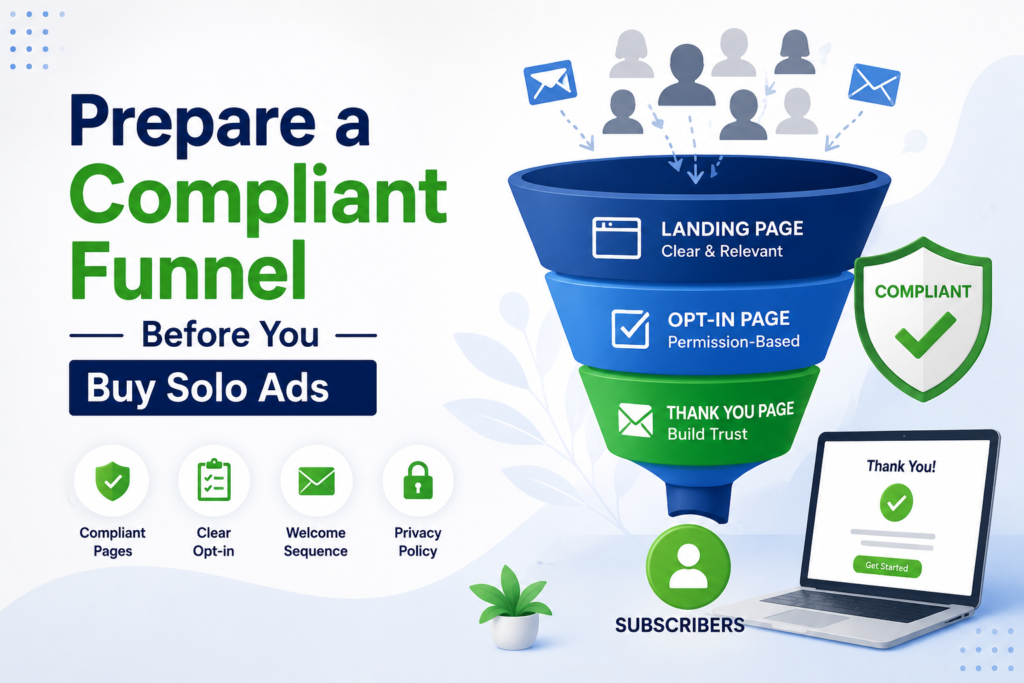
Build a Focused Opt-In Landing Page
Your landing page for solo ads for affiliate marketing should focus on one clear promise to the visitor. Avoid clutter by keeping your design clean and your call-to-action button prominent. A concise form that only asks for a name and email address will typically yield the best results.
Always include a link to your privacy policy to build trust with new visitors. Clearly state how you intend to use their information. This transparency is a cornerstone of effective affiliate marketing strategies.
Write a Thank-You Page That Introduces the Affiliate Offer Naturally
Once a user subscribes through solo ads for affiliate marketing, they should land on a thank-you page that confirms their request. Use this space to bridge the gap between your lead magnet and the affiliate product you are promoting. A natural transition helps the prospect understand why the offer is relevant to their needs.
Keep the tone helpful and informative rather than overly aggressive. You want to guide the user toward the next step without overwhelming them. This approach creates a positive first impression of your brand.
Create a Short Welcome Email Sequence for New Subscribers
Your email sequence for solo ads for affiliate marketing should begin immediately after the user opts in. The first email must deliver the promised lead magnet while introducing your primary affiliate offer. Subsequent emails should provide additional value to keep the subscriber engaged.
Consistency is vital for maintaining high open rates. Ensure your subject lines are catchy and relevant to the content they just requested. This strategy helps build a long-term relationship with your audience.
Use Clear Disclosures and Follow FTC, CAN-SPAM, and Platform Policies
Compliance for solo ads for affiliate marketing is a verification responsibility that you must take seriously. Always include clear affiliate disclosures on your pages to inform users that you may earn a commission. Review the specific requirements of the FTC and CAN-SPAM act to ensure your email practices remain legal.
Check the terms of service for your landing page builder and email service provider. Many platforms have strict rules regarding paid traffic and affiliate links. Staying compliant protects your accounts from being suspended or banned.
| Funnel Component | Primary Function | Key Requirement |
|---|---|---|
| Landing Page | Capture lead information | Clear value proposition |
| Thank-You Page | Bridge to affiliate offer | Natural transition |
| Welcome Email | Build subscriber trust | Compliance disclosures |
Match Your Message to the Solo Ads Traffic Source
Effective campaigns start by matching your advertisement’s tone and promise to the traffic you are purchasing. When you invest in solo ads for affiliate marketing, your ad copy serves as the first point of contact. It must resonate with the specific needs of your audience to ensure you attract the right people.
Write an Ad That Pre-Qualifies the Right Prospects
Your solo ads for affiliate marketing advertisement should act as a filter for your ideal prospects. By clearly stating who the offer is for, you discourage irrelevant clicks that waste your budget. Use language that speaks directly to the pain points or goals of your target niche.
When you define the audience clearly, you ensure that the solo ads traffic arriving at your landing page is already interested in your solution. This pre-qualification process saves time and improves your overall conversion rate.
Align the Email Subject, Call to Action, and Landing Page Promise
Consistency is vital for building trust with new subscribers. Your email subject line, the call to action, and the landing page promise must describe the same problem and the expected next step. If these elements do not match, visitors will feel confused and likely leave your page immediately.
Ensure that the transition from the ad to the landing page feels natural. A seamless experience encourages users to take the desired action without hesitation. Alignment creates a clear path for your potential leads to follow.
Use Specific Benefits Without Making Unsupported Claims
Focus on providing specific, supportable language about features or outcomes. Avoid making broad income promises, health claims, or using exaggerated urgency that might trigger skepticism. Credibility is your most valuable asset when running solo ads for affiliate marketing.
Instead of promising unrealistic results, highlight the practical benefits of the product or service. When you provide honest information, you build a stronger foundation for long-term engagement. Clear and accurate messaging helps you attract high-quality solo ads traffic that is genuinely interested in your offer.
Examples of Strong Calls to Action for First-Time Lead Campaigns
| Campaign Goal | Call to Action | Expected Outcome |
|---|---|---|
| Educational Guide | Download Your Free Guide | High-intent lead capture |
| Webinar Registration | Save My Virtual Seat | Increased event attendance |
| Product Demo | See How It Works | Qualified prospect interest |
| Newsletter Signup | Get Weekly Tips | Long-term audience growth |
Set a Safe Budget and Buy Your First Solo Ads
Before you dive into affiliate marketing campaigns, you must establish a clear financial roadmap. Proper planning prevents overspending and ensures you have enough capital to gather meaningful data. By treating your initial traffic purchase as a research investment, you position yourself for long-term success.
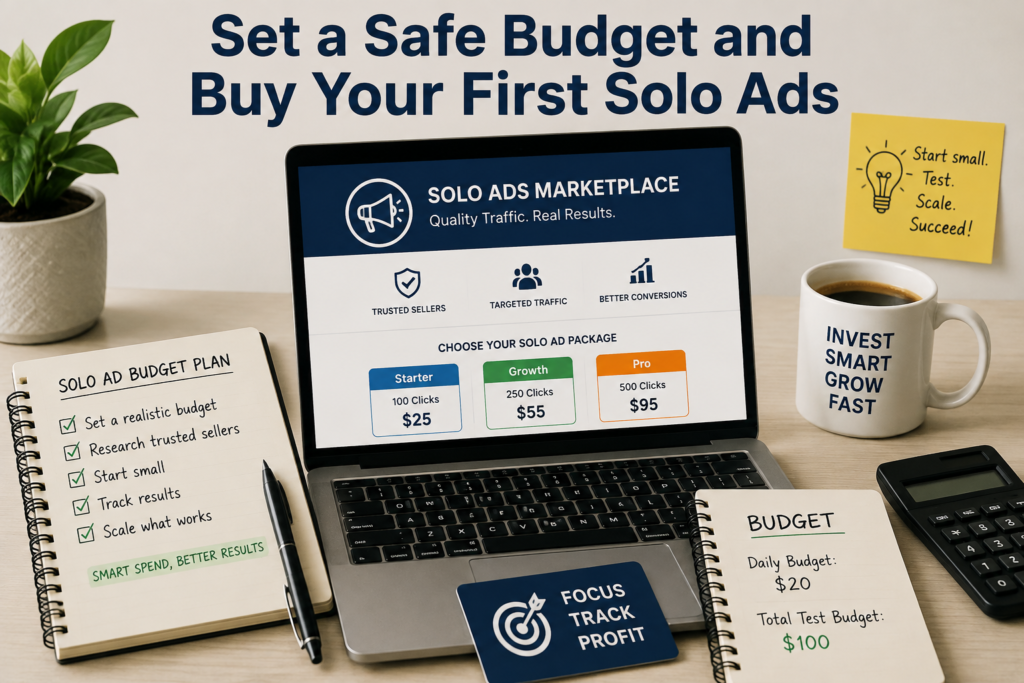
Calculate a Test Budget From Your Allowable Cost Per Lead
To determine your budget for solo ads for affiliate marketing, start by identifying your maximum allowable cost per lead (CPL). Calculate how much you can afford to pay for a single email subscriber while still maintaining a profitable margin on your backend offers. Always set aside a specific amount that you are comfortable losing during the initial testing phase.
Consider your expected conversion rates when setting these limits. If you anticipate a 20% opt-in rate, you need enough traffic to generate a statistically significant sample size. This approach helps you avoid premature conclusions based on small, random fluctuations in performance.
Start With a Small, Trackable Traffic Order
When you decide to buy solo ads, resist the urge to purchase massive packages immediately. Start with a small, trackable order to verify the quality of the traffic and the responsiveness of the list. This allows you to test your funnel mechanics without risking your entire marketing budget.
Clarify Click Guarantees, Replacement Policies, and Refund Terms
Professional vendors often provide specific guarantees regarding the number of clicks delivered. Before finalizing any transaction, confirm how they define a “unique click” and what happens if the traffic falls short of the agreed amount. Clear communication regarding replacement rules protects your investment against low-quality or non-responsive traffic.
Questions to Ask Before You Buy Solo Ads
Engaging with vendors directly is the best way to ensure you are getting the best solo ads for affiliate marketing. Use the following table to guide your pre-purchase inquiries and ensure you have all the necessary information to make an informed decision.
| Question Category | Key Inquiry | Why It Matters |
|---|---|---|
| Traffic Quality | Do you filter out bot traffic? | Ensures you pay for real human interest. |
| List Source | How was this list built? | Confirms the audience is relevant to your niche. |
| Geography | Can you target specific countries? | Aligns traffic with your offer’s availability. |
| Reporting | Do you provide tracking links? | Allows for independent verification of clicks. |
Schedule Delivery When You Can Monitor the Campaign
Timing is essential when launching your first campaign. Schedule your traffic delivery for a period when you are available to monitor your analytics dashboard in real-time. This allows you to spot technical issues, such as broken links or slow landing page load times, before the entire order is exhausted.
Track Clicks, Leads, and Sales With Reliable Attribution
Precise tracking turns guesswork into a repeatable science for your business. When you invest in solo ads traffic, you must know exactly which vendors and creatives drive your best results.
Without a robust system, you are essentially flying blind. You need to reconcile data from your email service provider, your landing page analytics, and your affiliate network dashboard to see the full picture.
Test Smarter, Grow Better
Stop guessing where your leads come from. Put your funnel to the test, track every click and conversion, and discover which traffic sources truly perform.
Configure UTM Parameters and Affiliate Tracking Links
Start by appending UTM parameters to every link you provide to a vendor for solo ads for affiliate marketing. This allows you to identify the specific source, medium, and campaign name within your analytics software.
Always use unique affiliate tracking links for each placement. This ensures that when a sale occurs, the commission is correctly attributed to the specific traffic source that generated the lead.
Measure Landing Page Visits, Opt-In Rate, and Cost Per Lead
Your primary goal is to understand how well your funnel converts cold visitors into subscribers. You should calculate your opt-in rate by dividing the number of successful sign-ups by the total unique visitors to your landing page.
Next, determine your cost per lead (CPL) by dividing the total spend on the traffic order by the number of new subscribers acquired. Monitoring these metrics daily helps you identify if a specific vendor is delivering low-quality traffic before you exhaust your budget.
“If you cannot measure it, you cannot improve it.”
Connect Lead Data to Affiliate Commissions and Earnings Per Click
To evaluate the true profitability of your affiliate marketing campaigns, you must link your lead data to actual sales. Calculate your earnings per click (EPC) by dividing total commissions earned by the total number of clicks purchased.
This metric reveals the real value of your traffic beyond just the initial opt-in. Use the following table to organize your performance data across different vendors:
| Vendor Name | Total Clicks | Opt-In Rate | Total Sales |
|---|---|---|---|
| Vendor A | 500 | 35% | $150 |
| Vendor B | 500 | 28% | $80 |
Use a Simple Campaign Tracking Sheet When Platform Data Is Limited
When your tracking tools do not sync perfectly, a manual spreadsheet becomes your most valuable asset. Create a document that logs the vendor, date, creative used, and total spend for every order.
Manually input your lead counts and commission totals at the end of each week. This practice ensures you maintain a clear record of which affiliate marketing campaigns are generating a positive return on investment.
Launch and Manage Your First Lead-Generation Campaign
Launching your first solo ads for affiliate marketing lead-generation campaign requires precision and a clear plan of action. You have invested time in your funnel, so ensuring everything functions correctly before the traffic hits is vital for your success.
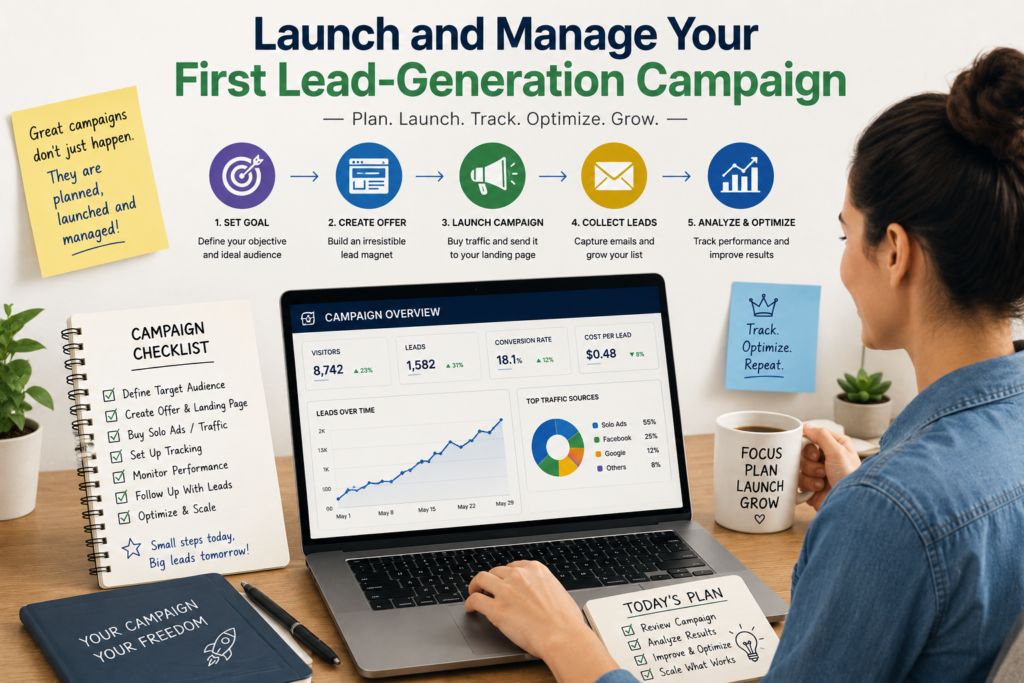
Complete a Final Prelaunch Check
Before you buy solo ads, perform a manual walkthrough of your entire funnel. Verify that every link points to the correct destination and that your tracking parameters are firing accurately in your dashboard.
Test your opt-in form on both desktop and mobile devices to ensure the layout remains responsive. Submit a test email address to confirm that your autoresponder triggers the welcome sequence immediately. Finally, check that your legal disclosures and privacy policies are visible on every page to maintain compliance.
Monitor Delivery, Bounce Rate, Opt-Ins, and Unusual Traffic Patterns
Once your solo ads traffic begins to flow, you must stay vigilant. Watch your analytics dashboard closely to ensure the clicks are arriving at the expected pace. A sudden spike or a complete halt in traffic often indicates a technical issue or a problem with the vendor’s delivery system.
Keep a close eye on your bounce rate and opt-in percentages. If you notice a high bounce rate, your landing page might be loading too slowly or failing to match the ad copy. Be wary of unusual traffic patterns, such as a high volume of clicks from non-target regions, which could suggest low-quality bot traffic.
Document the Vendor, Audience, Creative, Dates, and Results
Consistency is the secret to scaling affiliate marketing campaigns over time. Create a simple spreadsheet to log every detail of your purchase, including the vendor name, the specific audience description, and the exact ad creative used.
Record the delivery dates, the total cost, and the number of leads generated. By keeping these records in one place, you can easily compare performance across different sources. This data will eventually become your most valuable asset for making future buying decisions.
When to Pause a Campaign Instead of Spending More
Sometimes, the best decision is to stop a campaign early rather than waiting for the full order to complete. You should pause your traffic if you detect broken tracking links that prevent you from measuring your results. If you notice suspicious activity or if the cost per lead exceeds your maximum threshold, stop the spend immediately.
Do not hesitate to pause if the traffic quality is clearly mismatched with your offer. Protecting your budget is more important than completing a single order that is not delivering the expected value.
| Metric | What to Watch | Action Required |
|---|---|---|
| Click Volume | Delivery speed vs. agreement | Contact vendor if stalled |
| Opt-in Rate | Percentage of visitors who sign up | Optimize page if below 20% |
| Bounce Rate | Visitors leaving immediately | Check mobile responsiveness |
| Lead Quality | Engagement with follow-up emails | Pause if no opens occur |
Improve Solo Ads for Affiliate Marketing That Work
Optimization is the secret to finding solo ads for affiliate marketing that work effectively over time. Rather than guessing why a campaign failed, you should view your funnel as a series of distinct stages that require constant monitoring.
Diagnose Weak Results by Funnel Stage
To identify where your process breaks down, look at each step of the journey. Start by checking your delivery and click-through rates to see if the traffic is actually reaching your landing page.
Next, evaluate your opt-in rate to determine if your offer resonates with the audience. If people are subscribing but not buying, the issue likely lies within your email engagement or the final affiliate offer itself.
Test One Variable at a Time
When you identify a bottleneck, avoid the temptation to change everything at once. By testing one variable at a time, you can clearly see which adjustment caused a shift in performance.
This controlled approach allows you to isolate the impact of your headline, your offer benefits, or your audience targeting. Maintaining this discipline ensures that your data remains reliable and actionable.
Improve the Landing Page Before Increasing Traffic Volume
Never scale your traffic until your conversion rates are stable and profitable. Focusing on your landing page first ensures that you are not wasting your budget on a funnel that does not convert.
Test Headlines, Form Length, Benefits, and Calls to Action
Small tweaks to solo ads for affiliate marketing often lead to significant improvements in your conversion metrics. Try shortening your form to reduce friction, or rewrite your headline to better highlight the specific value you provide.
You should also experiment with different calls to action to see which phrasing drives the most engagement. These minor adjustments are fundamental to building successful affiliate marketing strategies.
Use Follow-Up Emails to Recover Interested but Unconverted Leads
Many prospects will not purchase during their first visit to your site. Use a well-crafted email sequence to address common objections and remind subscribers why your offer is valuable.
By providing consistent value through your follow-up messages, you keep your brand top-of-mind. This strategy helps you maximize the return on your solo ads for affiliate marketing by capturing sales that would otherwise be lost.
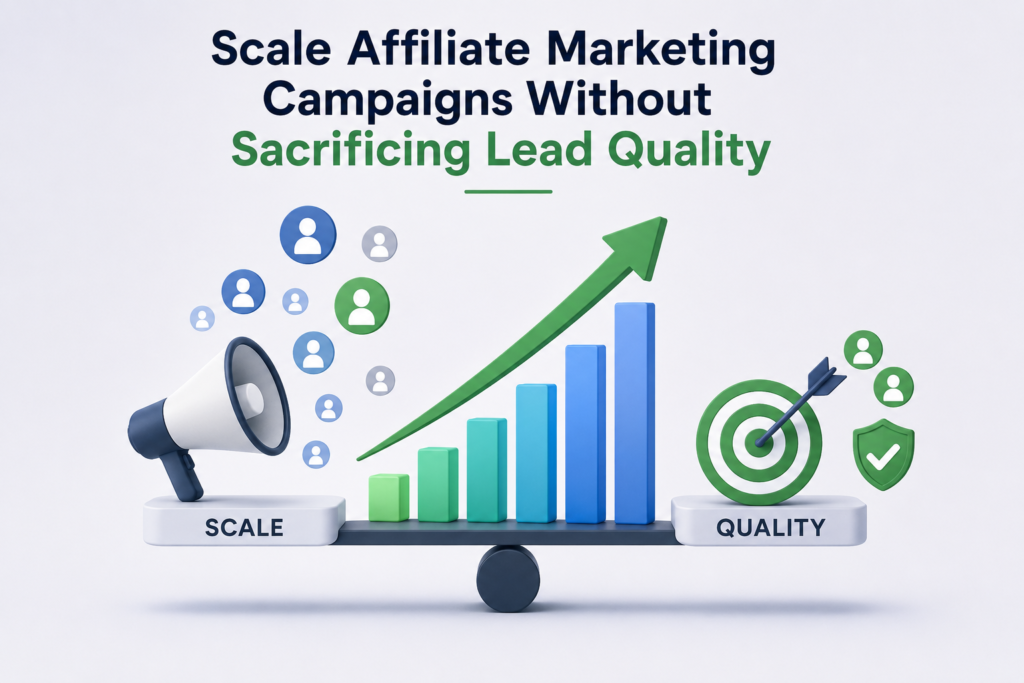
Scale Affiliate Marketing Campaigns Without Sacrificing Lead Quality
Scaling your affiliate marketing campaigns is a delicate balance between volume and quality. As you move past your initial tests, the goal shifts from simply getting traffic to maximizing the lifetime value of every subscriber you acquire.
Compare Vendors Using Cost Per Qualified Lead and Revenue Per Click
Do not judge your traffic sources solely by the number of clicks delivered. Instead, focus on the Cost Per Qualified Lead (CPQL) and the Revenue Per Click (RPC) to determine which vendors provide the highest return on investment.
High click volume is meaningless if those visitors never engage with your content or purchase your offers. By tracking how much revenue each specific vendor generates, you can identify which traffic sources are truly worth your marketing budget.
| Metric | Low-Quality Vendor | High-Quality Vendor |
|---|---|---|
| Conversion Rate | Below 1% | Above 3% |
| Revenue Per Click | $0.05 | $0.25+ |
| Lead Quality | Low Engagement | High Purchase Intent |
Repeat Successful Placements Before Expanding to New Sources
Consistency is the foundation of a profitable strategy. Before you venture into unknown territory, double down on the vendors who have already proven their worth with your specific audience.
“Success in scaling is not about finding the next big thing, but about perfecting the things that already work.”
Repeating successful placements allows you to refine your messaging and build a deeper relationship with a known audience. Only after you have maximized these reliable sources should you consider testing new geographies or niche segments.
Segment Subscribers by Interest, Engagement, and Purchase Intent
Effective segmentation is essential for maintaining high deliverability and relevance. By categorizing your subscribers based on their behavior, you ensure that your follow-up messages resonate with their specific needs.
- Interest: Group subscribers by the specific lead magnet or topic that brought them to your list.
- Engagement: Separate active openers from those who have gone cold to protect your sender reputation.
- Purchase Intent: Tag users who have clicked on affiliate links or visited your checkout pages for targeted retargeting.
Set Scaling Limits for Budget, Frequency, and List Fatigue
Even the best solo ads for affiliate marketing can lose their effectiveness if you push too hard. You must establish clear scaling limits to prevent list fatigue and maintain healthy engagement rates.
Monitor your frequency carefully to ensure you are not overwhelming your subscribers with too many offers. If you notice a sudden drop in open rates or an increase in unsubscribes, it is a clear sign that you have reached your current scaling limit and need to adjust your strategy.
Build a Repeatable Solo Ads Strategy for Long-Term Growth
Moving beyond your first campaign requires a shift from trial-and-error to a structured, repeatable business model. You must treat every traffic purchase as a data point that informs your future decisions. By documenting your results, you create a roadmap for consistent lead generation and sustainable profit.
Develop a Vendor Scorecard for Future Purchases
To identify the solo ads for affiliate marketing that work, you need a standardized way to evaluate your partners. A vendor scorecard allows you to compare performance across different providers objectively. Use the following criteria to grade each source:
- Lead Quality: Track the percentage of subscribers who engage with your follow-up emails.
- Targeting Accuracy: Measure how well the traffic matches your specific niche requirements.
- Delivery Speed: Note if the vendor meets the agreed-upon timeline for click delivery.
- Cost and Revenue: Calculate your return on investment by comparing the cost per lead against actual sales.
Combine Solo Ads With Content, Email, and Retargeting Strategies
Solo ads should never function as an isolated acquisition channel. Instead, integrate them into your broader affiliate marketing campaigns to maximize your reach. Use your email list to nurture leads generated from solo ads, while simultaneously driving traffic to your high-value content.
Retargeting adds another layer of security to your investment. By placing a tracking pixel on your landing page, you can re-engage visitors who did not opt in immediately. This multi-channel approach ensures that you capture value from every click you purchase.
Refresh Your Offer, Creative, and Follow-Up Sequence Regularly
Audience behavior changes over time, and your solo ads for affiliate marketing materials must evolve to stay relevant. Periodically update your landing page copy and ad creatives to prevent fatigue. A fresh approach often leads to higher conversion rates and better engagement from your subscribers.
Review your follow-up email sequence every few months to ensure the messaging aligns with current market trends. Small adjustments to your subject lines or call-to-action buttons can significantly improve your overall performance. Consistency is key, but stagnation is the enemy of growth.
Turn First-Lead Data Into Better Affiliate Marketing Strategies
Your initial campaign data is a goldmine for refining your long-term affiliate marketing strategies. Analyze which segments of your audience showed the highest purchase intent and focus your future efforts there. By learning from your own data, you move away from guessing and toward a predictable, scalable system.
Documenting your wins and losses helps you avoid repeating past mistakes. Use these insights to optimize your funnel and increase your earnings per click. With a disciplined approach, you can turn solo ads into a reliable pillar of your business.
Turn Traffic Into Leads
Take the next step toward sustainable affiliate growth with a data-driven solo ads strategy designed to attract relevant subscribers, improve conversions, and scale confidently.
Conclusion
Mastering your traffic acquisition starts with a commitment to precision and data-driven decisions. You must prioritize the careful selection of your offer, the verification of your vendor, and the creation of a compliant funnel. These steps form the bedrock of your success when using solo ads for affiliate marketing.
Your primary objective should focus on gathering reliable insights regarding audience fit and lead quality. Avoid the temptation to chase unverified volume early in your journey. Instead, treat your initial campaigns as a learning laboratory to understand your costs and follow-up performance.
Use the data you collect to refine your broader affiliate marketing strategies over time. Repeat the placements that yield positive results and scale your budget only when your economics remain stable. By maintaining this disciplined approach, you transform simple clicks into a repeatable system for long-term growth. Start your first test today and let the numbers guide your next move toward a more profitable business.
FAQs
What exactly are solo ads for affiliate marketing and how do they help generate leads?
Solo ads for affiliate marketing are a form of paid traffic where you purchase an email broadcast from a publisher who already has an established list of subscribers. Instead of building your own audience from scratch, you pay the vendor to send your offer directly to their community. This is a powerful way to get your first leads quickly because it leverages the existing trust between the publisher and their audience to drive solo ads traffic to your landing page.
How should I choose an offer to ensure my affiliate marketing campaigns are successful?
To find solo ads for affiliate marketing that work, look for high-converting offers on platforms like ClickBank, Digistore24, or WarriorPlus. Focus on products that solve a specific problem for the audience and evaluate the commission structure and cookie duration. Always verify that the affiliate program explicitly allows paid email promotion and the use of bridge pages before you buy solo ads for that specific offer.
How does solo ads traffic differ from platforms like Google Search or Facebook Ads?
Unlike search or social media traffic, which relies on intent-based queries or demographic algorithms, solo ads traffic is highly direct and fast-acting. While Google Ads targets people actively searching for a solution, solo ads reach people in their inbox via a recommendation. This means you have less control over the specific “moment” of the click but can achieve a higher volume of targeted visitors in a much shorter timeframe than organic or social affiliate marketing strategies.
Where can I find the best solo ads for affiliate marketing vendors?
The best solo ads for affiliate marketing are usually found on moderated marketplaces like Udimi or through direct relationships with reputable niche bloggers. When evaluating vendors, look for recent testimonials that confirm buyer-intent sales, ask for their traffic sources, and ensure they can target Tier 1 countries like the United States, Canada, and the United Kingdom. Avoid vendors who offer vague list descriptions or unrealistic performance guarantees.
What components do I need in my funnel before I buy solo ads?
Before you start driving traffic, you must build a compliant funnel using tools like ClickFunnels or Leadpages. This should include a focused opt-in landing page, a “Thank You” page that introduces the affiliate offer naturally, and a short welcome email sequence via an autoresponder like AWeber or GetResponse. Ensure your pages include clear disclosures to satisfy FTC and CAN-SPAM requirements to protect your affiliate marketing campaigns.
How do I write an ad that attracts the right prospects for my offer?
Your email swipe should pre-qualify readers by stating a specific benefit and identifying the problem your offer solves. To ensure your solo ads for affiliate marketing are effective, the email subject line, the call to action, and the landing page promise must be perfectly aligned. Avoid making unsupported income claims; instead, focus on the value the subscriber will receive by clicking your link.
How much should I budget when I decide to buy solo ads for the first time?
You should calculate a test budget based on your allowable cost per lead. Rather than spending a large amount upfront, start with a small, trackable order of 100 to 200 clicks to test your funnel’s conversion rate. Before committing, clarify the vendor’s click guarantees, refund terms, and their policy on replacing bot traffic or duplicate clicks to ensure you are getting high-quality solo ads traffic.
What metrics are most important for tracking my affiliate marketing strategies?
You should use a tracking tool like ClickMagick or Voluum to monitor your landing page opt-in rate, cost per lead (CPL), and earnings per click (EPC). By configuring UTM parameters, you can connect lead data directly to your commissions in your affiliate dashboard. This data allows you to see which vendors are providing solo ads for affiliate marketing that work and which ones are underperforming.
When is the right time to scale my solo ads campaigns?
Scaling should only occur once you have a validated “cost per qualified lead” that is lower than your average revenue per lead. Once you identify a vendor that delivers high-quality subscribers, repeat your placements with them before expanding to new sources. Successful affiliate marketing strategies involve segmenting your new subscribers by their engagement levels to prevent list fatigue and maintain high deliverability in your follow-up sequences.
How can I build a repeatable solo ads strategy for long-term growth?
Long-term success involves creating a vendor scorecard to track which sources provide the best long-term ROI. You should treat solo ads for affiliate marketing as one piece of a larger puzzle, combining them with content marketing and retargeting. Regularly refresh your creative assets and offers to keep your funnel engaging, and use the data from your first-lead campaigns to refine your overall affiliate marketing strategies for the future.
1 thought on “Solo Ads for Affiliate Marketing: How to Get Your First Leads”