
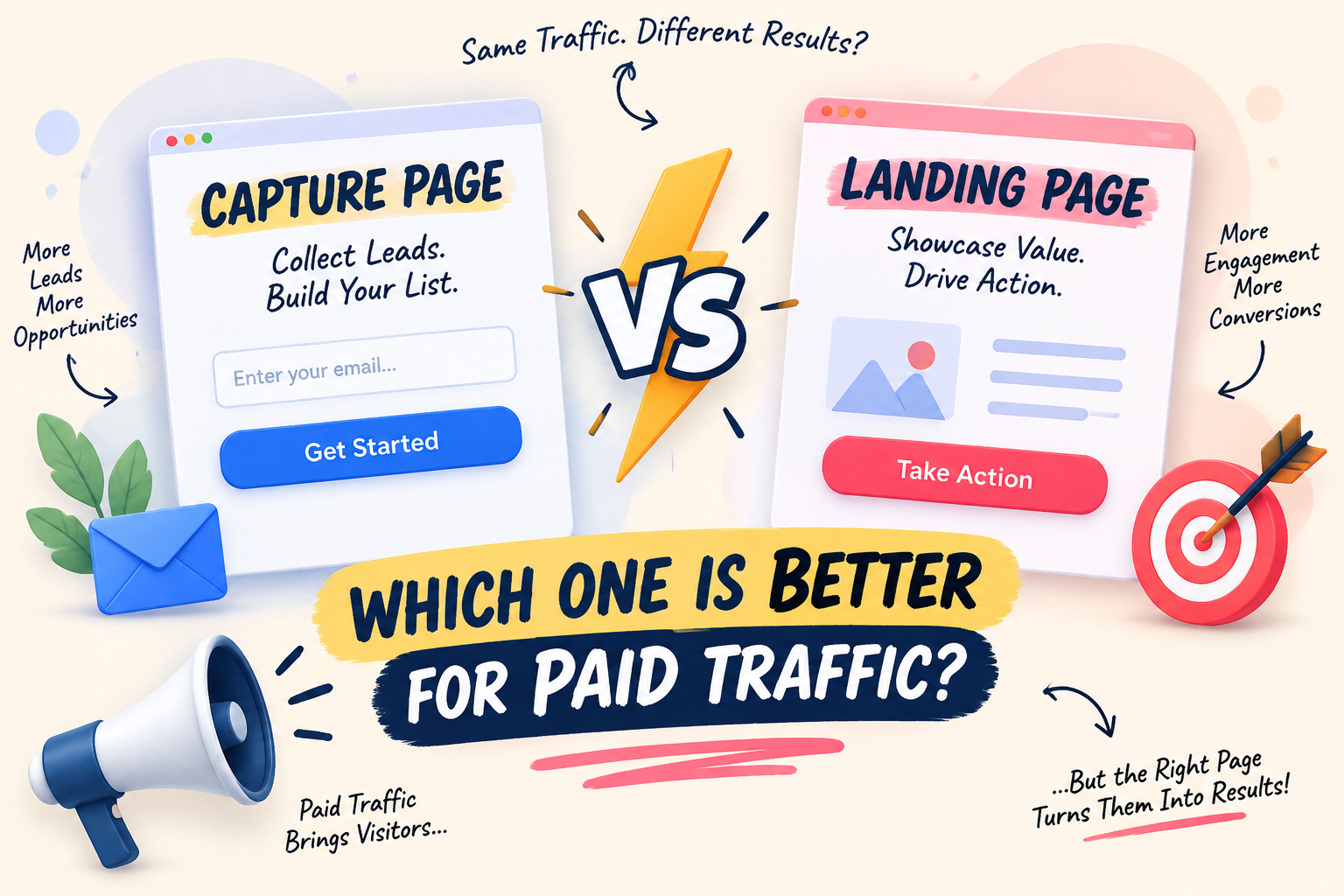
Did you know that nearly 70% of digital marketers struggle to choose the right destination for their paid advertising campaigns? When you spend your hard-earned budget on clicks, every visitor counts toward your bottom line. Selecting the correct web destination is essential for maximizing your return on investment. That is why the capture page vs landing page decision deserves careful consideration before launching a paid campaign.
This article evaluates the critical differences between a focused capture page vs landing page strategy. We will look beyond simple metrics to analyze lead quality, conversion rates, and overall campaign performance. You will learn exactly when to deploy a streamlined form or a detailed informational layout to achieve your specific advertising goals.
Key Takeaways
- Understand the fundamental differences between specialized lead forms and comprehensive web destinations.
- Learn how to align your campaign objectives with the right user experience.
- Discover why lead quality often outweighs raw traffic volume in paid advertising.
- Identify the best scenarios for using a minimalist design versus a content-rich layout.
- Improve your overall marketing efficiency by selecting the optimal destination for your audience.
Turn More Paid Clicks Into Leads
Stop wasting ad spend on pages that fail to convert. Discover the right page strategy for your campaign and turn more visitors into valuable leads.
Paid Traffic Goals That Shape Your Page Choice
When you invest in paid traffic, the design of your destination page acts as the bridge between user intent and your business results. This makes the capture page vs landing page decision an important part of your paid traffic strategy. Choosing the right format is not just about aesthetics; it is about meeting the specific needs of your visitors at the exact moment they arrive.
Match the page to your campaign objective
Your primary objective dictates whether you need a simple opt-in form or a comprehensive sales narrative. If your goal is to build an email list, you need a streamlined experience that removes distractions. Understanding the nuances of capture page vs landing page selection ensures that you do not lose potential leads to unnecessary friction.
“The goal of a landing page is to convert a visitor into a lead or customer by providing exactly what they were promised in the ad.”
Separate lead generation, sales, and conversion goals
Lead generation campaigns often thrive on simplicity, where the main goal is to capture contact information in exchange for a resource. Conversely, direct sales campaigns require more space to build trust and overcome objections. When you learn how to create a high-converting landing page, you must distinguish between a quick sign-up and a complex purchase decision.
If you are selling a high-ticket service, your page must provide enough information to justify the investment. The capture page vs landing page choice becomes especially important when deciding how much information a high-ticket offer requires. A short form is perfect for a free guide, but a long-form page is necessary for a consultation request. This is a practical example of how the capture page vs landing page decision should follow the complexity of the offer. Always align your page length with the weight of the commitment you are asking from the user.
Account for traffic temperature and audience awareness
The temperature of your traffic—whether they are cold prospects or warm retargeting leads, changes how much information they need. Cold traffic often requires more education and social proof to build initial trust. In contrast, warm traffic already knows your brand and may only need a final nudge to convert.
Matching your content depth to the user’s awareness level is a key factor in the capture page vs landing page debate. By tailoring your messaging to where the user stands in their journey, you significantly improve your chances of success. Always prioritize the user’s state of mind over your own desire for a quick conversion.
Capture Page vs Landing Page: Definitions and Core Purposes
Choosing the right destination for your ad traffic starts with knowing exactly what a capture page vs landing page is designed to do. While both formats aim to drive user action, they operate with different levels of complexity and intent. Understanding these nuances helps you align your page choice with your specific campaign goals.
What a capture page is designed to accomplish
Minimal messaging and a focused lead form
A capture page is built for speed and simplicity. Its primary goal is to remove distractions so the visitor focuses entirely on the lead form. By using minimal text and a clear, singular call to action, you reduce the friction that often prevents users from signing up.
Common offers for email addresses and contact details
You will typically see these pages used for high-velocity, low-commitment exchanges. Common lead capture page examples include sign-ups for newsletters, waitlists, or simple downloadable checklists. The value proposition is usually direct, promising an immediate benefit in exchange for basic contact information.
What a landing page is designed to accomplish
Education, persuasion, and conversion in one experience
In contrast, a landing page serves as a comprehensive destination for your traffic. It provides the necessary context, social proof, and detailed information required to convince a user to take a significant step. This format is ideal when your offer requires more trust or explanation before a visitor feels comfortable committing.
Examples of actions beyond lead submission
Effective examples of landing pages often guide users through a narrative that addresses specific pain points. Beyond simple email collection, these pages may encourage users to book a consultation, start a software trial, or watch a detailed product demonstration. By providing a richer experience, you can nurture interest and build stronger intent before the final conversion occurs.
How Capture Pages and Landing Pages Differ
When you analyze the capture page vs landing page debate, you quickly realize that design choices dictate user behavior. While both serve as destinations for your paid traffic, their structural requirements vary based on the complexity of your offer and the level of trust required from your audience.
Page length, navigation, and information density
A capture page is typically a single, focused screen designed for speed. It removes all navigation menus to ensure the visitor has only one path: to provide their contact information. In contrast, a landing page often requires more space to explain the value of a product or service.
Information density on a landing page is higher because it must educate the user. This difference is an important consideration when making a capture page vs landing page choice. You will often find multiple sections, including testimonials, feature lists, and detailed FAQs, to support the decision-making process.
Lead form placement and conversion friction
The placement of your lead form is a primary factor in conversion rates. It is also one of the practical factors to consider when comparing a capture page vs landing page approach. On a capture page, the form is usually placed “above the fold” to minimize the effort required by the user.
This approach reduces friction by asking for the bare minimum of information. It is one of the key advantages to consider when evaluating a capture page vs landing page strategy.
When you learn how to create a high-converting landing page, you discover that form placement is more strategic. You might place the form at the bottom of a long-form page, ensuring the user has consumed enough information to feel confident before they commit.
“The goal of a landing page is not just to capture a lead, but to qualify them through the strength of your message and the clarity of your offer.”
Message depth and objection handling
Capture pages rely on a strong, singular hook to drive immediate action. This makes the capture page vs landing page decision particularly relevant for campaigns focused on immediate lead generation.
They do not have the space to address complex objections or provide deep technical details. If your offer is simple, such as a free ebook or a newsletter sign-up, this brevity is an advantage.
Landing pages are built to handle skepticism. That distinction can strongly influence which capture page vs landing page format is more appropriate for your offer. This difference is central to understanding when the capture page vs landing page approach is more appropriate. They use social proof, case studies, and detailed comparisons to overcome barriers to entry.
This depth is vital when you are selling high-ticket items or complex software solutions. For these offers, the capture page vs landing page decision can directly affect lead quality and purchase intent.
Best-fit offers, funnels, and traffic sources
Choosing the right format depends on where your prospect is in the buying cycle. The capture page vs landing page decision should therefore reflect the prospect’s position in that journey. The following table highlights the key differences to help you decide which structure fits your current campaign needs.
| Feature | Capture Page | Landing Page |
|---|---|---|
| Primary Goal | Lead Generation | Education & Sales |
| Navigation | None | Minimal or None |
| Content Depth | Low | High |
| Best Traffic | Cold/Social | Warm/Search |
Ultimately, knowing how to create a high-converting landing page requires you to match the page structure to the user’s intent. By understanding the capture page vs landing page distinction, you can better align your paid traffic strategy with your business goals.
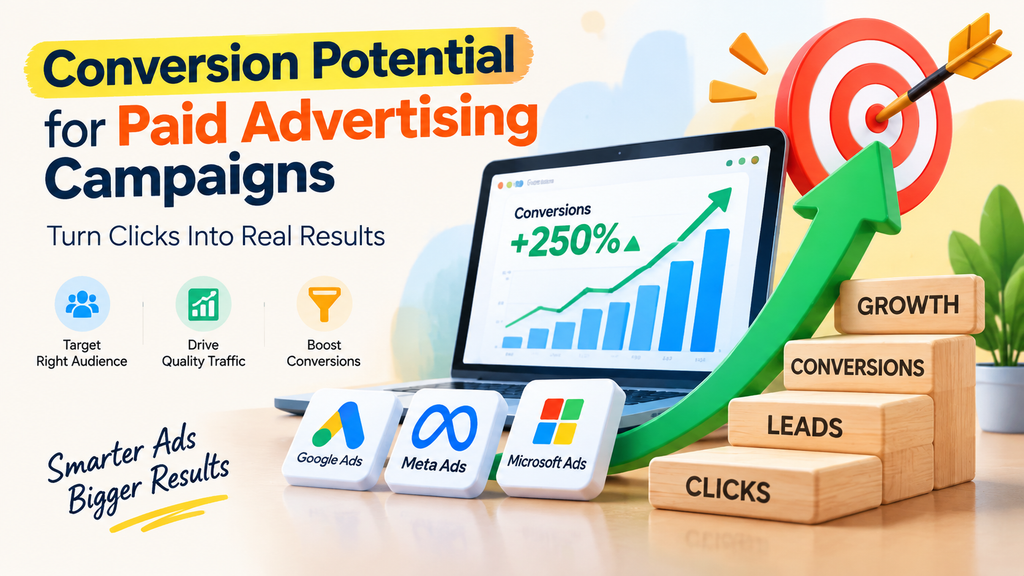
Conversion Potential for Paid Advertising Campaigns
Balancing immediate sign-ups with long-term customer value requires a strategic approach to your page design. When you analyze the capture page vs landing page debate, you must look beyond simple click-through metrics to understand how each format influences your bottom line.
Why capture pages can produce more initial conversions
Capture pages are built for speed and minimal distraction. By stripping away navigation menus and excessive text, these pages force the visitor to focus entirely on the opt-in form.
Common lead capture page examples often feature a single headline, a brief benefit list, and a clear call to action. This low-friction environment is ideal for top-of-funnel offers like free checklists or webinar registrations where the barrier to entry is intentionally low.
Why landing pages can improve lead quality and purchase intent
Landing pages serve a different purpose by providing the depth required to build trust. When you sell high-ticket services or complex software, a quick opt-in is rarely enough to convince a prospect.
Effective examples of landing pages include detailed testimonials, case studies, and comprehensive feature breakdowns. This extra information filters out casual browsers, ensuring that the leads you capture are genuinely interested in your solution.
How offer complexity affects the better-performing format
The complexity of your offer should dictate the length and structure of your page. Simple offers, such as a newsletter subscription, perform best on short, punchy pages that get straight to the point.
Conversely, complex products require more objection handling and educational content. If you try to sell a premium consulting package on a basic capture page, you will likely see high traffic but very low conversion rates because the visitor lacks the necessary context to trust your brand.
Balancing conversion rate with downstream revenue
It is a common mistake to prioritize the highest conversion rate at the expense of lead quality. A page that generates hundreds of low-quality leads might look successful on a dashboard, but it often creates a burden for your sales team. This is why the capture page vs landing page decision should account for what happens after the initial conversion.
You should focus on the downstream revenue generated by your traffic. Sometimes, a landing page with a lower conversion rate produces more profitable customers because those individuals are better educated and more prepared to purchase your product.
Cost, Quality, and Return on Ad Spend
When evaluating your paid traffic strategy, the difference between a capture page vs landing page often dictates your final return on investment. While many advertisers obsess over initial conversion metrics, the true measure of success lies in the long-term value of the leads you acquire. Focusing on the bottom line ensures that your budget is spent on growth rather than just vanity metrics.
Optimize Your Paid Traffic Funnel
A high conversion rate means little if your leads never become customers. Build a smarter funnel that balances conversion volume, lead quality, and revenue.
How page experience can influence cost per lead
Your page experience directly impacts how much you pay for each visitor to take action. For this reason, the capture page vs landing page format can influence the overall efficiency of your paid campaign. Platforms like Google and Meta reward high-relevance pages with lower costs per click and better ad placement.
Choosing the right capture page vs landing page format can help maintain that relevance from the ad click through to conversion. When you provide a seamless journey from the ad to the destination, you naturally lower your cost per lead.
Comparing cost per acquisition instead of headline conversion rate
It is easy to get distracted by a high headline conversion rate, but this number can be misleading. A page that converts 20% of visitors might attract low-intent users who never make a purchase. You should prioritize your cost per acquisition (CPA) to see if your traffic is actually driving sustainable revenue. The capture page vs landing page choice should ultimately support this same focus on profitable customer acquisition.
Evaluating lead quality, sales acceptance, and customer value
High-quality leads are the lifeblood of any profitable campaign. This is another reason the capture page vs landing page decision should consider lead quality, not just conversion volume. If you are wondering how to create a high-converting landing page, remember that quality often beats quantity. A page that filters out unqualified prospects saves your sales team time and increases the overall acceptance rate of your leads.
When a lower-converting landing page generates greater profit
Sometimes, a page with a lower conversion rate is actually the better business choice. By adding more information or requiring more effort to sign up, you effectively pre-qualify your audience. The capture page vs landing page choice therefore depends on how much qualification your campaign requires.
This strategy ensures that the people who do convert are genuinely interested in your offer, leading to higher lifetime customer value.
| Metric | Capture Page | Landing Page |
|---|---|---|
| Conversion Rate | High | Moderate |
| Lead Quality | Lower | Higher |
| Sales Acceptance | Lower | Higher |
| Profitability | Volume-based | Value-based |
Ultimately, your goal is to balance volume with profitability. Whether you choose a simple capture page vs landing page depends on your specific product complexity. Learning how to create a high-converting landing page requires constant testing of these financial variables to ensure your ad spend yields the highest possible return.
Ad-to-Page Message Match and Platform Performance
When a user clicks your ad, the destination page must immediately validate the promise made in the advertisement. This transition is the most critical moment in your sales funnel. If the visitor feels confused or misled, they will likely leave your site within seconds.

Carry the promise from the ad into the page headline
Your headline acts as the bridge between the user’s intent and your solution. That same principle should guide your capture page vs landing page strategy. It should mirror the language used in your ad creative to confirm that the visitor is in the right place. Consistency builds trust and reduces the bounce rate significantly.
Align audience segments, keywords, offers, and calls to action
Effective campaigns require a tight connection between your targeting and your content. Whether you are evaluating a capture page vs landing page, ensure that the offer remains identical to what was promised in the ad. Your call to action should also use similar terminology to guide the user toward the next step.
| Element | Ad Alignment | Impact on Performance |
|---|---|---|
| Headline | Direct Match | Higher Trust |
| Offer | Consistent Value | Better Conversion |
| Call to Action | Clear Intent | Reduced Friction |
Improve relevance and landing page experience signals
Search engines and social platforms monitor how users interact with your destination. High relevance signals tell these platforms that your ad provides a good user experience. By maintaining a strong link between your ad and your page, you can often lower your cost per click.
Avoid mismatched claims, disruptive redirects, and policy problems
Never use bait-and-switch tactics to drive traffic to your site. Disruptive redirects or claims that do not match the final destination can lead to account suspensions. When deciding between a capture page vs landing page, always prioritize transparency to keep your advertising accounts in good standing.
Choosing the Right Format for Different Paid Traffic Scenarios
Navigating the capture page vs landing page debate requires a clear understanding of your audience’s journey. Your decision should rely on the complexity of your offer and the specific intent of your visitors.
Use a capture page for simple lead magnets and early-funnel offers
When your goal is to build an email list or distribute a free resource, simplicity is your best friend. A lead capture page is designed to minimize distractions and focus entirely on the opt-in form.
Common lead capture page examples include:
- Downloadable industry whitepapers or PDF guides.
- Registration pages for upcoming webinars.
- Waitlist sign-ups for new product launches.
Use a landing page for high-consideration products and services
High-consideration offers require more trust and education before a user commits. A dedicated landing page provides the space needed to address objections, showcase testimonials, and explain complex value propositions.
Effective examples of landing pages often feature:
- Detailed video demonstrations of software.
- Comprehensive pricing tables for service packages.
- In-depth case studies that prove your results.
Choose based on search, social, display, and retargeting traffic
The source of your traffic dictates the level of awareness your visitors have. As a result, the capture page vs landing page format should change according to the traffic source and audience intent. You must tailor your page format to match the mindset of the user arriving from these different channels.
| Traffic Source | Recommended Format | Primary Goal |
|---|---|---|
| Search (Intent-driven) | Landing Page | Education & Trust |
| Social (Interest-driven) | Capture Page | Quick Engagement |
| Retargeting | Landing Page | Conversion Closing |
Combine both formats across a multi-stage funnel
You do not have to choose just one format for your entire marketing strategy. A capture page vs landing page strategy can use both formats at different stages of the same funnel. Many successful campaigns use a multi-stage funnel to guide prospects from initial interest to final purchase.
Start by using a capture page to gather contact information from cold traffic. Once you have their email, use a landing page in your follow-up sequence to present a more detailed offer that drives the final sale.
How to Create a High-Converting Landing Page
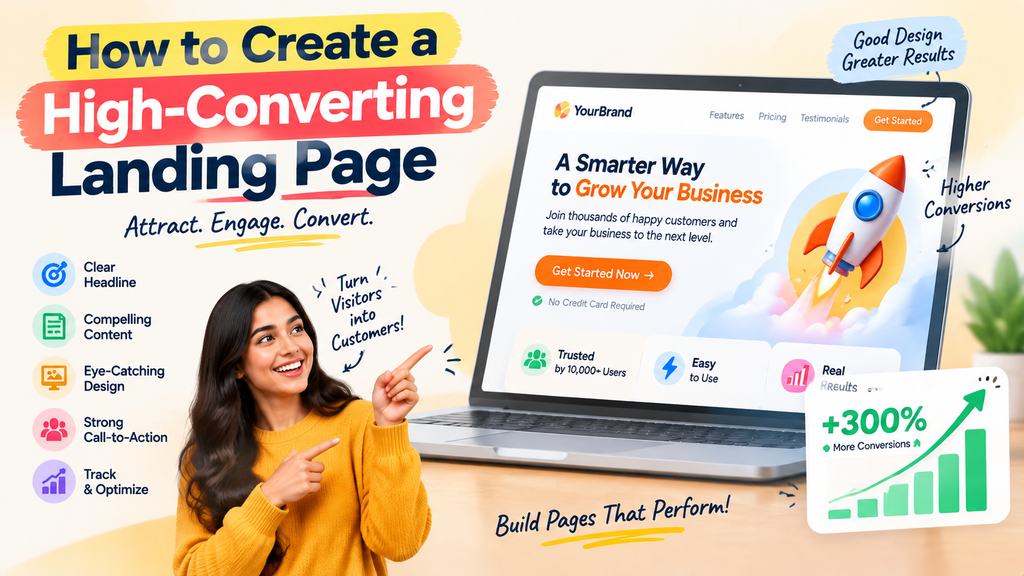
Mastering the art of how to create a high-converting landing page is essential for maximizing your paid advertising budget. While the debate regarding a capture page vs landing page often centers on simplicity, the true key to success lies in how well you align your page elements with user expectations.
Build a clear headline and above-the-fold value proposition
Your headline must immediately communicate the primary benefit of your offer. Visitors decide within seconds if your page is relevant to their needs.
Place your strongest value proposition at the very top of the screen. Ensure the headline directly mirrors the promise made in your paid advertisement to maintain consistency.
Show benefits, proof, and relevant product or service details
Focus on the specific problems your product solves rather than just listing features. Use bullet points to make these benefits easy to scan.
Incorporate social proof such as customer testimonials, industry awards, or case study data. This evidence builds the necessary confidence for a visitor to take the next step.
Write a specific call to action that reflects user intent
Avoid generic phrases like “Submit” or “Click Here.” Instead, use action-oriented language that highlights the value the user will receive.
For example, use “Get My Free Guide” or “Start My 14-Day Trial.” This creates a clear connection between the click and the expected outcome.
Reduce friction with focused design, fast loading, and mobile usability
A cluttered page distracts users from your primary goal. Use plenty of white space to guide the eye toward your conversion form or button.
Ensure your page loads in under three seconds, as slow speeds significantly increase bounce rates. Test your layout on mobile devices to guarantee a seamless experience for all users.
Use trust elements without distracting from the conversion goal
Include security badges, privacy policy links, and professional certifications to reassure your audience. Place these near your form to minimize anxiety during the final decision phase.
Keep these elements subtle so they do not compete with your main call to action. The goal is to provide enough reassurance to move the user forward without creating unnecessary visual noise.
| Element | Primary Purpose | Best Practice |
|---|---|---|
| Headline | Attention | Focus on benefit |
| Social Proof | Trust | Use real testimonials |
| CTA Button | Conversion | Use action verbs |
| Form Fields | Data Collection | Keep to a minimum |
Capture Page and Landing Page Examples That Clarify the Difference
Seeing real-world examples helps clarify the debate between a capture page vs landing page. While both serve to convert traffic, their structural design dictates how they handle user intent and information flow. By looking at specific use cases, you can better align your campaign goals with the right page architecture.
Lead capture page examples for downloadable guides and webinars
A typical lead capture page example often features a minimalist design focused on a single, high-value asset. For instance, a company offering a “2024 Industry Trends Report” will use a clean layout with a bold headline, a brief bulleted list of benefits, and a simple form. The primary goal here is speed, ensuring the user can exchange their email address for the resource with minimal distraction.
“Design is not just what it looks like and feels like. Design is how it works.”
Landing page examples for software demos and consultation offers
In contrast, examples of landing pages for high-consideration services like enterprise software demos require more depth. These pages often include detailed feature breakdowns, social proof, and video testimonials to build trust before the user commits to a meeting. You will notice these pages are longer, providing the necessary context to justify a more significant time investment from the prospect.
Paid social examples with short-form, low-friction opt-ins
When running ads on platforms like Facebook or Instagram, users are often in a discovery mindset. You should utilize a capture page that mirrors the quick, visual nature of the social feed. By keeping the form fields to a minimum—often just a name and email—you significantly reduce friction and increase the likelihood of a successful conversion.
Search advertising examples requiring deeper comparison content
Search traffic often carries higher intent, as users are actively looking for solutions to specific problems. When a user clicks an ad for “best CRM software,” they expect to see a page that compares options or highlights specific capabilities. These pages act as comprehensive landing pages, providing the depth required to satisfy the user’s research phase and move them closer to a purchase decision.
Testing and Measuring Both Page Types
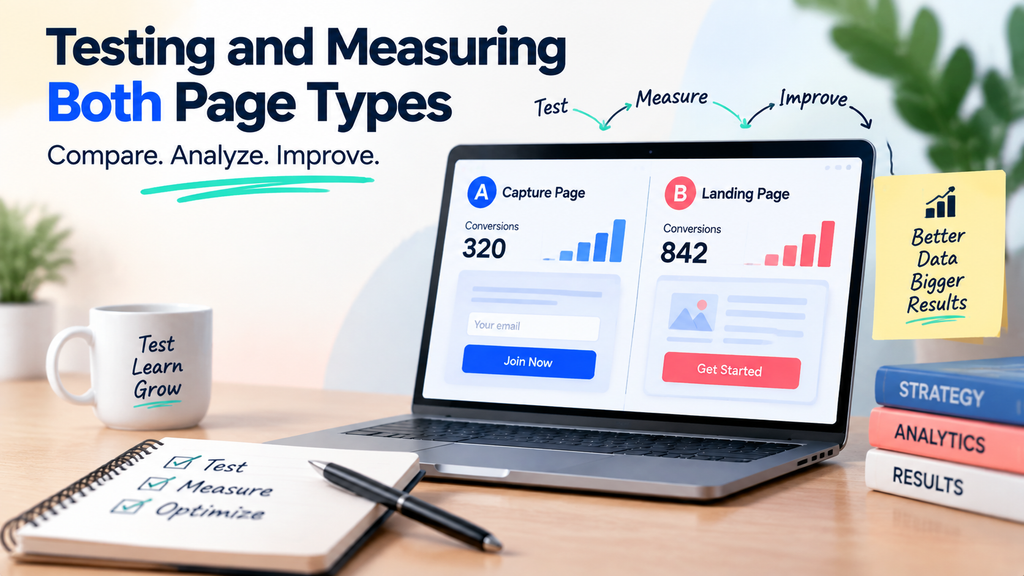
To truly understand the performance of your paid campaigns, you must implement a rigorous testing framework. Without clear data, you cannot determine whether a capture page vs landing page strategy is yielding the best return on your investment. Establishing a consistent measurement process allows you to move beyond guesswork and make informed decisions based on actual user behavior.
Set a primary conversion and secondary quality metrics
Every test needs a clear goal to be successful. Your primary conversion metric should be the specific action you want the user to take, such as a form submission or a download.
However, you must also track secondary quality metrics to ensure your traffic is valuable. These include lead-to-customer conversion rates, sales team feedback, and the long-term value of the leads generated.
Test headlines, forms, calls to action, and page length
When you learn how to create a high-converting landing page, you realize that small changes often lead to significant results. You should isolate specific variables to see what truly drives engagement.
- Headlines: Test different value propositions to see which resonates most with your audience.
- Forms: Experiment with the number of fields to balance lead quantity with data quality.
- Calls to Action: Use clear, action-oriented language to guide users toward the next step.
- Page Length: Compare short-form capture pages against long-form educational content.
Compare conversion rate, cost per lead, and cost per acquisition
Conversion rate is a helpful indicator, but it does not tell the whole story. You must evaluate the cost per lead (CPL) to understand the immediate efficiency of your ad spend.
More importantly, look at the cost per acquisition (CPA). A page with a lower conversion rate might actually be more profitable if it attracts higher-quality leads that are more likely to close into paying customers.
Use sufficient traffic and consistent attribution windows
Statistical significance is vital for any valid test. Ensure you have enough traffic flowing through your pages before you draw conclusions about which format performs better.
Maintain consistent attribution windows to track how users interact with your ads over time. This prevents skewed data caused by varying timeframes or external market factors.
Identify when a test improves volume but harms lead quality
Sometimes, a change might increase your total number of leads while simultaneously lowering their overall quality. This is a common trap when optimizing for quick wins rather than long-term growth.
Always verify that an increase in volume does not lead to a decrease in sales-qualified leads. If your conversion rate spikes but your revenue drops, you may need to reconsider your page strategy.
Which Page Should You Use for Your Paid Traffic Campaign?
Navigating the capture page vs landing page debate requires a clear understanding of your specific marketing goals. Your choice of destination page directly influences how users interact with your brand after clicking an ad. By aligning your page format with your campaign objectives, you can significantly improve your overall performance.
Choose a capture page when speed and low friction matter most
A capture page is ideal when your primary goal is to collect contact information quickly. These pages strip away distractions, focusing entirely on a single, clear call to action. When you look at successful lead capture page examples, you will notice they prioritize simplicity and immediate value.
Use this format for simple offers like newsletters, free checklists, or basic webinar registrations. Because these pages have minimal navigation, they keep the user focused on the form. This approach reduces bounce rates and encourages faster sign-ups from cold traffic.
Choose a landing page when trust and education drive conversion
When you are selling high-ticket items or complex services, you need more space to build credibility. A landing page allows you to provide detailed information, social proof, and objection handling. Learning how to create a high-converting landing page involves balancing this depth with a clear, persuasive narrative.
These pages are essential for products that require a longer consideration phase. By educating your audience, you ensure that the leads you generate are more qualified and ready to buy. This investment in content helps bridge the gap between initial interest and a final purchase decision.
Use a practical decision framework based on offer, audience, and funnel stage
Selecting the right format depends on the specific context of your campaign. You should evaluate your offer complexity, the awareness level of your audience, and where the user sits in your sales funnel. The following table provides a guide to help you make an informed decision.
| Factor | Capture Page | Landing Page |
|---|---|---|
| Offer Complexity | Low (Simple Lead Magnet) | High (Product/Service) |
| Audience Awareness | High (Problem Aware) | Low (Solution Aware) |
| Funnel Stage | Top of Funnel | Middle/Bottom of Funnel |
| Primary Goal | Rapid Lead Growth | Education & Sales |
Know when to test both formats instead of making a permanent choice
Data should always guide your final decision rather than assumptions. This is especially important when testing a capture page vs landing page strategy to determine which format produces better business results.
Even if a capture page seems like the obvious choice for a specific offer, testing it against a longer landing page can reveal surprising insights. You might find that a slightly longer page actually increases the quality of your leads, even if the total volume drops.
Run split tests to compare metrics like cost per lead and customer lifetime value. By remaining flexible, you can optimize your strategy over time. Never assume that one format is superior for every campaign; instead, let your audience tell you what works best through their behavior.
Choose the Page That Drives Results
Ready to improve your paid advertising performance? Apply the capture page versus landing page framework and create a destination designed around your audience and goals.
Conclusion
Selecting the right destination for your paid traffic requires a focus on your specific business outcomes. You must look beyond simple click-through rates to understand the true value of your leads. The debate regarding the capture page vs landing page format disappears when you prioritize long-term profitability over vanity metrics.
Your choice should reflect the complexity of your offer and the current awareness level of your audience. High-intent prospects often require the educational depth found in professional examples of landing pages to feel comfortable moving forward. Simpler offers might thrive with the streamlined nature of a dedicated capture page.
You gain a competitive edge by testing these formats against your unique cost per acquisition goals. Monitor how different page structures influence your sales pipeline and overall return on ad spend. Use these insights to refine your funnel and ensure every visitor encounters the most effective path to conversion.
Start your next campaign by aligning your page choice with your primary objective. Keep your focus on the quality of the connection you build with your potential customers. Consistent testing remains your best tool for achieving sustainable growth in any digital advertising environment.
FAQs
What is the fundamental difference in the capture page vs landing page debate for paid traffic?
The primary difference lies in the goal and the amount of information provided. A capture page is a minimalist tool designed specifically to gather contact information, usually just an email address, in exchange for a lead magnet. In contrast, a landing page is more robust, offering detailed information, social proof, and education to persuade a visitor to complete a more significant action, such as booking a demo or making a purchase. When choosing between a capture page vs landing page, you must decide if your priority is lead volume or lead qualification.
How to create a high-converting landing page for a search advertising campaign?
To understand how to create a high-converting landing page, you must focus on message match and trust. Ensure your headline directly mirrors the keyword used in your Google Ads or Microsoft Advertising campaign. Incorporate high-quality visuals, clear benefit-driven subheadlines, and social proof like testimonials from recognizable brands. Finally, ensure the page is mobile-responsive and loads quickly to prevent abandonment.
What are some effective lead capture page examples for top-of-funnel offers?
Notable lead capture page examples include the simple sign-up forms used by HubSpot for their industry reports or Shopify’s “start your free trial” entry pages. These pages typically feature a single field for an email address and a high-contrast button, removing all distractions to ensure the highest possible conversion rate for cold traffic.
Can you provide examples of landing pages that work well for high-consideration products?
Successful examples of landing pages for complex services can be seen in the SaaS industry. Companies like Salesforce and Slack use long-form landing pages that include feature breakdowns, video demonstrations, and “Trust Radius” badges. These elements are vital for high-consideration offers where the visitor needs significant education before they are willing to commit to a sales call or a subscription.
When should I prioritize a capture page over a detailed landing page?
You should use a capture page when your offer is simple and low-risk, such as a webinar registration or a PDF checklist. If you are running Meta ads to a cold audience, a capture page often results in a lower cost per lead because it requires very little “cognitive load” from the user. It is the ideal format for building an email list quickly before nurturing those leads through a longer sales funnel.
Why might a lower-converting landing page produce a better return on ad spend (ROAS)?
While a landing page might have a lower conversion rate than a simple capture page, the leads it generates are often higher quality. By providing more information and handling objections upfront, you filter out “looky-loos” and attract prospects with higher purchase intent. For a company like Tesla or Airbnb, a lead that has been properly educated on a landing page is much more likely to convert into a high-value customer, leading to a more profitable campaign overall.
How does traffic source influence the choice between these two page types?
Traffic from Google Search often has higher intent, meaning users are looking for specific answers and may prefer a detailed landing page that proves your solution is the best fit. Conversely, social media traffic from TikTok or Instagram is often more discovery-based. For these users, a low-friction capture page is usually more effective at “stopping the scroll” and securing a conversion before the user moves back to their social feed.