
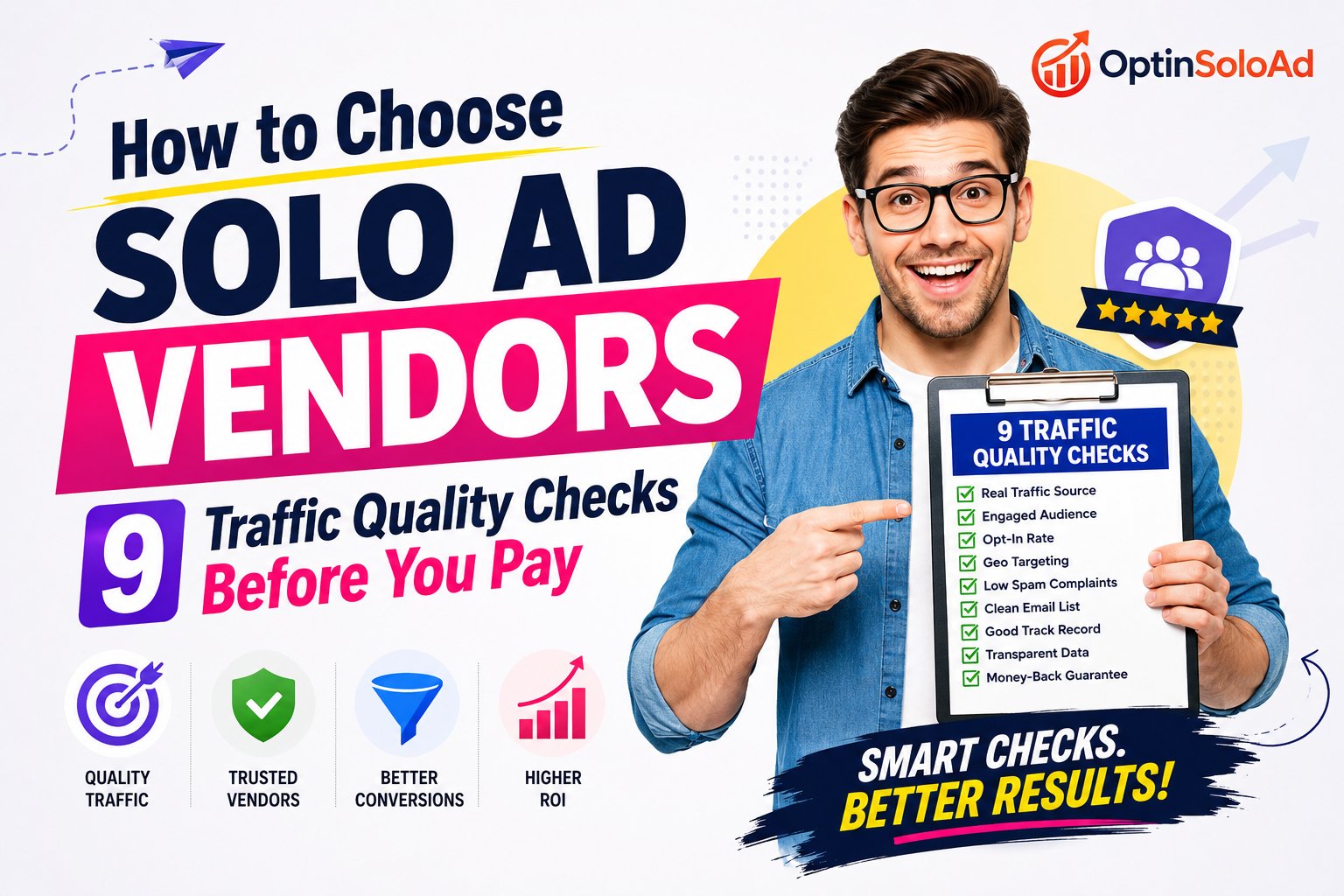
Have you ever wondered why your email marketing campaigns fail to convert despite paying for premium traffic? The secret often lies in the quality of the sources you choose. Many marketers lose their entire budget on low-quality clicks that never turn into loyal customers.
Vetting your traffic sources is the most critical step in protecting your marketing investment. By carefully evaluating potential partners, you ensure that your message reaches real people who are genuinely interested in your offer. This proactive approach separates successful professionals from those who struggle to see a return on their spending.
In this guide, we establish a robust framework for analyzing solo ad vendors. We will walk you through a nine-step verification process designed to filter out junk traffic. Mastering these checks will allow you to navigate the competitive landscape of solo ad vendors with complete confidence and precision.
Key Takeaways
- Understand why traffic quality is the primary driver of email marketing success.
- Learn to identify red flags that indicate low-quality or bot-driven traffic.
- Implement a nine-step verification framework to protect your marketing budget.
- Gain the confidence to select reliable partners for your future campaigns.
- Discover how to maximize your return on investment through careful vetting.
Choose Better Solo Ad Vendors
Stop wasting your marketing budget on questionable traffic. Learn how to vet solo ad vendors, verify traffic quality, and protect your investment before paying.
The Importance of Due Diligence in Solo Ad Buying
Finding the best solo ad vendors requires a shift in how you view your marketing budget. Many beginners treat solo ads as a simple commodity, but this mindset often leads to significant financial loss. When you fail to perform proper research, you risk paying for fake clicks or lists that have no interest in your offer.
Impulsive buying is the fastest way to drain your advertising capital without seeing a return. You must move away from the idea of just “buying clicks” and start viewing your purchases as a strategic investment in high-quality, targeted traffic. This methodical approach protects your business from non-responsive audiences and ensures your message reaches real people.
Due diligence acts as your primary defense against fraud in the digital marketplace. By taking the time to verify the quality of a provider, you gain a competitive edge over those who skip these essential steps. The following table highlights the critical differences between an impulsive approach and a strategic, due-diligence-focused strategy.
| Feature | Impulsive Buying | Strategic Due Diligence |
|---|---|---|
| Traffic Quality | Often contains bots | Verified human engagement |
| Financial Risk | High chance of loss | Calculated investment |
| Long-term Growth | Stagnant or declining | Scalable and sustainable |
| Vendor Selection | Random or cheapest | Vetted, high-performing |
Ultimately, working with the best solo ad vendors is a process of elimination and verification. You are building a foundation for your business that relies on consistent, high-intent traffic. By prioritizing research today, you save yourself from the frustration of wasted campaigns and poor conversion rates in the future.
Step One: Verify Vendor Reputation and Community Standing
Your success in email marketing often hinges on the credibility of the solo ad vendors you choose to hire. Before you commit your budget, you must perform a deep dive into their public history and community standing. This initial vetting process acts as a filter to ensure you only work with professionals who deliver consistent results.
Checking Marketplace Ratings and Reviews
Most reputable solo ad vendors operate on established platforms like Udimi or within private marketing masterminds. You should look for a high volume of verified reviews that span several months or even years. The solo ad vendors with a long track record of positive feedback is generally more reliable than one with a sudden burst of five star ratings.
Pay close attention to the specific comments left by previous buyers. Look for mentions of conversion rates, communication quality, and the overall responsiveness of the vendor. Consistent praise regarding the quality of the traffic is a strong indicator that you are dealing with a professional.
Identifying Red Flags in Vendor Feedback
Not all feedback is created equal, and you must learn to spot subtle warning signs. Be wary of vendors who have many generic reviews that lack detail or specific results. If you notice a pattern of complaints regarding bot traffic or poor communication, it is best to move on to another provider.
Sudden spikes in positive reviews can sometimes indicate artificial inflation or a temporary change in list quality. Always prioritize transparency and look for vendors who openly address negative feedback. Use the following table to help you distinguish between high-quality partners and those you should avoid.
| Indicator | Reliable Vendor | Unreliable Vendor |
|---|---|---|
| Review History | Consistent over years | Erratic or very new |
| Feedback Detail | Specific results mentioned | Vague or generic praise |
| Communication | Proactive and clear | Slow or defensive |
| Traffic Quality | Verified by tracking | Unverifiable or hidden |
Step Two: Analyze the Traffic Source and Geographic Targeting
Finding the best solo ad vendors requires a deep dive into their traffic sources. You must ensure that your investment reaches a high-intent audience rather than low-quality clicks that drain your budget without providing results.
When you evaluate potential solo ad vendors, look beyond simple click counts. Focus on the origin of the traffic and the methods used to build the email list you are paying to access.
Confirming Tier-1 Country Traffic
Most successful marketers prioritize Tier-1 countries, which include the United States, Canada, the United Kingdom, Australia, and New Zealand. These regions typically offer the highest purchasing power and conversion potential for digital offers.
Ask your vendor for a geographic breakdown of their recent campaigns. A reputable provider will have no issue sharing a screenshot from their tracking software that confirms the majority of their clicks originate from these specific nations.
If solo ad vendors cannot provide this data, you should proceed with extreme caution. Relying on traffic from outside your target market often leads to wasted ad spend and poor engagement metrics.
Understanding the Vendor’s Lead Generation Methods
The best solo ad vendors build their lists through ethical, sustainable methods. You want to ensure that the subscribers on the list opted in voluntarily because they are genuinely interested in your niche.
Avoid vendors who rely on incentivized traffic or “get-paid-to-click” schemes. These methods often result in lists filled with people who have no intention of buying your product or service.
Instead, look for providers who use high-quality squeeze pages and organic content marketing to attract leads. This approach ensures that the audience is active, responsive, and ready to engage with your marketing message.
| Traffic Metric | High-Quality Source | Low-Quality Source |
|---|---|---|
| Geographic Origin | Tier-1 Countries | Non-Targeted Regions |
| Opt-in Method | Organic Squeeze Page | Incentivized/Paid Clicks |
| Engagement Level | High Open/Click Rates | High Bounce/Bot Rates |
| List Maintenance | Regularly Scrubbed | Stale/Unverified Data |
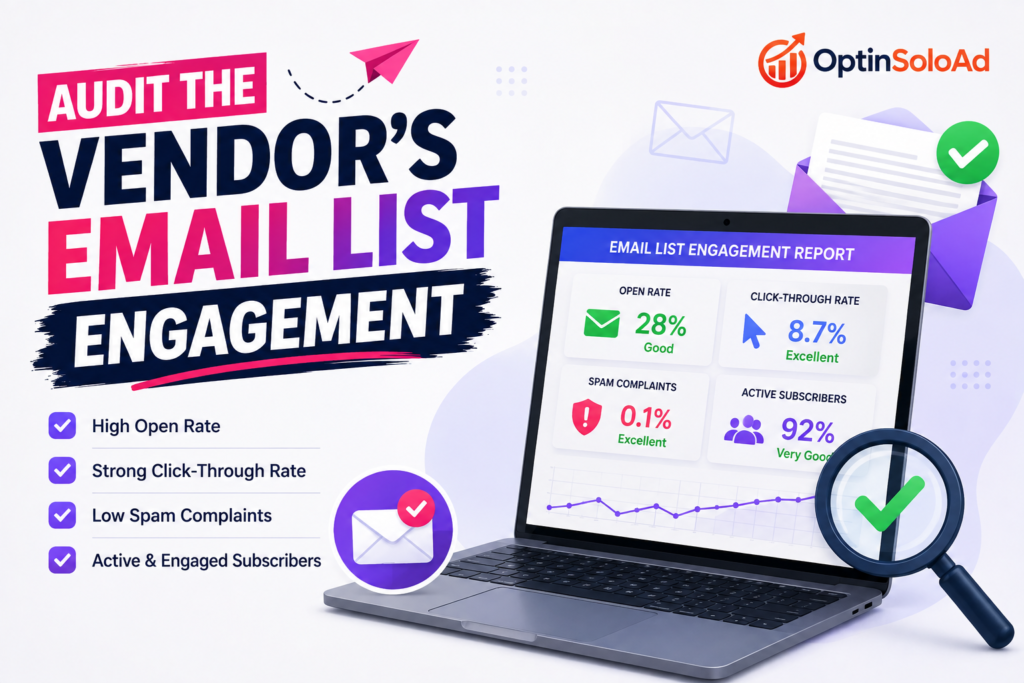
Step Three: Audit the Vendor’s Email List Engagement
A massive email list is only as valuable as the people who actually open your messages. You might be tempted by a provider with a million subscribers, but engagement is the true metric of success. When you hire a professional solo ads vendor, you need to ensure their audience is active and responsive to new offers.
Requesting Proof of Recent Click-Through Rates
Never take a vendor’s word for it when they claim their list is highly responsive. You should always request verifiable proof of recent click-through rates (CTR) from their latest campaigns. A reputable solo ads vendor will typically provide screenshots from their tracking software to demonstrate how their subscribers interact with emails.
Look for consistent performance rather than a single outlier result. If the CTR is unusually high, it might indicate bot traffic, while a very low rate suggests a disengaged audience. Consistent engagement is the hallmark of a healthy, well-managed list that will provide actual value to your business.
Evaluating List Hygiene and Scrubbing Practices
List hygiene refers to the process of removing inactive, bounced, or invalid email addresses from a database. A professional solo ads vendor prioritizes this practice to maintain high deliverability rates and ensure that your message reaches real people. You should ask specifically how often they scrub their lists to keep them clean.
If a vendor cannot explain their maintenance process, they are likely sending emails to “dead” accounts. This practice hurts your sender reputation and wastes your advertising budget. The following table outlines the key differences between a healthy list and a neglected one.
| Metric | Healthy List | Neglected List |
|---|---|---|
| Bounce Rate | Below 2% | Above 5% |
| Open Rate | Consistent (15%+) | Erratic or Low |
| Scrubbing Frequency | Monthly or Weekly | Rarely or Never |
| Subscriber Quality | Verified & Active | Cold & Unresponsive |
By verifying these metrics, you protect your investment and ensure that your traffic comes from genuine, interested prospects. Always prioritize a solo ads vendor who values list quality over sheer volume.
Step Four: Test for Bot Traffic and Click Fraud
Protecting your marketing budget from fraudulent activity is essential when buying traffic. When you work with a solo ads vendor, you must ensure that the clicks you pay for come from real human prospects. Without proper oversight, you risk spending your capital on automated scripts that provide zero value to your business.
Using Third-Party Click Tracking Tools
Relying solely on the statistics provided by your traffic provider is a common mistake. You should always utilize independent, third-party tracking software like ClickMagick or Voluum to monitor your incoming traffic. These tools provide granular data that helps you verify the quality of the clicks delivered by your solo ads vendor.
By using these platforms, you can track the IP addresses and user agents of every visitor. This level of transparency allows you to hold your provider accountable for the traffic quality. Accurate data is your best defense against wasted advertising spend.
Identifying Patterns of Artificial Traffic
You must learn to spot the red flags that indicate non-human activity. One common sign of bot traffic is an unusually high number of clicks occurring within seconds of each other. If your tracking software shows a 100% bounce rate with zero time spent on the page, you are likely dealing with automated bots.
Another warning sign is traffic originating from data centers rather than residential internet service providers. If you notice these suspicious patterns, document the evidence immediately and discuss it with your solo ads vendor. Taking these steps ensures that your budget is reserved for genuine prospects who are actually interested in your offer.
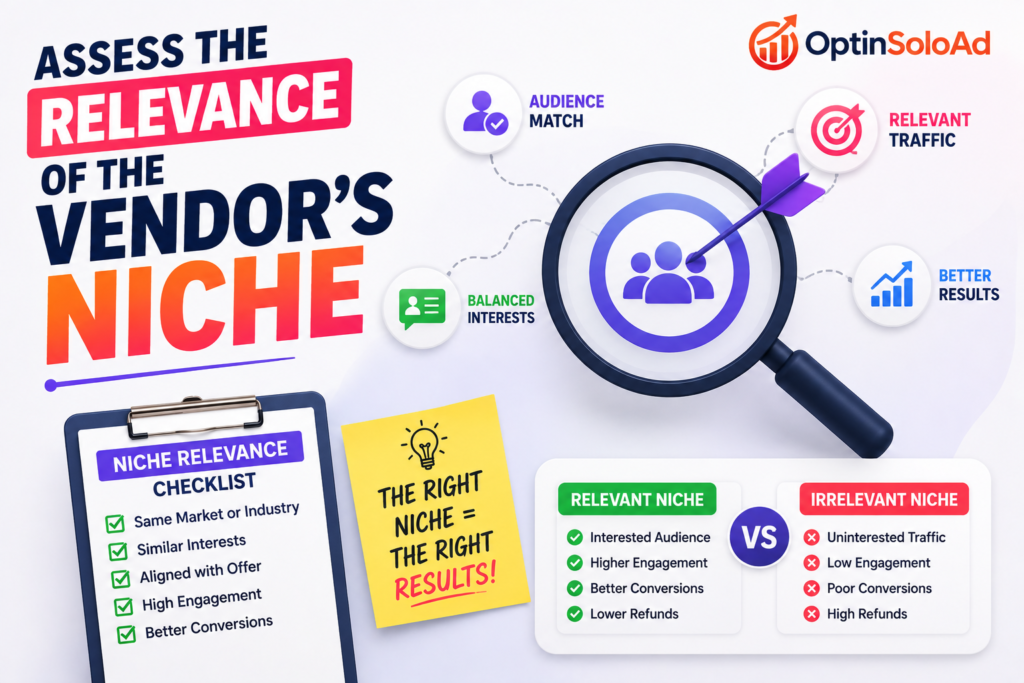
Step Five: Assess the Relevance of the Vendor’s Niche
Strategic alignment between your product and the vendor’s list is the secret to a successful campaign. Even if you find a highly reputable solo ads vendor, your results will suffer if their subscribers have no interest in your specific niche. You must ensure that the traffic you purchase is primed for your particular offer.
Without this connection, you are essentially paying for clicks that will never turn into loyal customers. Taking the time to verify this fit is a critical step in protecting your marketing budget.
Matching Your Offer to the Vendor’s Audience
Before you commit to a purchase, analyze the core topics the vendor covers in their email communications. A solo ads vendor who focuses on cryptocurrency will likely not provide high-quality leads for a weight loss program. You should look for overlap in the pain points and desires of their audience compared to your target customer profile.
Ask yourself if the vendor’s subscribers are accustomed to buying products in your category. If the audience is used to free content but rarely makes purchases, your conversion rates will likely remain low. Consistency in niche alignment is the most reliable way to ensure your message lands with the right people.
Requesting Audience Demographic Data
Do not hesitate to ask for specific insights regarding the people on the list. A professional solo ads vendor should be able to provide basic demographic information such as age ranges, primary geographic locations, and general interests. This data helps you confirm that the audience matches your ideal customer avatar.
When you review this information, look for patterns that indicate active engagement. If the vendor cannot provide any details about their subscribers, it is often a sign that the list quality is poor or unmanaged. Data-driven decisions will always outperform guesswork when you are scaling your outreach efforts.
Step Six: Evaluate Communication and Professionalism
Professionalism serves as a reliable indicator of how a vendor will manage your specific campaign needs. When you engage with a potential solo ads vendor, the way they handle your initial inquiries often mirrors how they will manage your paid traffic campaign. A partner who values your time and provides clear, concise answers is far more likely to deliver the results you expect.
Testing Response Times Before Purchase
Before you commit any funds, send a few preliminary questions to gauge the responsiveness of your solo ad vendors. A high-quality solo ads vendor should reply within a reasonable timeframe, typically within 24 hours. If a provider takes several days to answer simple questions, it may signal poor organization or a lack of interest in your success.
Pay close attention to the quality of their replies. Are they providing generic, copy-pasted responses, or are they addressing your specific concerns? Clear communication is a vital asset that helps you avoid misunderstandings once the campaign is live.
Clarifying Expectations and Refund Policies
You must establish firm expectations regarding delivery windows and traffic quality before finalizing your payment. Ask the solo ads vendor directly about their process for handling under-delivery or low-quality clicks. A professional provider will have a transparent, written policy that protects your investment.
Reviewing these policies ensures you are not left in the dark if the campaign does not meet the agreed-upon metrics. Use the following table to distinguish between professional and unprofessional traits during your vetting process.
| Feature | Professional Vendor | Unprofessional Vendor |
|---|---|---|
| Response Time | Under 24 Hours | Multiple Days or No Reply |
| Refund Policy | Clear and Documented | Vague or Non-Existent |
| Communication | Proactive and Detailed | Short and Dismissive |
| Expectations | Defined in Writing | Unclear or Verbal Only |
By prioritizing these interactions, you build a foundation of trust. A solo ads vendor who communicates with integrity is an essential partner for your long-term growth.
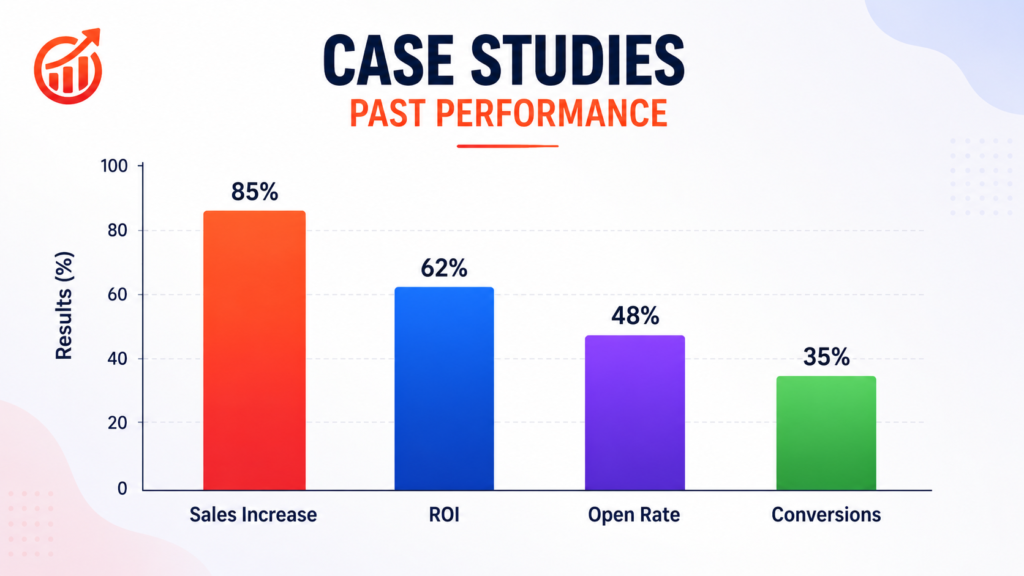
Step Seven: Review Case Studies and Past Performance
Evaluating the track record of a vendor is a critical step in identifying the best solo ad vendors for your business. Past performance often acts as the most reliable predictor of future results in digital advertising. By looking at historical data, you gain confidence that your investment will yield the expected traffic quality.
Analyzing Screenshots of Previous Campaigns
When you request evidence of past success, look for authentic screenshots from reputable tracking platforms. These images should display clear metrics such as click-through rates, unique visitor counts, and geographic distribution. Consistent performance across multiple campaigns is a strong indicator of a reliable provider.
Be wary of screenshots that appear heavily edited or lack specific campaign dates.Legitimate solo ad vendors will gladly share transparent data to prove their ability to deliver high quality traffic. This level of detail helps you verify if they are truly among the best solo ad vendors in the industry.
Asking for References from Long-Term Clients
Direct feedback from other marketers provides invaluable social proof that public reviews cannot match. Ask the vendor for contact information of clients who have purchased traffic from them repeatedly over several months. Long-term partnerships suggest that the vendor consistently meets expectations and maintains high standards.
When you reach out to these references, ask specific questions about lead quality and conversion rates. A vendor who is confident in their service will not hesitate to connect you with satisfied customers. This verification process ensures you are choosing one of the best solo ad vendors to support your long-term growth.
Step Eight: Conduct a Small Scale Test Campaign
Running a small test campaign is the smartest way to protect your investment when working with a new solo ads vendor. You should never commit your entire marketing budget to a provider without first verifying their performance in a real-world environment. This controlled approach allows you to gather essential data while keeping your financial risk to a minimum.
Test Traffic Before You Scale
Ready to protect your next campaign? Use proven traffic checks to test vendors, measure lead quality, and identify reliable partners before increasing your budget.
Setting a Budget for Initial Testing
When you start a test, keep your initial spend modest to ensure you do not overextend your resources. A common strategy is to purchase between 100 and 200 clicks to get a representative sample of the traffic quality. This volume is usually sufficient to see how the audience interacts with your landing page and opt-in form.
By limiting your initial spend, you gain the flexibility to pivot if the results do not meet your expectations. Protecting your capital is just as important as generating new leads. If the test proves successful, you can then confidently increase your budget for future campaigns with that specific solo ad vendors.
Monitoring Lead Quality and Conversion Metrics
Once your campaign is live, you must track specific performance indicators to determine if the traffic is truly valuable. Focus on your opt-in rate, the quality of the email addresses provided, and the subsequent engagement levels of those new subscribers. If the leads do not open your emails or show interest in your follow-up sequence, the traffic source may be low quality.
Use the following table to compare your test results against standard industry benchmarks to evaluate your solo ads vendor performance effectively.
| Metric | Poor Performance | Average Performance | Excellent Performance |
|---|---|---|---|
| Opt-in Rate | Below 20% | 30% – 40% | Above 50% |
| Bounce Rate | Above 10% | 5% – 8% | Below 3% |
| Email Open Rate | Below 10% | 15% – 25% | Above 30% |
| Conversion Value | Negative ROI | Break-even | Positive ROI |
Always remember that a single test provides a snapshot, not a guarantee of future success. If the metrics align with your goals, you have successfully validated the vendor and can proceed with scaling your efforts.
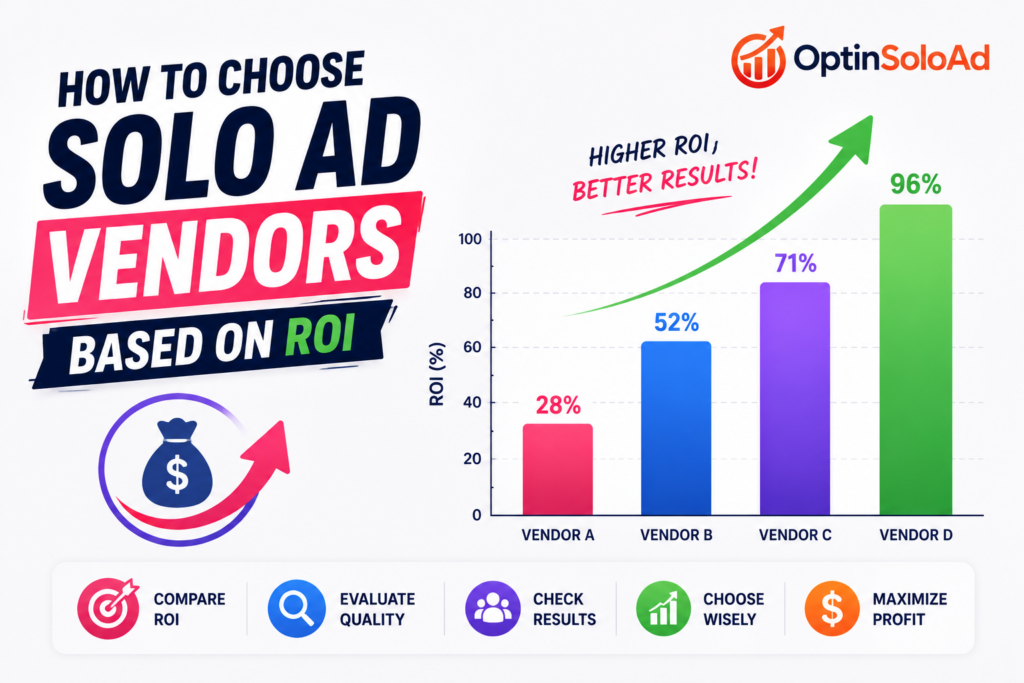
Step Nine: How to Choose Solo Ad Vendors Based on ROI
Transforming your advertising strategy requires a shift from viewing costs as simple expenses to seeing them as strategic investments in customer acquisition. The ultimate goal of your vetting process is to identify solo ad vendors who provide a consistent, positive return on investment for your business. By focusing on these financial metrics, you turn your traffic buying into a reliable engine for growth.
Calculating Your Cost Per Lead
To determine the true profitability of your campaigns, you must accurately calculate your cost per lead (CPL). Simply divide your total campaign spend by the number of new leads generated during that period. This figure provides a clear baseline for evaluating the efficiency of your marketing efforts.
Once you have your CPL, compare it against the lifetime value of your customers. If your acquisition cost remains lower than the revenue generated by a new subscriber, you have found a winning formula. Tracking this data consistently allows you to filter out underperforming sources quickly.
Scaling Up Successful Vendor Partnerships
When you identify high-performing solo ad vendors, the next logical step is to increase your budget with them. Scaling solo ad vendors should only occur after you have verified the stability of your conversion rates over multiple test cycles. Start by gradually increasing your order size to ensure the quality of traffic remains consistent at higher volumes.
Maintain open communication with your partners as you scale your operations. By securing larger placements with trusted providers, you maximize your reach and revenue potential. This disciplined approach ensures that your business continues to grow while keeping your acquisition costs within a profitable range.
Turn Traffic Into Profitable Growth
Build a smarter traffic strategy with careful vendor selection, real performance data, and controlled testing. Discover how better traffic decisions can improve your marketing results.
Conclusion
Selecting the right solo ad vendors requires a disciplined approach that prioritizes quality, transparency, and data-driven decision-making. You hold the power to transform your marketing results by applying these nine rigorous checks before you commit your budget.
Your success depends on your ability to filter out low-quality traffic sources. By focusing on verified reputation and clear metrics, you protect your business from wasted spend. This process turns advertising into a predictable engine for growth.
Consistent testing and careful monitoring serve as the bedrock of a sustainable long-term strategy. You should view every campaign as a learning opportunity to refine your audience targeting. Use these insights to build a network of reliable partners who help you scale your business effectively.
Take action today by auditing your current vendor list against these standards. Share your experiences with these vetting methods to help others in the digital marketing community improve their results. Your commitment to high standards will set you apart in a crowded marketplace.
FAQs
Why is it critical to conduct thorough due diligence when selecting solo ad vendors?
Due diligence is your primary defense against wasted marketing spend and fraudulent activity. Without a methodical vetting process, you risk purchasing clicks from non-responsive lists or automated bots that provide zero value to your business. By prioritizing traffic quality over low prices, you ensure that every dollar invested in a solo ads vendor contributes to your long-term business growth rather than just inflating your traffic statistics with empty numbers.
How can I identify the best solo ad vendors in a competitive marketplace?
To find the best solo ad vendors, focus on transparency and a proven track record. Look for providers on reputable platforms like Udimi who maintain consistent, positive ratings over an extended period. The most reliable solo ad vendors will openly share their lead generation methods and provide verified proof of recent results, demonstrating that their list remains active and responsive to new offers.
What are the common red flags to watch for in vendor feedback and ratings?
You should be wary of solo ad vendors who have a sudden influx of identical positive reviews or those who lack any constructive critical feedback. If a vendor’s ratings seem artificially inflated or if they are defensive when asked about their list hygiene practices, it is a significant sign to proceed with caution. Genuine solo ad vendors will have a history of transparent communication and a steady stream of diverse client testimonials.
Why is Tier-1 traffic a priority when hiring a solo ads vendor?
Tier-1 traffic, originating from countries such as the United States, Canada, United Kingdom, Australia, and New Zealand, typically carries much higher purchasing power and higher conversion potential for most offers. When you work with a solo ads vendor, ensuring your traffic reaches these high-intent geographic locations is essential for achieving a sustainable conversion rate and a positive return on investment.
How do I verify a vendor’s email list engagement and responsiveness?
A professional solo ads vendor should be able to provide proof of recent click-through rates (CTR) and explain their list scrubbing practices. Ask the vendor how often they remove inactive subscribers and what methods they use to keep their audience engaged. High engagement rates are a hallmark of a healthy list, ensuring that your message is actually seen by real human prospects rather than ignored in an overcrowded inbox.
How can I protect my campaign from bot traffic and click fraud?
You should always utilize independent third-party tracking software such as OptiniSoloAd or QualityClickControl to monitor your traffic in real-time. These tools help you identify suspicious patterns, such as instant clicks from data centers or non-human browsing behavior. By implementing these safeguards, you can hold your solo ad vendors accountable and ensure your budget is spent on genuine prospects who are interested in your offer.
Why should I always start with a small-scale test campaign before scaling?
Testing allows you to validate a vendor’s claims in a real-world environment without risking your entire marketing budget. By purchasing a small package of clicks, you can monitor the cost per lead and the actual behavior of the subscribers on your landing page. This controlled approach helps you identify which of the best solo ad vendors are worth a larger financial commitment based on actual performance data.
How do I calculate the ROI to determine if a solo ads vendor is profitable?
To determine profitability, you must calculate your total spend against the revenue generated from the leads captured during your campaign. Track your conversion metrics through your sales funnel to see how many leads turn into paying customers. If the lifetime value of a customer exceeds your cost per lead, you have identified a successful partnership that is ready to be scaled for maximum reach and revenue.
How do I ensure my offer is relevant to the vendor’s specific audience?
Before finalizing a purchase, request detailed demographic data or a summary of the vendor’s list niche. Whether your offer is in the Make Money Online (MMO), health, or personal development sector, it must align with the interests of the subscribers. A reputable solo ads vendor will be honest about whether your offer is a good fit for their audience, as your success directly impacts their reputation and future business.
3 thoughts on “How to Choose Solo Ad Vendors: 9 Traffic Quality Checks Before You Pay”