
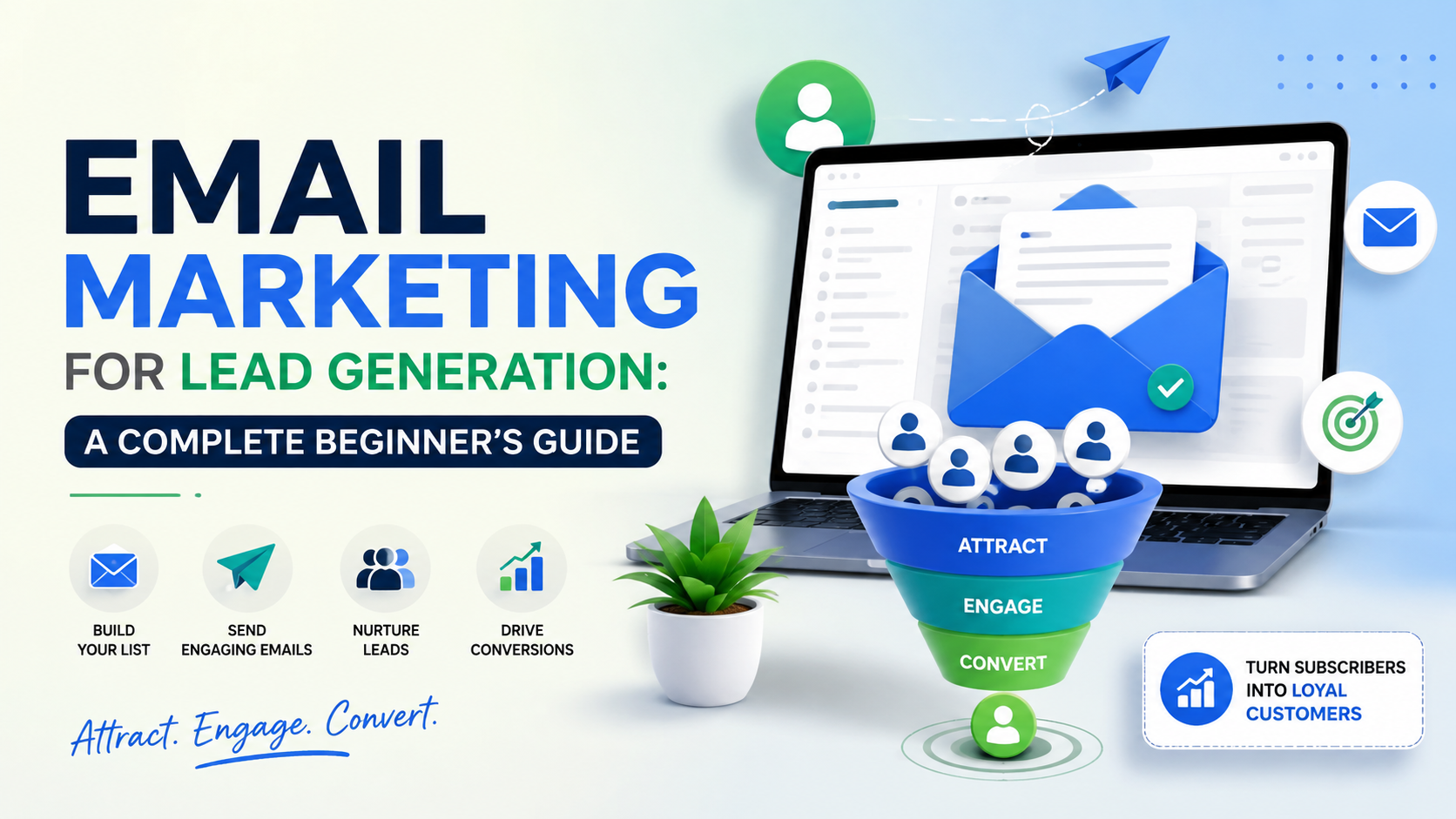
Have you ever wondered why some businesses effortlessly attract high-value clients while others struggle to find anyone interested in their services? The secret often lies in how you build relationships before a sale even happens. Using a structured email marketing for lead generation approach allows you to identify and nurture potential customers effectively.
This guide helps you master the art of turning casual visitors into loyal buyers. A strong email marketing for lead generation strategy can help you build this relationship systematically. We focus on creating quality leads rather than just growing a massive list of names. You will learn how to design compelling offers, secure permission, and automate follow-up sequences that drive real revenue.
By refining your email marketing strategy, you can transform your outreach into a reliable engine for growth. We will walk through every step of building successful lead generation email campaigns that convert. Effective email marketing for lead generation connects these campaigns with measurable business goals. Get ready to streamline your process and see measurable results in your business today.
Key Takeaways
- Focus on attracting high-intent prospects rather than just increasing subscriber counts.
- Develop valuable offers that encourage users to share their contact information willingly.
- Use automation to nurture relationships consistently without manual effort.
- Prioritize the quality of your database to improve overall conversion rates.
- Measure your success by tracking revenue growth instead of vanity metrics.
Turn Your Email List Into a Revenue Engine
Stop collecting contacts and start attracting prospects who are ready to buy. Build a smarter email lead generation system that consistently turns subscribers into customers.
How Email Marketing for Lead Generation Works
You can turn anonymous website traffic into a valuable asset by mastering the art of permission-based communication. Effective email marketing for lead generation relies on creating a clear value exchange where visitors willingly provide their contact details in return for something useful.
Turning Website Visitors Into Identifiable Prospects
The process begins with lead capture, the moment a visitor moves from being an unknown browser to an identifiable prospect. By offering high-value resources like whitepapers, checklists, or exclusive discounts, you encourage users to share their email addresses. This is one of the foundational principles of email marketing for lead generation.
Once you have this information, the visitor enters your database as a qualified lead. This transition is critical because it allows you to move from broad, impersonal advertising to direct, personalized communication. Email marketing for lead generation makes this personalized communication possible at scale.
Understanding the Lead Generation and Sales Funnel
Successful generating leads for email marketing requires a deep understanding of the customer journey. A well-planned email marketing for lead generation strategy should support every stage of this journey. You must guide your audience through distinct stages to ensure they remain engaged until they are ready to purchase.
The typical funnel follows this progression:
- Awareness: The visitor discovers your brand through content or social media.
- Interest: The user engages with your lead magnet and joins your list.
- Consideration: You nurture the lead with educational content that builds trust.
- Conversion: The prospect makes a purchase or signs up for your service.
“Trust is the currency of the digital age. When a customer gives you their email address, they are granting you permission to enter their private space; treat that access with respect.”
Why Permission-Based Email Outperforms Purchased Lists
Many beginners are tempted to buy contact lists to speed up growth, but this strategy often backfires. Permission-based email marketing ensures that your audience actually wants to hear from you, which significantly improves your deliverability and engagement rates.
When you engage in targeted email outreach with a list that has opted in, you benefit from several key advantages:
- Higher Open Rates: Subscribers recognize your brand and expect your messages.
- Better Sender Reputation: Fewer spam complaints mean your emails reach the inbox consistently.
- Stronger Relationships: You build a community of loyal followers rather than a list of strangers.
Ultimately, building your list organically creates a sustainable foundation for your business. This foundation strengthens your email marketing for lead generation efforts over time. By focusing on quality over quantity, you ensure that your marketing efforts lead to long-term revenue growth.
Set Goals for Your Lead Generation Campaign
Defining your lead generation goals ensures that every message you send serves a specific business purpose. Without a clear target, your efforts may lack the focus needed to drive meaningful results. Successful email marketing for lead generation requires you to align your tactical choices with your broader company vision.
Choosing a Primary Campaign Objective
You should select one primary objective before you begin drafting your emails. Trying to achieve too many outcomes at once often dilutes your message and confuses your audience. Focus your energy on a single, measurable action that moves the needle for your business.
- Increasing qualified sales inquiries
- Driving signups for product trials
- Encouraging consultations or demo requests
- Boosting direct online purchases
Defining Your Ideal Customer Profile
Your ideal customer profile acts as a compass for your entire strategy. By identifying the specific characteristics of your best customers, you can tailor your messaging to resonate with those most likely to buy. This approach prevents you from wasting resources on prospects who are not a good fit for your offer.
Consider factors such as industry, company size, job title, and the specific pain points your product solves. These details help you create a more precise email marketing for lead generation strategy. When you speak directly to the needs of your target audience, your engagement levels will naturally rise. This clarity helps you attract high-quality leads who are ready to engage with your brand.
Matching Email Goals to Business Outcomes
Connecting your email metrics to actual business outcomes is essential for long-term growth. This connection is especially important when measuring the success of email marketing for lead generation. You must view your data as a cohesive system rather than isolated numbers. This holistic view allows you to make informed decisions that improve your bottom line.
Lead volume, conversion rate, and customer acquisition cost
These three metrics work together to define the health of your campaign. High lead volume is only valuable if your conversion rate remains healthy throughout the funnel. Furthermore, keeping your customer acquisition cost low ensures that your marketing efforts remain profitable over time.
| Metric | Purpose | Impact |
|---|---|---|
| Lead Volume | Top of Funnel | Scale |
| Conversion Rate | Middle of Funnel | Efficiency |
| Acquisition Cost | Bottom of Funnel | Profitability |
Setting realistic benchmarks for a new email program
If you are just starting, do not be discouraged by low initial numbers. Your first few campaigns serve as a baseline to help you understand your audience’s behavior. Focus on consistency during the first ninety days to gather enough data for meaningful optimization.
Once you have established a baseline, you can begin testing small changes to improve your performance. Remember that even small improvements in your open and click-through rates can lead to significant gains in total revenue. Stay patient and let the data guide your next steps.
Create a Valuable Lead Magnet
Generating leads for email marketing requires a compelling incentive that bridges the gap between interest and action. A relevant lead magnet is therefore central to effective email marketing for lead generation. A well-crafted lead magnet acts as a catalyst, encouraging visitors to trade their contact details for high-value information. By providing immediate utility, you establish trust before you ever send a formal sales pitch.
Build a Lead Nurturing System That Converts
Your leads need more than occasional emails. Create automated, personalized campaigns that build trust, qualify prospects, and move high-intent subscribers closer to becoming customers.
Choosing an Offer That Solves a Specific Customer Problem
Your email signup offer must address a single, urgent pain point that your ideal customer already recognizes. Avoid broad topics that lack focus. Instead, target a specific hurdle that prevents your prospect from achieving their immediate goals.
When your content provides a clear solution, it positions your brand as a helpful authority. This approach makes email marketing for lead generation more effective by delivering value before asking for a purchase. This relevance is the key to high conversion rates. If the offer is too generic, visitors will likely ignore it.
Lead Magnet Formats That Encourage Signups
Choosing the right format depends on how your audience prefers to consume information. A content upgrade can take many shapes, but it should always be easy to digest and implement.
Checklists, templates, guides, and calculators
These formats are excellent for providing quick wins. A checklist helps users organize complex tasks, while a template saves them time on repetitive work. Calculators are particularly effective because they offer personalized data, making the interaction feel tailored to the user’s specific situation.
Webinars, free consultations, and product trials
For more complex solutions, interactive formats work best. Webinars allow you to demonstrate expertise in real-time, while free consultations build a personal connection. Product trials are the ultimate bridge, as they allow prospects to experience the value of your paid solution firsthand.
Connecting the Lead Magnet to Your Paid Offer
Your free resource should naturally lead the subscriber toward your primary product or service. This approach makes email marketing for lead generation more closely connected to revenue. Think of the magnet as a sample of the value you provide in your paid offerings. If the transition feels logical, the prospect will be more likely to view your paid solution as the next logical step.
Ensure that the skills or insights gained from the freebie are directly applicable to the paid experience. This alignment creates a seamless journey from a casual visitor to a paying customer.
Writing a Clear Value Proposition and Call to Action
A strong call to action is essential for driving conversions. Your value proposition must clearly state what the user will receive and how it will improve their situation. Avoid exaggerated claims that sound like marketing fluff.
Focus on the specific outcome the user can expect. Clear expectations are essential for making email marketing for lead generation more effective. Use direct language that tells the reader exactly what to do next. When your message is clear and honest, you build the credibility necessary to turn a lead into a long-term client. This credibility can make email marketing for lead generation more effective over the long term.
Build High-Converting Signup Experiences
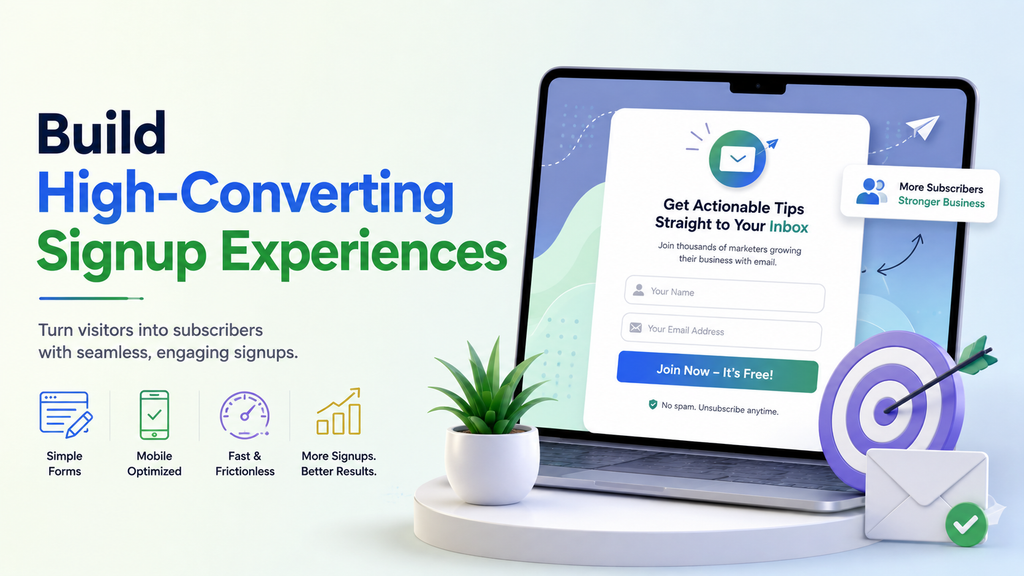
High-converting signup experiences are the bridge between anonymous traffic and your future customers. They also form an important part of a successful email marketing for lead generation process. When you prioritize the user journey, you turn passive browsers into active participants in your brand story.
Placing Forms on High-Intent Website Pages
To succeed at generating leads for email marketing, you must meet your audience where their interest is highest. Place your lead capture forms on pages where visitors are already evaluating your solutions.
- Product and Service Pages: These pages attract users who are actively looking for solutions.
- Pricing Pages: Visitors here are often ready to commit, making them prime candidates for your list.
- Resource Hubs: Offering a whitepaper or guide here captures users seeking deeper industry knowledge.
Designing Landing Pages for One Conversion Goal
A focused landing page conversion strategy requires removing all distractions. When a visitor arrives at a dedicated page, they should face only one clear path forward.
Avoid including navigation menus, footer links, or unrelated offers that pull the user away from your goal. By keeping the page clean, you ensure the visitor stays focused on the value proposition you have presented. A focused landing page can improve the results of your email marketing for lead generation efforts.
Reducing Form Friction Without Sacrificing Lead Quality
The balance between gathering data and respecting user time is vital for lead capture forms. A frictionless signup process can significantly strengthen your email marketing for lead generation efforts. Too many fields can discourage signups, while too few might leave you with low-quality leads.
Selecting the right number of fields
Start by asking only for the information you absolutely need to initiate a relationship. Usually, a name and an email address are sufficient to begin your nurturing process.
Using progressive profiling as trust grows
You can gather more detailed information over time through signup form optimization. Once a user is already on your list, use subsequent interactions to ask for additional details like job title or company size.
Using Popups, Embedded Forms, and Social Lead Ads
Diversifying your capture methods helps you reach users across different touchpoints. Embedded forms work well for static content, while popups can capture attention at the right moment.
Additionally, social lead ads allow you to capture information directly within platforms like LinkedIn or Facebook. This removes the need for a user to leave the social app, which often leads to higher conversion rates.
Choose an Email Marketing Platform and Prepare Your Account
Selecting the right email marketing platform is the foundation of your lead generation success. The right platform can make email marketing for lead generation easier to automate and measure. You need a tool that balances ease of use with powerful features like automation and detailed reporting. A professional system ensures your messages reach the inbox while providing the data you need to grow.
Essential Platform Features for Beginners
When evaluating software, look for built-in form builders that allow you to capture leads directly on your website. Automation capabilities are equally vital, as they allow you to send timely follow-ups without manual intervention. Ensure the platform offers robust deliverability support to keep your sender reputation high.
Reliable reporting tools help you track open rates, click-through rates, and overall conversion performance. These reports help you evaluate whether your email marketing for lead generation is producing meaningful results. Choose a provider that offers clear dashboards so you can quickly identify which campaigns drive the most value. A user-friendly interface will save you significant time as you scale your efforts. The right technology can help simplify email marketing for lead generation as your subscriber base grows.
Connecting Forms, Customer Relationship Management Tools, and Analytics
Disconnected data leads to missed opportunities and poor attribution. By prioritizing CRM integration, you ensure that every lead captured on your site flows directly into your central database. This connection keeps your records accurate and up to date across all departments.
Linking your email software with analytics tools allows you to see the full journey of a prospect. You can track how a visitor moves from a landing page to a paying customer. This visibility is essential for optimizing your marketing spend and improving your return on investment.
Organizing Contacts With Custom Fields and Tags
Effective email list segmentation starts with how you store your contact data. Using custom fields allows you to capture specific details like job titles, company size, or product interests. These data points enable you to send highly relevant content to different groups within your audience.
Creating consistent naming conventions
Establish a clear system for naming your tags and lists from the very beginning. Consistent labels prevent confusion as your database grows and your team expands. A well-organized account makes it easier to run targeted campaigns without accidentally excluding key segments.
Protecting subscriber data and account access
Maintaining subscriber data protection is a non-negotiable requirement for any professional business. Always use multi-factor authentication to secure your account and limit access to authorized team members only. Respecting user privacy builds trust and ensures you remain compliant with modern digital regulations.
Grow Your List With Permission-Based Acquisition
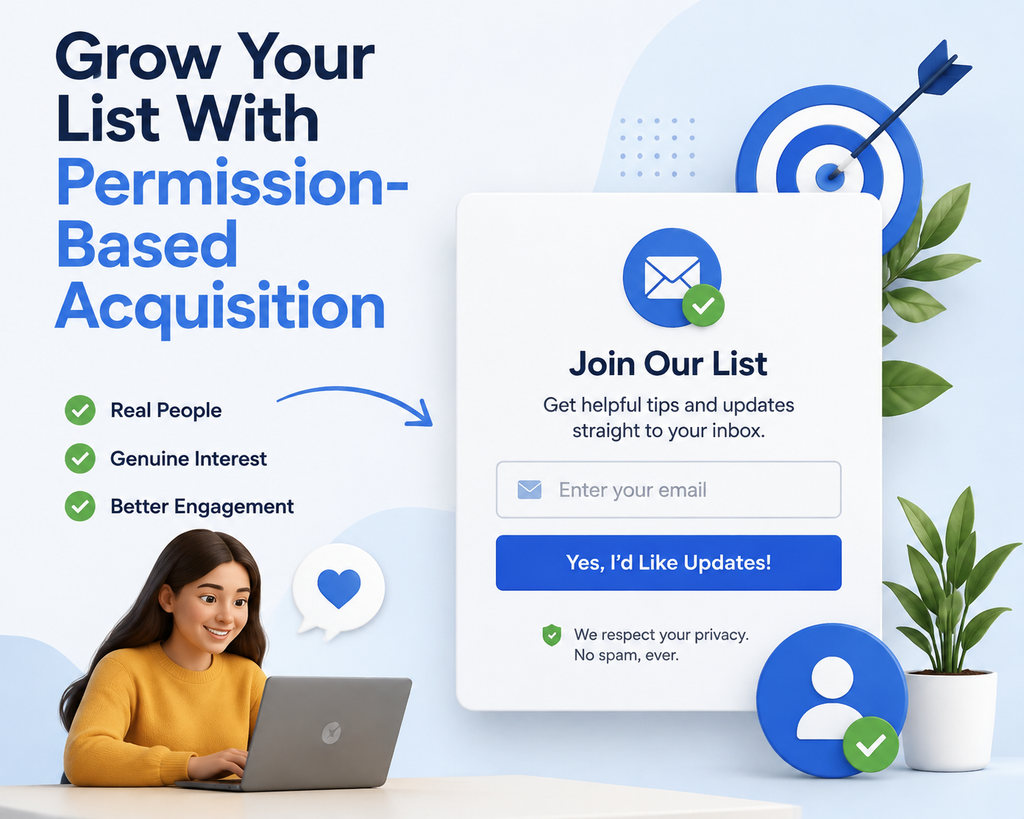
Sustainable growth for your email marketing efforts relies on the foundation of permission-based acquisition. Permission-based acquisition is a core requirement of responsible email marketing for lead generation. By focusing on quality over quantity, you ensure that your audience is genuinely interested in your brand. This approach is essential for generating leads for email marketing that actually convert into long-term customers.
Using Content Marketing to Attract Qualified Subscribers
High-quality content serves as a magnet for your ideal prospects. It can become a powerful acquisition channel within your email marketing for lead generation strategy. When you provide educational blog posts, white papers, or industry reports, you establish authority in your niche. These content marketing leads are often more engaged because they have already interacted with your expertise before joining your list.
Building Partnerships and Targeted Email Outreach Campaigns
Collaborating with complementary businesses allows you to reach new, relevant audiences. Through targeted email outreach, you can connect with individuals who have already expressed interest in similar solutions. Always ensure that your outreach is personalized and relevant, rather than sending unsolicited bulk messages that can damage your sender reputation.
Promoting Signup Opportunities Across Your Digital Channels
Your website, social media profiles, and even your email signature are prime real estate for list growth. You should place clear calls to action where your audience naturally spends their time. Consistent promotion across these channels helps maintain a steady flow of new subscribers without relying on paid lists. This consistent approach provides a strong foundation for email marketing for lead generation.
Following United States Email Consent Requirements
Operating within the United States requires strict adherence to legal standards regarding digital communication. Building trust starts with transparency about how you will use a subscriber’s data. You must always provide clear value and respect the boundaries of your audience.
Obtaining clear permission and honoring unsubscribe requests
Every subscriber must provide explicit consent before you add them to your database. You should make the signup process transparent by explaining exactly what kind of content they will receive. Furthermore, you must provide an easy way for users to opt out of your communications at any time.
Understanding CAN-SPAM compliance basics
The CAN-SPAM compliance framework sets the standard for commercial email in the United States. You must include a valid physical mailing address in your emails and ensure your subject lines accurately reflect the content inside. It is vital to review these legal obligations regularly to ensure your specific business practices remain fully compliant.
| Acquisition Method | Primary Benefit | Compliance Level |
|---|---|---|
| Content Marketing | High Lead Quality | High |
| Strategic Partnerships | Expanded Reach | High |
| Targeted Outreach | Direct Engagement | Medium |
| Purchased Lists | Immediate Volume | Low/Risk |
Use Email List Segmentation to Improve Lead Quality
You can significantly boost your lead quality by implementing a strategic approach to email list segmentation. Segmentation makes email marketing for lead generation more relevant to each subscriber. Instead of sending generic blasts to your entire database, you should group contacts based on specific characteristics that define their unique needs. This targeted method ensures that your communication remains relevant and valuable to every recipient.
Segmenting Contacts by Demographics and Firmographics
Start by organizing your audience using basic data points. For B2C businesses, demographics like age, gender, and geographic location help tailor your messaging. If you operate in the B2B space, firmographics such as company size, industry, and job title are essential for success.
By using these categories, you can craft segmented email campaigns that speak directly to the professional challenges or personal interests of your subscribers. This foundational step prevents your brand from appearing out of touch with your audience.
Segmenting by Behavior, Interest, and Buying Intent
Beyond static data, you should leverage behavioral segmentation to understand what your leads actually want. This involves tracking which links they click, which products they view, and how often they interact with your content. By identifying high-intent signals, you can prioritize leads that are ready to make a purchase.
This approach allows you to move away from guesswork and toward data-driven marketing. Data-driven decisions can significantly improve your email marketing for lead generation performance. When you understand a lead’s specific interests, you can deliver content that solves their immediate problems. Understanding these interests allows email marketing for lead generation campaigns to become more personalized.
Creating Separate Paths for New, Engaged, and Inactive Leads
Managing the lifecycle of your subscribers requires distinct communication paths. New leads need a warm welcome and educational content, while engaged subscribers might be ready for product demos or case studies. Meanwhile, inactive leads require a different strategy to re-engage them before they churn.
Using website activity and email engagement data
Your CRM should track how users interact with your site and your emails. If a lead visits your pricing page multiple times, they are showing high intent. You can use this data to trigger specific follow-up messages that address their potential hesitation.
Updating segments automatically as behavior changes
Manual list management is inefficient and prone to errors. Modern platforms allow you to set up automated rules that move contacts between segments based on their latest actions. This ensures your messaging always reflects the current status of the lead.
| Segment Type | Data Source | Primary Goal |
|---|---|---|
| Demographic | Signup Forms | Relevance |
| Behavioral | Website Tracking | Intent Identification |
| Engagement | Email Metrics | Retention |
Personalizing Content Without Overstepping Privacy Boundaries
While email personalization is a powerful tool, you must always respect user privacy. Be transparent about the data you collect and how you intend to use it. Always provide clear opt-out options to maintain trust with your audience.
Focus on proportionate personalization that adds value without feeling intrusive. By handling sensitive information with care and following best practices, you build a sustainable relationship with your leads that lasts for years. Trust and transparency should remain central to your email marketing for lead generation strategy.
Write and Design Lead-Nurturing Email Campaigns
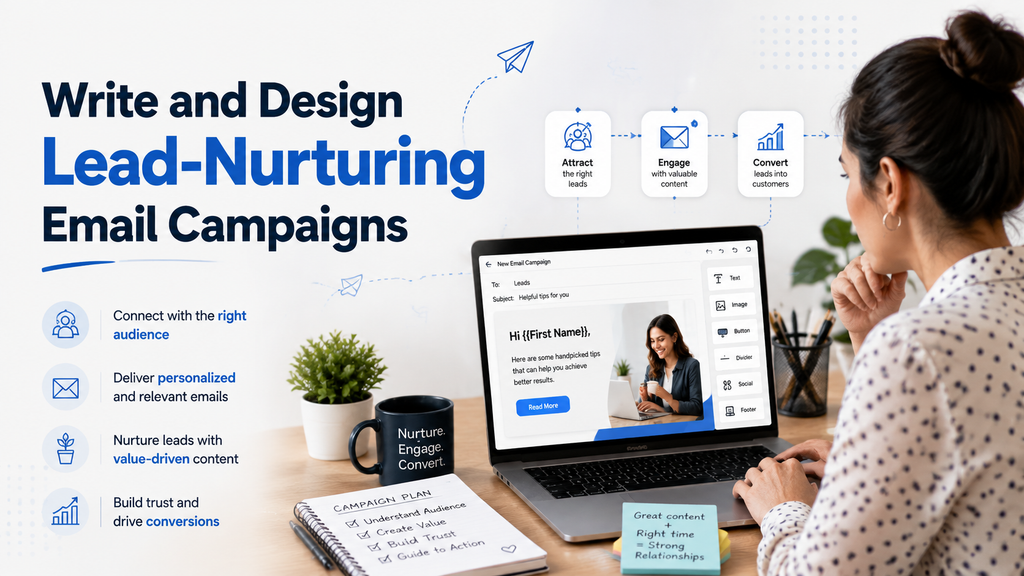
Effective lead nurturing emails transform casual subscribers into loyal, long-term customers. This is one of the primary objectives of email marketing for lead generation. By providing consistent value, you guide prospects through their decision-making process without applying unnecessary pressure. This approach to email marketing for lead generation ensures that your brand remains a helpful resource rather than just another inbox distraction.
Planning a Welcome Sequence for New Subscribers
Your welcome email sequence serves as the first impression of your brand. It also provides an important starting point for email marketing for lead generation. It should immediately deliver the lead magnet promised during signup while setting clear expectations for future communication. Use this initial touchpoint to introduce your company values and explain how you will help solve the subscriber’s specific problems.
Structuring Educational Emails That Build Trust
Once the welcome phase concludes, shift your focus toward providing ongoing value. By utilizing email list segmentation, you can ensure that the content sent to each subscriber aligns with their specific interests and questions. This targeted approach demonstrates that you understand their unique challenges and are committed to their success.
Structure your educational content to address common pain points step-by-step. Use a mix of case studies, how-to guides, and industry insights to establish your authority. When you prioritize education over immediate sales, you naturally build the trust required for long-term conversion.
Writing Subject Lines That Set Accurate Expectations
Your subject line is the gatekeeper of your content. It must be honest and descriptive to ensure that subscribers know exactly what to expect when they open your message. Avoid clickbait tactics, as these can damage your sender reputation and lead to higher unsubscribe rates.
Creating Clear, Persuasive Calls to Action
Every message you send should have a specific purpose. Strong email calls to action guide your reader toward the next logical step in their journey.
Using one primary action per email
Focusing on a single goal prevents decision fatigue. When you provide too many options, subscribers often choose to do nothing at all. Keep your primary button or link prominent and easy to find.
Matching calls to action with buyer readiness
Tailor your requests based on where the lead is in the funnel. A new subscriber might only be ready for a blog post, while a highly engaged lead may be prepared for a product demo. Aligning your CTA with their current intent increases the likelihood of a positive response.
Designing Accessible, Mobile-Friendly Emails
Most of your audience will read your emails on a smartphone. Ensure your design is responsive, using large fonts and single-column layouts that look great on small screens. Accessibility is also vital; use high-contrast colors and descriptive alt text for all images to ensure every subscriber can engage with your content.
Balancing Automation With Relevant Human Communication
While automation tools are essential for scaling your efforts, they should never feel robotic. Inject your brand voice into every template to maintain a personal connection. Occasionally, send a manual, text-only email from a real person at your company to invite feedback or answer questions directly. This balance keeps your communication feeling authentic and approachable. Maintaining this balance can strengthen email marketing for lead generation without making your messages feel overly promotional.
Automate Follow-Up and Convert Leads Into Customers
You can significantly boost your conversion rates by moving away from manual outreach toward intelligent, automated workflows. By implementing targeted email outreach, you ensure that every communication feels personal and timely. This shift allows your team to focus on high-value tasks while the system handles routine engagement.
Mapping the Lead Nurturing Journey
Successful marketing automation begins with a clear map of your customer’s path. Automation allows email marketing for lead generation to operate consistently as your audience grows. You must identify the specific stages a lead moves through, from initial awareness to final purchase. By visualizing this journey, you can create content that addresses the unique needs of a prospect at every step.
Setting Triggers, Delays, and Exit Conditions
Effective lead nurturing automation relies on precise timing to maintain engagement without becoming intrusive. This timing is essential for keeping email marketing for lead generation relevant throughout the customer journey. Triggers act as the starting point for a sequence, while delays ensure that messages arrive at natural intervals. You should also define exit conditions to stop a sequence immediately once a user takes the desired action.
These safeguards prevent your brand from sending repetitive or irrelevant content. When a lead converts, they should be moved to a new, more relevant workflow. This keeps your communication fresh and highly respectful of the subscriber’s time.
Creating Behavior-Based Follow-Up Messages
A behavior-based email strategy allows you to react to what your users actually do on your site. By tracking specific actions, you can deliver content that feels like a natural continuation of their experience.
Responding to downloads, clicks, and page visits
When a visitor downloads a whitepaper or clicks a specific link, your system should trigger an immediate, relevant follow-up. For example, if a user visits your pricing page multiple times, you might send a case study or a limited-time offer. This level of responsiveness builds trust and demonstrates that you understand their current interests.
Routing sales-ready leads to the right team
Not every lead is ready to buy immediately, but some show clear signs of intent. When a prospect interacts with high-value pages, your automation should automatically notify your sales department. This ensures that your team reaches out to the most qualified prospects while they are still actively engaged.
Using Lead Scoring to Prioritize High-Intent Prospects
Lead scoring is a powerful method for ranking your contacts based on their engagement levels. Using lead scoring can make email marketing for lead generation more focused on high-intent prospects. You assign points for actions like opening emails, visiting your website, or filling out forms. This helps your team focus their energy on the leads most likely to convert into paying customers.
| Action Type | Engagement Level | Priority Score |
|---|---|---|
| Email Open | Low | 5 Points |
| Link Click | Medium | 15 Points |
| Resource Download | High | 30 Points |
| Pricing Page Visit | Very High | 50 Points |
Reactivating Unengaged Subscribers Before Removing Them
Over time, some subscribers may stop interacting with your content. Before you remove them from your list, try a targeted reactivation campaign to see if they are still interested. A simple, friendly check-in can often bring valuable leads back into the fold.
“The goal is not to have the largest list, but to have the most engaged list. Quality always beats quantity when it comes to long-term growth.”
If they remain unresponsive after several attempts, it is best to remove them to protect your sender reputation. This keeps your database clean and ensures your metrics reflect a truly interested audience.
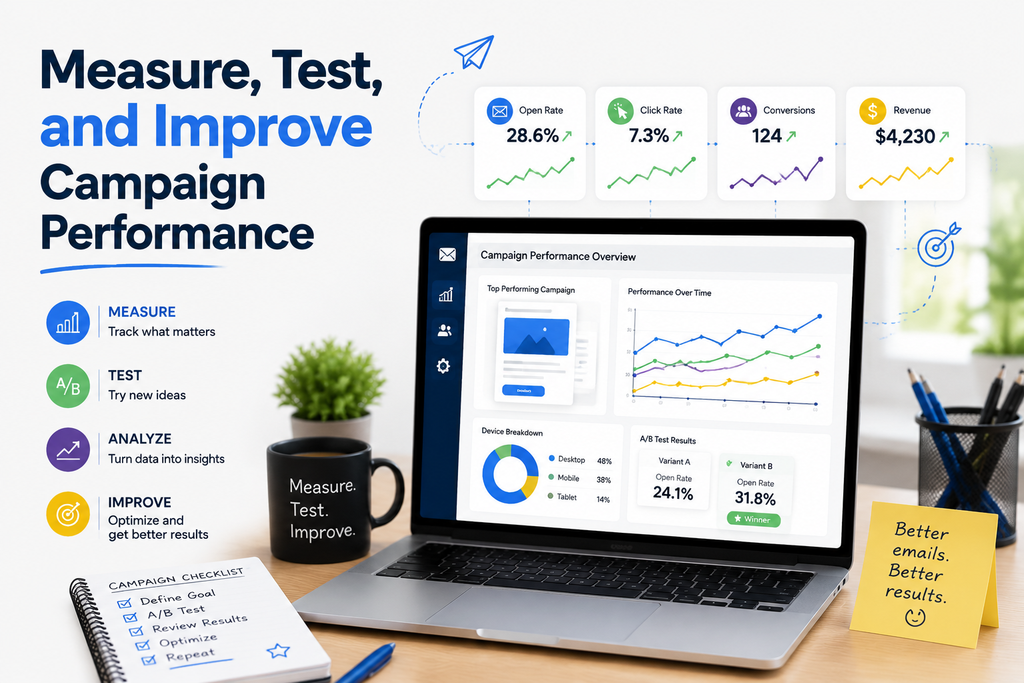
Measure, Test, and Improve Campaign Performance
Transforming raw numbers into actionable insights is the secret to scaling your lead generation efforts. By consistently reviewing your performance, you ensure that your targeted email outreach remains effective and relevant to your audience.
Tracking the Metrics That Matter for Lead Generation
Delivery rate, open rate, click-through rate, and conversion rate
These core email marketing metrics provide a snapshot of your campaign health. A high delivery rate confirms your emails reach the inbox, while your open rate indicates how well your subject lines capture attention. Your click-through rate measures engagement, and the conversion rate reveals how many recipients actually completed your desired action.
Unsubscribe rate, spam complaints, and list growth
Monitoring negative signals is just as important as tracking positive engagement. A spike in unsubscribes or spam complaints often signals that your content is not meeting subscriber expectations. Consistent list growth, however, proves that your lead magnets and signup forms are successfully attracting the right people.
Measuring Leads From Signup to Revenue
True conversion tracking goes beyond simple clicks; it connects your email activity to actual business revenue. This revenue-focused approach helps businesses evaluate the real value of email marketing for lead generation. By using email list segmentation, you can identify which audience groups are most likely to purchase your products. This allows you to focus your resources on the segments that provide the highest return on investment.
| Metric | Goal | Action |
|---|---|---|
| Open Rate | 20% – 30% | Refine subject lines |
| Click-Through Rate | 2% – 5% | Improve CTA placement |
| Conversion Rate | 1% – 3% | Optimize landing page |
| Bounce Rate | Below 2% | Clean your email list |
Running Meaningful A/B Tests
Testing subject lines, offers, send times, and calls to action
A/B testing allows you to make data-backed decisions rather than relying on guesswork. You should test one variable at a time to isolate what truly drives results. For example, changing your call to action button color or text can significantly impact your final conversion numbers.
Using a large enough sample to make informed decisions
Statistical significance is vital for reliable results. If your sample size is too small, your findings may be due to chance rather than actual preference. Always wait until enough subscribers have interacted with your test before declaring a winner.
“Data is the bridge between where you are and where you want to be. Without it, you are just guessing.”
Improving Deliverability and Sender Reputation
Maintaining list hygiene and removing invalid addresses
High email deliverability depends on a clean list. Regularly removing inactive or invalid email addresses prevents bounces and protects your sender reputation. This practice ensures that your messages continue to land in the primary inbox rather than the spam folder.
Authenticating your domain with SPF, DKIM, and DMARC
Technical authentication is a non-negotiable step for modern email marketers. By setting up SPF, DKIM, and DMARC records, you prove to internet service providers that you are a legitimate sender. This security layer is essential for maintaining trust and high inbox placement rates.
Turning Campaign Data Into Practical Next Steps
Once you have gathered your data, the final step is to implement changes. Use your findings to refine your content strategy, adjust your automation triggers, and improve your overall lead nurturing process. Continuous improvement ensures your email program grows alongside your business. Ongoing refinement is an important part of successful email marketing for lead generation.
Optimize Your Email Strategy for Growth
Turn campaign data into measurable growth. Refine your segmentation, automation, and conversion strategy to attract better leads and generate more revenue from every subscriber.
Conclusion
Mastering email marketing for lead generation requires a commitment to consistency and clear objectives. You now possess the framework to transform casual visitors into loyal customers through intentional planning and value-driven communication.
Your success depends on your ability to refine your lead generation strategy over time. Start by launching a manageable campaign that addresses a specific customer need. Use the data you collect to improve your messaging and target your audience with precision.
Focus on attracting qualified leads by providing genuine value at every touchpoint. When you prioritize helpful content and respectful engagement, you build trust that lasts. This foundation allows you to scale your efforts while maintaining high standards for your brand.
Continuous email campaign optimization remains the key to long-term digital growth. Regular testing and refinement can help your email marketing for lead generation strategy deliver increasingly better results.
Regular optimization can help your email marketing for lead generation strategy produce stronger results over time. Review your metrics regularly to understand what resonates with your subscribers. Adjust your tactics based on real behavior to ensure your outreach stays relevant and effective.
You are ready to take these steps and grow your business online. Implement these practices today to see how a structured approach turns your email list into a powerful engine for revenue.
FAQs
What is the primary difference between standard newsletters and email marketing for lead generation?
While traditional newsletters focus on general brand awareness or updates, email marketing for lead generation is a targeted strategy designed to identify and nurture specific prospects. Your goal is to move a subscriber from the initial awareness stage through a structured sales funnel by providing high-value content, such as Salesforce industry reports or HubSpot templates, that eventually triggers a conversion or purchase decision.
How can I ensure my targeted email outreach doesn’t get flagged as spam?
Successful targeted email outreach relies on relevance, personalization, and permission. By researching your prospects through platforms like LinkedIn Sales Navigator and ensuring your offer solves a specific pain point, you provide value rather than noise. Furthermore, staying compliant with CAN-SPAM regulations, such as including a clear unsubscribe link and your physical business address, is essential for maintaining your sender reputation and ensuring your emails reach the inbox.
Why is email list segmentation considered the “secret sauce” of lead quality?
Email list segmentation allows you to divide your audience into specific groups based on their behavior, demographics, or buying intent. Instead of sending a generic message to your entire list, you can use Mailchimp or ActiveCampaign to deliver content that matches where a lead is in their journey. For example, a “new lead” might receive educational content, while an “engaged lead” who has clicked on your pricing page might receive a direct consultation offer.
What are the best tools for generating leads for email marketing?
Generating leads for email marketing effectively requires a combination of high-value lead magnets and optimized signup experiences. You can use Canva to design professional checklists or guides, and tools like OptinMonster or Unbounce to create high-converting landing pages and popups. The key is to offer a “quick win” that solves a problem for your visitor in exchange for their contact information.
How many fields should I include in my lead generation forms?
You should strive for a balance between lead volume and lead quality. Shorter forms with only an email address typically result in higher signup rates, but longer forms help you qualify prospects upfront. A professional approach often involves using progressive profiling, a feature found in platforms like Marketo which asks for more detailed information, such as job title or company size, only after the subscriber has interacted with your brand multiple times.
How do I measure the actual ROI of my lead generation campaigns?
Beyond simple metrics like open and click-through rates, you must track conversion rates and Customer Acquisition Cost (CAC). These metrics provide a clearer picture of the financial impact of email marketing for lead generation. By integrating your email platform with a CRM like Pipedrive, you can see exactly which targeted email outreach campaigns resulted in closed deals. This data allows you to see the full journey from the initial lead capture to the final revenue generated, helping you refine your strategy over time.
1 thought on “Email Marketing for Lead Generation: A Complete Beginner’s Guide”