
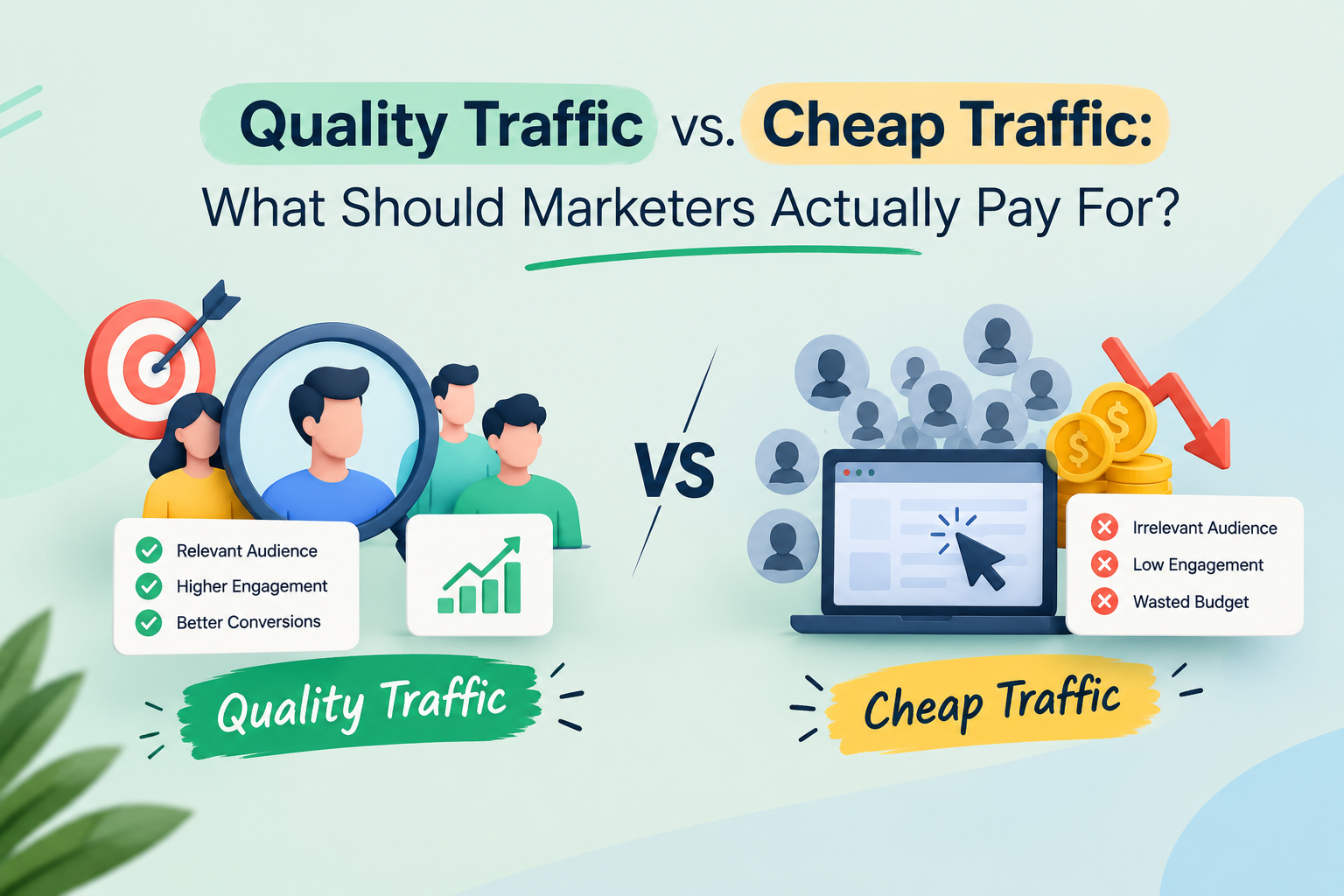
Have you ever wondered if your marketing budget is fueling real growth or simply buying empty clicks? Many businesses fall into the trap of prioritizing volume over substance, often chasing the lowest cost per visitor. However, not all digital visitors are created equal.
Understanding the true value of quality traffic is essential for any brand aiming to scale. While inexpensive clicks might look impressive on a spreadsheet, they rarely translate into meaningful sales or long-term loyalty. True success depends on attracting users who are genuinely interested in your offerings.
In this guide, we will explore how to evaluate your acquisition channels effectively. You will learn how to compare the economics of different sources and determine which investments drive the best return. By focusing on traffic quality, you can shift your strategy from chasing numbers to building a sustainable, high-converting customer base.
Key Takeaways
- Distinguish between high-volume clicks and visitors who drive actual revenue.
- Learn why low-cost acquisition often leads to poor conversion rates.
- Discover methods to calculate the true ROI of your marketing spend.
- Understand how to prioritize sources that align with your business goals.
- Master the art of balancing budget constraints with long-term growth.
Turn Traffic Into Real Growth
Stop wasting budget on empty clicks. Discover how to identify high-quality visitors, improve conversions, and invest confidently in channels that deliver measurable business results.
Why Quality Traffic Matters More Than Cheap Clicks
Focusing on raw visitor counts is a common trap that drains marketing budgets without delivering growth. While seeing thousands of hits on your dashboard feels rewarding, it rarely translates into actual business success. You need quality traffic that aligns with your specific goals to see a real return on your investment.
Traffic volume does not equal marketing value
High visitor numbers often mask a lack of genuine interest in your products or services. If your site attracts people who have no intention of buying, your conversion rates will inevitably suffer. Marketing value is found in the relevance of the visitor, not the sheer size of the audience.
Vanity metrics can be misleading when you evaluate campaign performance. A massive influx of uninterested users might look good on a report, but it does nothing to move the needle on your revenue. True success requires attracting individuals who are actively looking for solutions you provide.
How visitor intent affects conversions and revenue
Visitor intent acts as the bridge between a simple click and a completed sale. When a user arrives at your site with a clear problem to solve, they are far more likely to engage with your content. This alignment between user needs and your offerings is the hallmark of quality traffic.
High-intent visitors spend more time on your pages and interact with your calls to action. They are not just browsing; they are evaluating your brand as a potential partner or provider. By prioritizing these users, you create a direct path to higher conversion rates and increased long-term revenue.
The hidden costs of low quality traffic
Relying on low quality traffic creates significant financial and operational burdens for your business. You end up paying for clicks that never convert, which effectively wastes your hard-earned advertising budget. This inefficiency forces you to spend more just to maintain a baseline level of performance.
Beyond the direct ad spend, poor traffic distorts your analytics and confuses your data-driven decisions. Your sales team also loses valuable time chasing leads that have no real interest in your services. Ultimately, focusing on cheap clicks creates a cycle of wasted resources that prevents you from scaling effectively.
What Defines Quality Traffic?
Understanding what constitutes high quality traffic is the first step toward sustainable growth. You need to look past the sheer volume of visitors to see who is actually interacting with your brand. True value lies in the alignment between your marketing efforts and the specific needs of your ideal customer profile.
Relevant visitors who match your target audience
The most valuable visitors are those who arrive at your site with a genuine interest in your products or services. When your content and ads reach people who are already searching for solutions you provide, you achieve a higher level of relevance. This alignment ensures that your marketing budget is spent on individuals who are likely to become long-term customers.
Engaged sessions, meaningful actions, and purchase intent
Beyond simple relevance, you must track how visitors behave once they land on your pages. High quality web traffic is characterized by deep engagement, such as reading multiple articles, watching product videos, or signing up for newsletters. These actions serve as strong indicators that a visitor is moving through your sales funnel with clear intent.
High quality web traffic versus vanity metrics
Many marketers fall into the trap of prioritizing vanity metrics like raw page views or total session counts. While these numbers might look impressive on a report, they often fail to reflect actual business health. Focusing on high quality traffic means prioritizing conversion-ready behavior over fleeting, low-value clicks that do not contribute to your revenue goals.
Behavioral signals that indicate genuine interest
Genuine interest is often revealed through specific, measurable actions. Look for visitors who spend significant time on your site, interact with interactive elements, or return to your pages multiple times. These behavioral signals suggest that your audience finds real value in your offerings and is building a relationship with your brand.
Warning signs of automated, incentivized, or irrelevant visits
You should remain vigilant against traffic that lacks human intent or genuine interest. High bounce rates, extremely short session durations, and traffic from suspicious geographic locations are common red flags. If you notice a sudden spike in visitors who perform no meaningful actions, you may be dealing with automated bots or incentivized clicks that provide no real value to your business.
Quality Traffic vs. Cheap Traffic: Comparing the Real Economics
Evaluating the true cost of your marketing efforts requires looking far beyond the initial price of a click. While low-cost clicks might seem attractive on a spreadsheet, they often fail to deliver the traffic quality necessary to sustain a profitable business. You must analyze the entire funnel to understand the actual financial impact of your advertising spend.
Cost per click compared with cost per qualified visitor
The price you pay for a click is merely the entry fee, not the total cost of acquisition. A cheap click that does not convert is significantly more expensive than a premium click that leads to a high-value sale. You should prioritize the cost per qualified visitor to ensure your budget supports meaningful engagement.
| Metric | Cheap Traffic Source | Premium Traffic Source |
|---|---|---|
| Cost Per Click | $0.10 | $2.50 |
| Conversion Rate | 0.5% | 5.0% |
| Cost Per Lead | $20.00 | $50.00 |
| Lead Quality | Low | High |
Why low acquisition prices can produce negative ROI
Low acquisition prices often conceal poor conversion rates and weak customer intent. When you purchase bottom-tier traffic, you frequently pay for bots or disinterested users who never intend to purchase. This creates a hidden tax on your resources, as your sales team wastes time chasing leads that will never close.
“Price is what you pay. Value is what you get.”
Calculating cost per lead, customer, and revenue dollar
To master traffic quality, you must track your metrics all the way to the revenue stage. Calculate your cost per lead and cost per customer to see which channels actually drive growth. If a specific source provides cheap clicks but results in a high cost per revenue dollar, it is draining your profitability.
Attribution limits that can make cheap traffic look profitable
Many analytics platforms struggle to track the full journey of a user across multiple devices. This creates attribution gaps where cheap traffic appears to drive conversions simply because it was the last touchpoint. You must look deeper into your data to ensure you are not rewarding low-value sources for results they did not truly earn.
Lifetime customer value as a better purchasing benchmark
The most successful marketers focus on the Lifetime Customer Value (LCV) rather than the immediate cost of a click. High traffic quality brings in users who return, refer others, and increase their spending over time. By optimizing for LCV, you ensure that your marketing budget builds a sustainable asset rather than just a temporary spike in volume.
How to Measure Traffic Quality Before You Scale
Scaling your digital presence requires more than just high visitor numbers; it demands a rigorous approach to evaluate traffic quality. Before you increase your ad spend, you must implement a framework that tracks how users interact with your brand. This ensures that every dollar you invest contributes to long-term growth rather than temporary spikes in vanity metrics.
Measure Traffic That Actually Matters
Go beyond clicks and vanity metrics. Learn practical ways to measure traffic quality, uncover profitable channels, reduce wasted spend, and scale campaigns with confidence.
Core analytics metrics for evaluating visitor quality
To effectively measure traffic, you should focus on metrics that signal genuine interest. Look beyond simple page views and prioritize data points like average session duration, pages per session, and goal completion rates. These indicators help you identify which visitors are actually engaging with your content.
Using conversion paths instead of bounce rate alone
Many marketers rely too heavily on bounce rate, but this metric often hides the truth about user intent. A visitor might bounce because they found the exact answer they needed on your landing page. Instead, analyze the full conversion path to see if users are moving from awareness to consideration and finally to a purchase.
Segmenting traffic by source, audience, device, and location
Not all traffic is created equal, and segmentation is the key to uncovering hidden performance trends. By breaking down your data by source, you can identify which channels bring in high-intent users. Furthermore, analyzing device and location data helps you tailor your messaging to the specific needs of your most profitable customer segments.
Comparing landing-page engagement across acquisition channels
You should compare how different channels perform on the same landing page to see which sources drive the most meaningful interactions. If one channel shows high engagement but low conversion, you may need to adjust your call-to-action. This granular view allows you to optimize your budget toward the channels that provide the highest value.
Setting quality thresholds for leads and sales
Establishing clear quality thresholds is essential for maintaining a healthy sales pipeline. You should define what constitutes a “qualified” lead based on specific actions, such as form submissions or demo requests. By setting these benchmarks, you can quickly cut off low-performing traffic sources that fail to meet your ROI requirements.
| Metric Category | Low Quality Indicator | High Quality Indicator |
|---|---|---|
| Engagement | High bounce rate | High time-on-page |
| Conversion | Zero goal completions | Consistent lead generation |
| Retention | Single-session users | Returning visitor frequency |
| Cost Efficiency | High CPA | High Customer Lifetime Value |
Where to Get Quality Traffic Across Paid and Organic Channels
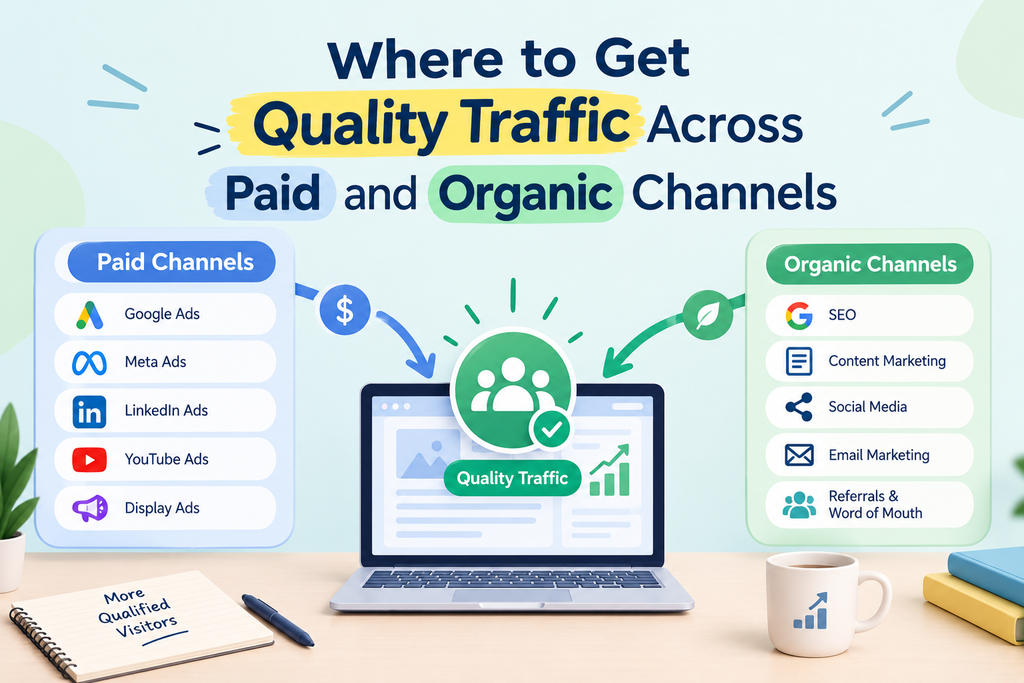
You can effectively get quality traffic by aligning your marketing channels with specific user intent. Success depends on choosing platforms that match your business goals, whether you need immediate sales or long-term brand authority. By diversifying your approach, you ensure that your budget supports sustainable growth rather than just vanity metrics.
Search advertising for high-intent demand
Paid search remains the gold standard for capturing users who are actively looking for solutions. When someone types a specific query into Google, they demonstrate clear intent to solve a problem or make a purchase. Targeting high-intent keywords allows you to place your brand directly in front of these prospects at the exact moment they are ready to convert.
SEO and content that attract qualified prospects over time
Organic search provides a foundation for long-term success by building trust and authority. While it takes time to rank, the visitors you gain through high-quality content are often more engaged than those from paid ads. To consistently get quality traffic, you must focus on solving user pain points through educational blog posts, white papers, and helpful guides.
Social media, email, partnerships, and referral traffic
Beyond search, you can nurture relationships through channels that rely on trust and community. These platforms are excellent for moving prospects through the funnel, especially when they are already familiar with your brand. Consider these strategies to diversify your reach:
- Email marketing: Re-engage past visitors with personalized offers.
- Strategic partnerships: Leverage the credibility of industry peers to reach new, relevant audiences.
- Social media: Use community engagement to build brand loyalty and drive repeat visits.
When targeted display campaigns can deliver strong results
Display advertising often gets a bad reputation, but it works well when you prioritize precision over scale. You can get quality traffic from display networks by focusing on niche websites that your target audience visits frequently. Contextual relevance is the key to ensuring your ads appear in environments that align with your brand values.
How audience targeting and creative quality affect outcomes
The effectiveness of any campaign ultimately rests on how well you define your audience and craft your message. Generic ads rarely convert, regardless of the platform. By using data-driven audience segments and high-quality creative assets, you ensure that your message resonates with the right people at the right time.
Do Native Ads Give Quality Traffic?
Many marketers wonder if native ads truly provide the quality traffic needed for sustainable growth. While these placements blend seamlessly into editorial content, their effectiveness depends heavily on your strategic execution. You must look beyond simple click-through rates to determine if your investment yields real value.
When native advertising can reach relevant audiences
Native ads excel when they align perfectly with the surrounding editorial environment. By placing your content on reputable sites that mirror your target audience’s interests, you reach users in a discovery mindset. Contextual relevance acts as a bridge, turning a casual reader into an engaged prospect.
Evaluating publisher context, targeting, and user intent
Successful campaigns require a deep dive into publisher quality and audience demographics. You should prioritize platforms that offer granular targeting options, such as interest-based or behavioral segments. When your ad content solves a specific problem for the reader, you foster meaningful intent rather than just capturing a fleeting glance.
Common native ad problems that create low quality traffic
Not all native placements are created equal, and some can lead to significant waste. Misleading headlines or “clickbait” styles often attract users who have no genuine interest in your brand. This results in low quality traffic that bounces immediately, inflating your costs without moving the needle on revenue.
Separating discovery traffic from conversion-ready visitors
It is vital to recognize that native ads often function as a top-of-funnel awareness tool. You should not expect every visitor to convert instantly upon their first interaction. Instead, treat these users as prospects who are just beginning their journey, and nurture them through subsequent retargeting efforts.
Metrics to review before increasing native ad spend
Before scaling your budget, analyze engagement metrics that go beyond the initial click. Look at time on site, pages per session, and subsequent conversion rates to identify patterns of low quality traffic. If your data shows high bounce rates and zero engagement, you must refine your targeting or creative approach.
| Metric | High-Quality Indicator | Low-Quality Indicator |
|---|---|---|
| Time on Site | Above 60 seconds | Under 5 seconds |
| Bounce Rate | Below 50% | Above 90% |
| Conversion Path | Multi-page navigation | Immediate exit |
| User Intent | Active research | Accidental click |
How to Buy Quality Traffic Without Paying for Waste
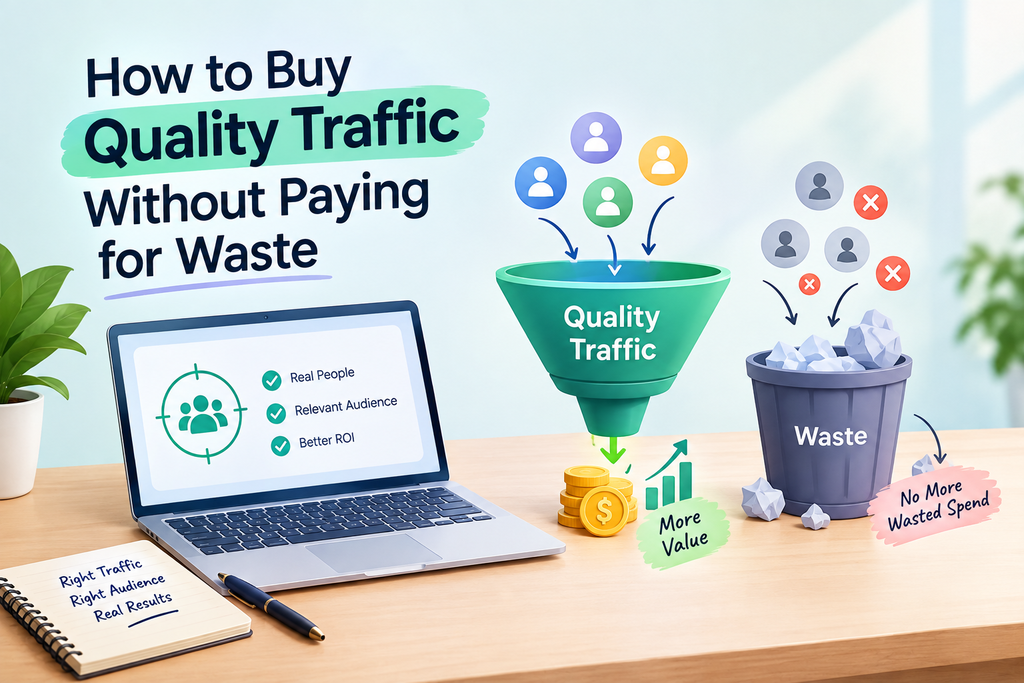
Securing high-value visitors requires a disciplined approach to media buying that prioritizes accountability over sheer volume. When you aim to buy quality traffic, you must move beyond surface-level metrics to ensure your budget reaches real, interested prospects. Establishing strict controls allows you to filter out low-value noise and focus on sustainable growth.
Questions to ask traffic vendors and media partners
Before signing any insertion order, you should demand full transparency regarding how a partner sources their audience. Ask specifically if they use owned-and-operated sites or if they rely on third-party networks to fulfill your campaign requirements. Understanding the origin of your clicks is the first step in maintaining high traffic quality.
Inquire about their fraud detection protocols and how they handle bot traffic. A reputable partner will provide clear documentation on their filtering methods. If a vendor cannot explain their traffic acquisition strategy, you should consider that a significant red flag.
Verifying audience sources, placements, and delivery methods
You must verify that your ads appear in contexts that align with your brand values and target audience. Request a site-level placement report to see exactly where your ads are being served. If you find your content appearing on irrelevant or low-trust domains, you are likely wasting your budget.
Use verification tools to monitor delivery in real-time. These tools help you confirm that your ads are viewable and reaching human users rather than automated scripts. Consistent monitoring ensures that your investment remains focused on legitimate engagement.
Using small tests, conversion tracking, and spending limits
Never commit your entire budget to a new source without running a controlled pilot program. Start with a small, time-bound test to measure how the traffic performs against your specific conversion goals. If the initial data shows poor engagement, you can cut the source before it drains your resources.
Implement robust conversion tracking to see which traffic sources actually drive revenue. By setting strict daily spending limits, you protect your account from unexpected spikes in costs. This cautious approach allows you to scale only the channels that prove their worth.
Contract terms for invalid traffic, refunds, and reporting
Your agreements should include clear clauses regarding invalid traffic and non-human activity. Ensure your contracts specify that you are not responsible for paying for fraudulent clicks or impressions. Demand detailed, granular reporting that allows you to audit the performance of every campaign.
If a partner fails to meet agreed-upon quality standards, the contract must outline a clear refund or credit process. These protections are essential when you buy quality traffic at scale. Without these safeguards, you carry all the risk for poor performance.
Why transparent first-party data matters when you buy quality traffic
First-party data provides the most accurate picture of your audience’s behavior and intent. When you partner with vendors who share transparent data, you can better optimize your campaigns for long-term success. This data allows you to refine your targeting and improve overall traffic quality over time.
| Strategy | Primary Benefit | Risk Mitigation |
|---|---|---|
| Small Pilot Tests | Validates ROI | Limits financial exposure |
| Placement Audits | Ensures brand safety | Prevents low-quality domains |
| Invalid Traffic Clauses | Protects budget | Enables refund requests |
| First-Party Data | Improves targeting | Reduces audience waste |
Building a Traffic Budget Around Business Outcomes
Aligning your marketing budget with business outcomes requires a shift in how you view traffic acquisition. Instead of chasing the lowest cost per click, you should prioritize the total value each visitor brings to your brand. By focusing on outcomes, you ensure that every dollar spent contributes to your bottom line.
Matching traffic investment to funnel stage and campaign goal
Your budget allocation should reflect the specific role each channel plays in your sales funnel. Top-of-funnel campaigns often require broader reach, while bottom-of-funnel efforts demand high intent. Matching your investment to these stages prevents wasted spend on audiences that are not ready to convert.
- Awareness: Focus on reach and engagement metrics.
- Consideration: Prioritize time on site and content interaction.
- Conversion: Target high-intent keywords and retargeting audiences.
Balancing immediate conversions with long-term audience growth
A healthy marketing strategy balances quick wins with sustainable growth. While immediate conversions provide necessary cash flow, investing in long-term audience building creates a compounding effect. You must allocate resources to both direct response and brand-building activities to maintain a competitive edge.
Creating a channel scorecard for traffic quality and ROI
To manage your budget effectively, you need a clear way to compare performance across different sources. A channel scorecard helps you track traffic quality alongside financial metrics. This tool allows you to identify which channels drive the most profitable customers over time.
| Channel | Conversion Rate | Customer Value | ROI Status |
|---|---|---|---|
| Search Ads | High | High | Profitable |
| Social Media | Medium | Medium | Growth |
| Referral | High | High | Optimized |
When cheap quality traffic is realistic—and when it is not
Finding cheap quality traffic is possible when you leverage highly relevant organic content or niche communities. However, you should be wary of low-cost sources that promise high volume without clear targeting. If a price seems too good to be true, it often indicates poor traffic quality that will not lead to meaningful sales.
Reallocating budget from volume sources to profitable sources
Regularly auditing your spending is essential for long-term success. If a high-volume channel fails to deliver conversions, you should shift those funds toward sources with proven performance. Prioritizing cheap quality traffic that actually converts is far more effective than paying for vanity metrics that do not support your business goals.
Build a Smarter Traffic Strategy
Learn which acquisition channels truly drive revenue and how to optimize your marketing spend around qualified visitors, stronger conversions, customer value, and sustainable growth.
Conclusion
Your marketing budget serves as the engine for your business expansion. You should prioritize qualified attention and meaningful engagement over the lure of inexpensive clicks. True success comes when you focus on profitable customer actions that drive your bottom line.
Measuring quality traffic requires a deep look at conversion paths and customer economics. You must use source-level segmentation and transparent vendor reporting to verify your results. These practices ensure that every dollar spent contributes to your long-term goals.
Better traffic decisions lead to higher conversion rates and improved return on investment. You can build sustainable online growth by shifting your strategy toward high-value visitors. Start auditing your current channels today to ensure your resources support your most important business outcomes.
FAQs
What is the primary difference between high quality traffic and cheap clicks?
The distinction lies in measurable business value. While cheap clicks often represent accidental hits, bots, or users with zero intent, high quality traffic consists of visitors who align with your target audience and are likely to convert. When you prioritize traffic quality over raw volume, you ensure your marketing budget is spent on sessions that lead to improved ROI and long-term growth rather than vanity metrics that fail to impact your bottom line.
Why should I focus on quality traffic if my goal is to increase site visibility?
Visibility without engagement is a drain on your resources. Low quality traffic can actually harm your brand by distorting your analytics data, making it difficult to understand what truly resonates with your customers. By focusing on high quality web traffic, you attract visitors who spend more time on your pages and interact with your content, which signals to search engines like Google that your site is a valuable resource, ultimately boosting your organic reach more effectively than a flood of irrelevant visits.
How can I effectively measure traffic to determine if it is valuable?
To accurately measure traffic, you must look beyond the bounce rate. Utilize tools like Google Analytics 4 to track specific conversion paths, lead quality thresholds, and session depth. You should segment your data by source and device to see which channels, such as LinkedIn or specialized industry referrals, deliver users who complete your desired actions. Assessing the cost per qualified lead (CPQL) rather than just the cost per click (CPC) is essential to verifying the true worth of your visitors.
What are the best strategies to get quality traffic for a new campaign?
To get quality traffic, you should prioritize high-intent channels like search engine marketing (SEM) and SEO. By targeting specific long-tail keywords that your ideal customers use during their research phase, you ensure the visitors you attract are already looking for your solution. Additionally, leveraging first-party data through platforms like HubSpot to create lookalike audiences on Meta Ads can help you reach prospects with a proven interest in your niche.
Do native ads give quality traffic compared to search or social ads?
The answer to “do native ads give quality traffic?” depends largely on your targeting and placement strategy. When you use platforms like Taboola or Outbrain, native ads can deliver excellent results for top-of-funnel discovery by placing your content on reputable publisher sites like CNN or Business Insider. However, if not monitored closely, native campaigns can sometimes attract low quality traffic from “click-baity” placements. It is vital to review publisher-level performance to ensure the context matches your brand’s intent.
Is it possible to find cheap quality traffic that actually converts?
Finding cheap quality traffic is challenging but possible through highly specific niche targeting and efficient content distribution. For example, a well-optimized Pinterest campaign or an email partnership with a micro-influencer in your field can yield a low cost-per-acquisition. The key is to ensure that “cheap” refers to the efficiency of the buy, not the standard of the audience. You should always be wary of vendors offering massive volume at prices that seem too good to be true, as these often involve non-human traffic.
What should I look for when I decide to buy quality traffic from a media partner?
Before you buy quality traffic, you must vet the vendor’s transparency and delivery methods. Ask for detailed reporting on where your ads will appear and ensure they have strict protocols to filter out invalid or bot traffic. Requesting a small test budget allows you to evaluate high quality traffic signals before committing to a larger spend. Trustworthy partners will provide clear insights into their audience sources and be willing to align their performance goals with your specific business outcomes, such as sales or verified registrations.
How does focusing on lifetime customer value change how I purchase traffic?
When you use lifetime customer value (LTV) as your benchmark, you realize that paying more for high quality traffic upfront is often the most profitable move. A visitor from a high-intent Amazon search might cost five times more than a random social media click, but if that visitor has a 50% higher retention rate and a larger average order value, the initial investment is justified. Shifting your budget from high-volume, low-intent sources to those that deliver quality traffic ensures your marketing spend fuels sustainable, profitable growth.
1 thought on “Quality Traffic vs. Cheap Traffic: What Should Marketers Actually Pay For?”