
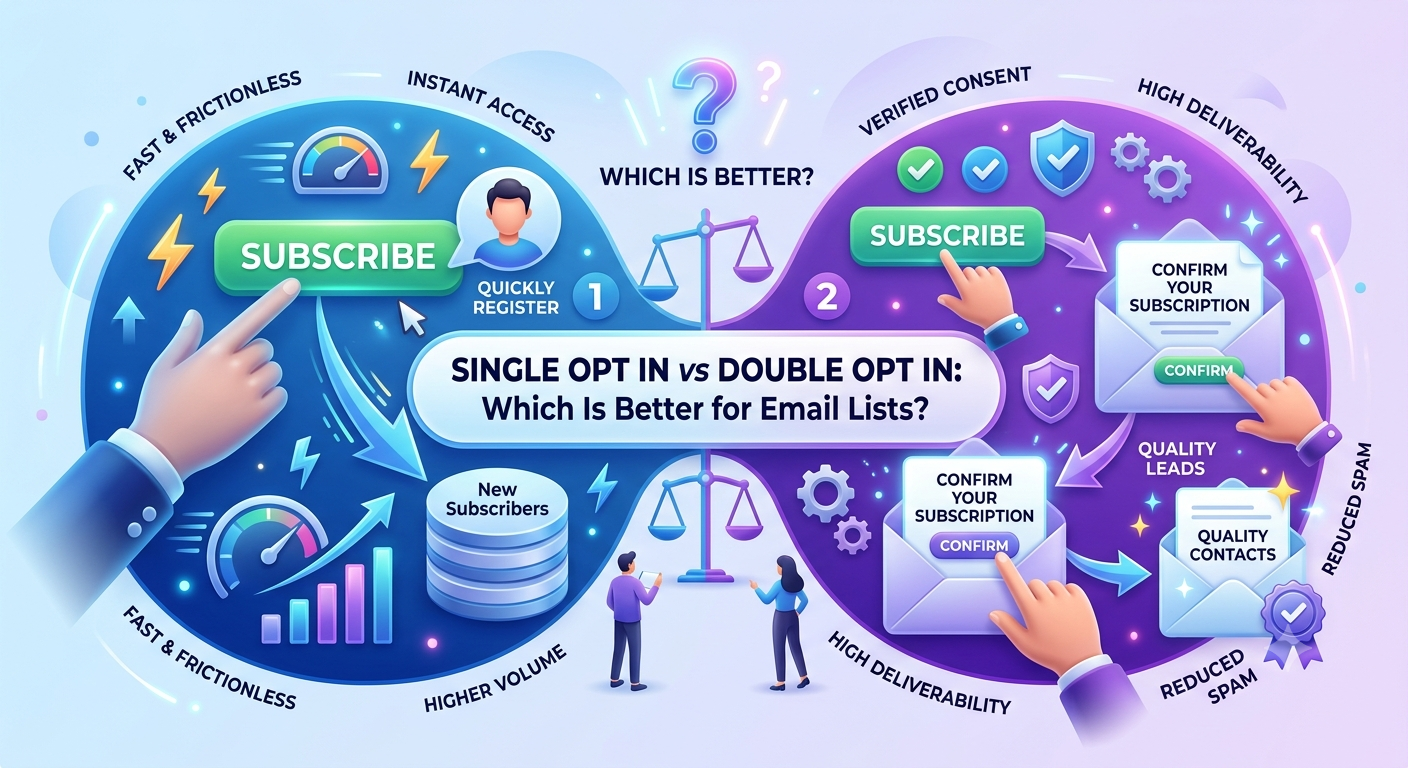
Did you know that nearly 20% of all newly collected email addresses never receive the first email sent to them because of simple typos, fake addresses, or aggressive spam filters? When building an email list for your business, every subscriber represents potential revenue, brand loyalty, and a direct long-term connection. Yet, digital marketers, affiliate creators, e-commerce store owners, and SaaS founders constantly face a pivotal strategic crossroads: should you use a single opt-in mechanism or a double opt-in mechanism to collect subscribers?
The choice between single opt in vs double opt in is not just a technical settings toggle inside your email marketing platform. In fact, comparing single opt in vs double opt in reveals fundamental differences in how audiences interact with your brand from day one. It directly impacts your list growth speed, user experience, overall email deliverability, and ultimate return on investment (ROI). On one hand, single opt in vs double opt in debates center on whether convenience and volume trump strict email validation. On the other hand, understanding single opt in vs double opt in allows marketers to tailor their subscription funnels based on their specific traffic sources and monetization goals.
When driving high-converting traffic, such as targeted buyer traffic from trusted providers like Optinsoload, the way you capture leads becomes critical to your bottom line. Optinsoload helps business owners and affiliate marketers channel real, pre-vetted human visitors straight to their landing pages. However, whether those visitors convert into permanent email subscribers depends heavily on how you resolve the single opt in vs double opt in question for your sales funnel. In this comprehensive guide, we will break down every single nuance of single opt in vs double opt in so you can make the absolute best choice for your email marketing success without having to search anywhere else.
Key Takeaways
- Speed vs. Quality Balance: Single opt-in maximizes user growth speed and eliminates signup friction, while double opt-in prioritizes higher list quality, active engagement, and zero initial bounce rates.
- Deliverability Direct Impact: Double opt-in automatically protects your sender reputation from spam bots and bad emails, whereas single opt-in requires proactive list hygiene and verification tools to keep your inbox placement high.
- Legal Compliance Rules: While double opt-in is heavily favored in strict data privacy jurisdictions like Germany, single opt-in remains fully legal across most global regions (including the US, UK, and Canada), provided clear consent and unsubscribe mechanisms are present.
- Conversion Rate Differential: Single opt-in yields up to 20% to 30% higher total subscriber volume because users are added instantly without needing to check their inbox to click a secondary confirmation link.
- Traffic Alignment: High-intent buyer traffic from platforms like Optinsoload performs exceptionally well with optimized single opt-in funnels, provided you use real-time validation and engaging initial welcome emails.
Supercharge Your Funnel with Verified Buyer Traffic
Stop wasting budget on dead clicks. Drive 100% real human visitors directly to your landing pages and scale your email list effortlessly with Optinsoload today.
What Is Single Opt In vs Double Opt In? Understanding the Fundamentals
To make an informed decision for your digital growth strategy, you first need to understand what is single opt in vs double opt in from both a technical architecture and a subscriber-journey perspective. Both methods aim to collect consent from online visitors, but they differ significantly in the number of steps required before a contact becomes an official active subscriber on your mailing list.
What Is Single Opt-In (SOI)?
Single opt-in, often abbreviated as SOI, is a seamless, one-step subscription process. A user visits your landing page, lead capture form, or website pop-up, enters their email address (and optionally their name or phone number), and clicks the submit button. The moment they press submit, they are immediately added to your active subscriber database and receive instant access to your initial email sequence or lead magnet.
In a single opt in vs double opt in comparison, the single opt-in model represents the path of least resistance. When weighing single opt in vs double opt in for immediate campaign execution, single opt-in delivers unmatched initial speed. There are no secondary verification steps required from the subscriber. Once the form is submitted, the subscriber journey begins immediately.
[ Visitor enters email ] ──> [ Clicks Submit ] ──> [ Added to Active List Instantly ]
The Typical Single Opt-In Flow:
- A prospective lead arrives on your lead capture page (for instance, through a targeted buyer traffic campaign from Optinsoload).
- The user enters their email address into the form fields.
- The user hits “Subscribe” or “Get Instant Access.”
- The user is immediately redirected to a thank-you page or direct download link, and their email address is placed directly onto your main active email list.
What Is Double Opt-In (DOI)?
Double opt-in, abbreviated as DOI, adds a mandatory second confirmation step to the signup flow. When a prospective lead enters their email address into your signup form, they are not immediately added as an active subscriber. Instead, your email service provider (ESP) creates a pending subscription record and automatically sends a confirmation email containing a unique validation link or button.
When comparing single opt in vs double opt in, the user must open their email inbox, locate the confirmation email, and click the confirmation link inside the double opt-in process. Only after clicking this verification link is the user moved from pending status to active subscriber status on your email list.
[ Visitor enters email ] ──> [ Clicks Submit ] ──> [ Receives Confirmation Email ]
                                                             │
[ Added to Active List ] <── [ Clicks Confirmation Link ] <──┘
The Typical Double Opt-In Flow:
- A prospective lead enters their contact details into your signup form.
- The user is redirected to a confirmation reminder page telling them to check their inbox.
- An automated confirmation email (“Please confirm your subscription”) is delivered to the user’s inbox.
- The user opens the email and clicks the confirmation button or link.
- The email software officially activates the lead and triggers the automated welcome series or lead magnet delivery.
Core Differences at a Glance
When evaluating single opt in vs double opt in, comparing their core operational traits helps clarify which mechanism fits your specific business goals:
| Feature / Trait | Single Opt-In (SOI) | Double Opt-In (DOI) |
| Steps Required | 1 step (Immediate form submission) | 2 steps (Form submission + email confirmation link) |
| List Growth Rate | Fast (0% confirmation drop-off) | Moderate to Slow (15% to 35% link drop-off) |
| Lead Quality | Variable (includes typos, bots, and unread emails) | Very High (verified real email inboxes) |
| Initial Friction | Very Low (frictionless signup) | Higher (requires inbox switching and clicking) |
| Spam Complaint Risk | Slightly Higher if unmanaged | Very Low |
| Setup Complexity | Simple & Direct | Requires confirmation page & trigger emails |
| Immediate Offer Delivery | Instant on thank-you page | Delayed until email confirmation |
Understanding single opt in vs double opt in at this foundational level allows you to see why different businesses lean toward different solutions depending on their customer acquisition funnels. Examining single opt in vs double opt in clearly highlights the tradeoff between signup convenience and list verification.
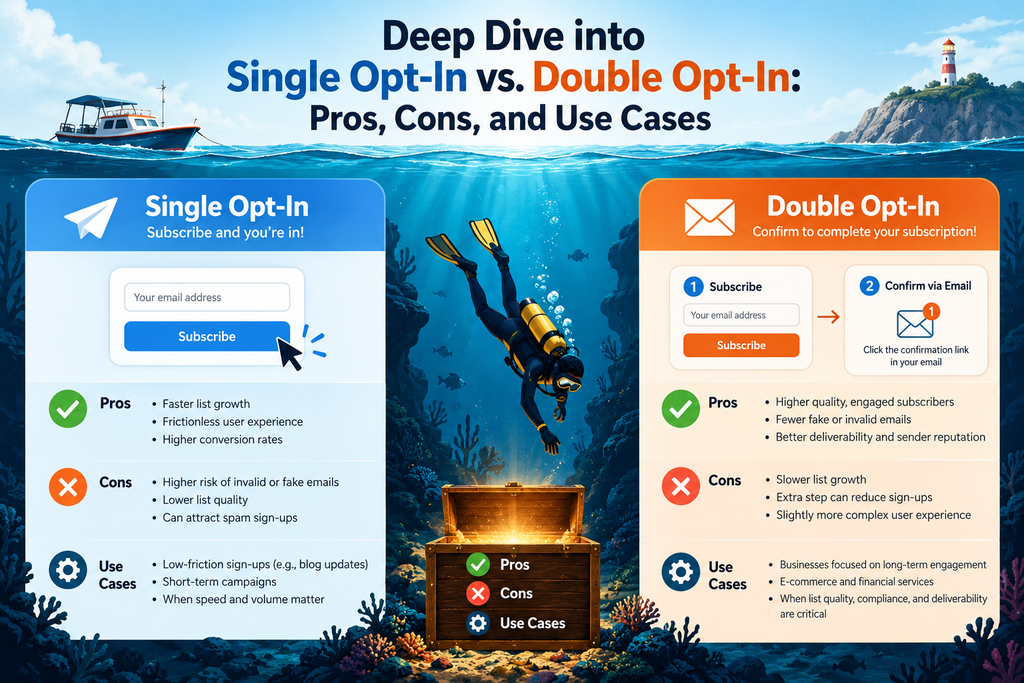
Deep Dive into Single Opt-In (SOI): Pros, Cons, and Use Cases
When deciding between single opt in vs double opt in, single opt-in is widely celebrated for its simplicity and raw conversion capacity. However, like any marketing strategy, it comes with distinct advantages and potential vulnerabilities that require careful management.
The Benefits of Single Opt-In
1. Maximum Conversion Rates and Rapid List Growth
The primary reason marketers favor single opt-in when choosing single opt in vs double opt in is the elimination of conversion friction. In any single opt in vs double opt in evaluation, reducing friction is the number one driver of list volume. Every additional step in a conversion funnel creates an opportunity for potential leads to lose interest, get distracted, or forget what they were doing, which is an important factor when comparing single opt in vs double opt in.
With single opt-in, every user who fills out your form instantly becomes part of your audience. Studies routinely show that single opt-in forms capture 20% to 30% more total subscribers compared to double opt-in forms. If your priority is scaling your distribution channel as quickly as possible, single opt-in provides the fastest path forward.
2. Immediate Gratification for the Subscriber
Modern web users value speed and instant gratification. When someone opts in to receive a free e-book, a discount code, a cheat sheet, or video training, they expect immediate access. Single opt-in allows you to redirect users straight to the download page or present the offer on the thank-you page without making them wait for an email to arrive.
3. Synergy with Paid Traffic and Solo Ads
When you are spending money on paid advertising campaigns, such as buying targeted buyer traffic through Optinsoload, maximizing your cost-per-lead efficiency is critical. Optinsoload delivers real, human buyer traffic to your landing page, where conversion rates can reach 50% to 85% with an optimized funnel. Using a single opt-in approach ensures that every visitor who wants your information enters your funnel immediately, giving you maximum value for every click you purchase.
The Drawbacks of Single Opt-In
1. Exposure to Typos and Invalid Email Addresses
Because single opt-in accepts whatever address is entered into the input box, it is susceptible to human typing errors (such as entering “gnail.com” instead of “gmail.com”). These invalid emails result in hard bounces, which can hurt your overall email deliverability over time if left unmonitored.
2. Susceptibility to Bot Signups and Spam Traps
Automated spam bots frequently fill out unprotected web forms across the internet. In a single opt in vs double opt in dynamic, single opt-in forms without spam prevention (like reCAPTCHA or real-time API validation) can accumulate fake addresses or dangerous spam traps that harm your domain authority.
3. Potentially Lower Initial Open Rates
Subscribers who sign up via single opt-in did not have to prove active inbox engagement right away. As a result, list-wide open rates and click-through rates might appear lower on paper compared to hyper-filtered double opt-in lists, even though the total absolute number of engaged users may still be higher.
Best Use Cases for Single Opt-In
- Paid Traffic Campaigns: When driving paid visitors from networks like Optinsoload, single opt-in maximizes immediate lead capture efficiency.
- E-Commerce Coupon Delivery: Instant coupon codes presented directly on the thank-you page drive higher immediate sales.
- Content Upgrades and Webinar Registrations: Where immediate access and low friction are crucial for attendee retention.
Deep Dive into Double Opt In (DOI): Pros, Cons, and Use Cases
To evaluate single opt in vs double opt in fully, we must analyze the double opt-in approach with equal depth. Double opt-in is designed as a quality-first approach that prioritizes list health above sheer volume.
Benefits of Double Opt In
1. Superior List Quality and Intent
One of the most prominent benefits of double opt in is that it guarantees every address on your active mailing list belongs to a real person who has active access to that inbox. By forcing subscribers to open their inbox and click a confirmation link, you filter out passive users, fake emails, and accidental submissions. Anyone who completes the double opt-in process demonstrates a high level of genuine intent and interest in your message.
2. Enhanced Deliverability and Lower Bounce Rates
Major mailbox providers such as Gmail, Yahoo, and Outlook monitor how recipients interact with your incoming emails. High hard bounce rates and marked spam complaints harm your IP and domain sender reputation. Because double opt-in eliminates invalid email addresses at the door, your bounce rate remains exceptionally low. This keeps your domain in good standing with inbox providers, helping your emails land in the primary inbox rather than the promotions or spam folders.
3. Built-In Defense Against Bots and Spam Traps
Because a spam bot cannot log into an external email account to click a unique verification link, double opt-in naturally prevents bad automated leads from entering your database. This protects your email service provider account from being flagged or suspended due to unexpected bot attacks.
4. Clear Proof of Consent for Legal Regulations
In regions with strict data privacy legislation, having explicit double confirmation provides clear, time-stamped proof that the recipient requested your communications. This paper trail can be invaluable during compliance audits.
The Drawbacks of Double Opt-In
1. Significant Subscriber Drop-Off
The most significant disadvantage in the single opt in vs double opt in debate is the loss of subscribers between form submission and email confirmation, making signup friction an important factor in choosing the right method.
Industry benchmarks show that anywhere from 15% to 35% of people who fill out a double opt-in form never click the confirmation link. Some users forget, some get distracted, and others find that the confirmation email was diverted to their spam or promotions tab.
2. Delayed Customer Onboarding
If a customer is eager to read your guide or access a time-sensitive promotional code, forcing them to wait for a confirmation email creates unwanted friction and delay. If the confirmation email takes even a few minutes to arrive due to server delays, the customer’s buying impulse may cool down.
3. Increased Funnel Complexity
Setting up an effective double opt-in system requires creating custom confirmation instruction pages, writing compelling confirmation emails, and setting up secondary redirect logic inside your autoresponder software.
Best Use Cases for Double Opt-In
- High-Value Paid Newsletters: Where deliverability and engagement per subscriber directly dictate subscription pricing.
- Strict Legal Compliance Jurisdictions: For businesses targeting specific countries where explicit double opt-in consent is required by local enforcement agencies.
- B2B High-Ticket Consulting: Where list size matters far less than dealing exclusively with vetted decision-makers.
Maximize Your Lead Conversions & ROI
Fuel your single or double opt-in setup with high-converting, pre-filtered buyer clicks designed to dramatically boost your opt-in rates up to 85%. Start scaling today.
Legal Compliance & Privacy Regulations: Where and Is Double Opt In Required?
A major source of confusion when analyzing single opt in vs double opt in is determining legal privacy requirements across international borders. Digital business owners often wonder: is double opt in required by global privacy frameworks, and where is double opt in required specifically when deciding between single opt in vs double opt in?
Is Double Opt In Required by Law?
The short answer is: in most global jurisdictions, double opt-in is not explicitly mandated by statutory law, but it is often highly recommended as a gold standard for proving user consent.
Let’s look at how major global privacy frameworks view the single opt in vs double opt in distinction:
1. GDPR (European Union General Data Protection Regulation)
Under the EU GDPR, organizations must obtain freely given, specific, informed, and unambiguous consent before collecting and processing personal data. GDPR does not explicitly state that you must use double opt-in. Single opt-in is legally permissible under GDPR provided that:
- You clearly explain what emails the subscriber will receive.
- You maintain a record of when and how consent was given.
- You provide an effortless, one-click unsubscribe link in every email.
However, double opt-in provides the ultimate documentation of unambiguous consent because it creates a time-stamped confirmation record tied directly to the owner of the inbox.
2. CAN-SPAM Act (United States)
The United States CAN-SPAM Act is an opt-out regulation rather than a strict opt-in regulation. It does not require double opt-in, nor does it strictly mandate single opt-in before sending commercial messages. Instead, it focuses on requiring truthful header information, clear identification of advertising, valid physical mailing addresses, and honoring opt-out requests within 10 business days.
3. CASL (Canada’s Anti-Spam Legislation)
Canada’s Anti-Spam Legislation requires explicit or implied consent before sending commercial electronic messages. CASL accepts single opt-in as valid explicit consent as long as the signup form contains clear disclosures and opt-in checkboxes that are not pre-ticked.
4. CCPA / CPRA (California Consumer Privacy Act)
California’s privacy legislation focuses primarily on notice, transparency, and the right to opt out of the sale or sharing of personal data. It does not legally require double opt-in for standard email newsletter subscriptions.
Where Is Double Opt In Required?
While global statutory laws leave the door open, local regulatory interpretations and case law in specific countries create scenarios where double opt-in becomes practically essential when evaluating single opt in vs double opt in. When assessing legal compliance in single opt in vs double opt in setups, businesses must look at local regulations.
So, where is double opt in required in practical application?
- Germany (DSGVO & Case Law): German courts have repeatedly ruled that in commercial disputes, the burden of proof rests entirely on the sender to demonstrate that the actual owner of an email address consented to receiving emails. Because a single opt-in form can be filled out by anyone entering someone else’s email address without authorization, German courts routinely reject single opt-in records as sufficient legal proof of consent. Therefore, if you are actively targeting consumers in Germany, double opt-in is considered functionally mandatory by legal experts.
- Austria and Switzerland: Similar to Germany, legal practices and consumer protection agencies in Austria and German-speaking Switzerland place a heavy burden of proof on email senders, making double opt-in the standard operating procedure for local digital marketing.
Outside of these specific European territories, choosing single opt in vs double opt in remains primarily a strategic marketing decision rather than a legal straightjacket.
Single Opt In vs Double Opt In: Detailed Comparison across Critical Metrics
To truly decide between single opt in vs double opt in for your digital marketing campaigns, let us analyze how both options compare across five essential performance metrics that impact your business bottom line.
1. Conversion Rate & List Growth Speed
When evaluating single vs double opt in on conversion rates, single opt-in is the undisputed champion.
When a user submits a single opt-in form, 100% of those form submissions enter your active email list. In contrast, with double opt-in, you inevitably suffer a confirmation loss rate of 15% to 35%.
For instance, if 1,000 interested visitors submit your opt-in form:
- Single Opt-In: You gain 1,000 active subscribers immediately.
- Double Opt-In: Assuming an average 25% drop-off, you end up with only 750 active subscribers.
If you are buying high-quality traffic, such as buyer traffic from Optinsoload, you want to maximize your immediate return on investment. Single opt-in ensures that every dollar spent on attracting clicks translates into the largest possible active email database.
2. Email Deliverability & Sender Reputation
Email deliverability is the measure of how successfully your emails reach the subscriber’s primary inbox rather than bouncing or getting flagged as spam, making it a key consideration in single opt in vs double opt in.
In the single opt in vs double opt in battle for deliverability, each method manages sender reputation differently:
- Double Opt-In: Superior baseline deliverability. Because every email address has verified its existence and owner interest, bounce rates are near zero and spam complaints are extremely low. Mail servers recognize your domain as a high-trust sender.
- Single Opt-In: Requires active monitoring. Because invalid emails and typos can slip through, your bounce rate can rise if you don’t use real-time email verification tools. However, with modern list cleaning routines and proper domain authentication (SPF, DKIM, DMARC), single opt-in deliverability can easily match double opt-in performance.
3. Open Rates & Engagement Levels
When comparing open rates in a single opt in vs double opt in framework, double opt-in lists almost always display higher percentage-based open rates and click-through rates.
This occurs because double opt-in naturally filters out passive subscribers. A list of 1,000 double opt-in subscribers might yield a 40% open rate (400 opens). Meanwhile, a single opt-in list generated from the same initial audience might have 1,300 subscribers yielding a 32% open rate (416 opens).
Notice that while the percentage open rate is lower for single opt-in, the total absolute number of people reading your emails (416 vs. 400) is actually higher! Marketers must look beyond vanity percentage metrics to measure raw audience reach.
Double Opt-In List:  1,000 Subs  ──(40% Open Rate)──> 400 Total Readers
Single Opt-In List:  1,300 Subs  ──(32% Open Rate)──> 416 Total Readers  [WINNER: Absolute Reach]
4. Cost Per Lead (CPL) & Monetization Potential
Cost Per Lead (CPL) measures how much money you spend to acquire a single active email subscriber, making it an important metric when comparing single opt in vs double opt in.
- Single Opt-In: Keeps CPL significantly lower because no leads are lost to unclicked confirmation emails. Lower CPL means faster cost recovery, especially when promoting immediate affiliate offers, biz-opp products, or low-ticket tripwires on your thank-you page.
- Double Opt-In: Increases effective CPL because you lose a percentage of leads during the confirmation step. However, those who do confirm may have a slightly higher immediate lifetime value (LTV) due to their high commitment level.
5. Bot Defense & List Hygiene
Spam bots pose a growing threat to online forms. They submit fake data, real people’s stolen email addresses, or malicious trap links.
- Double Opt-In: Serves as an automatic, passive bot filter. Bots will never open the inbox to click the confirmation link, keeping your active list completely free of bot clutter.
- Single Opt-In: Requires proactive bot defense, such as implementing Google reCAPTCHA, Cloudflare turnstile, or integrating real-time API verification services to block bot submissions before they reach your database.
Single Opt In or Double Opt In: How to Choose the Right Strategy for Your Business
Now that we have analyzed what is single opt in vs double opt in across every angle, how do you make the final choice? Single opt in or double opt in depends on your unique business model, your traffic acquisition channels, and your primary operational goals.
Use the following decision matrix to guide your choice:
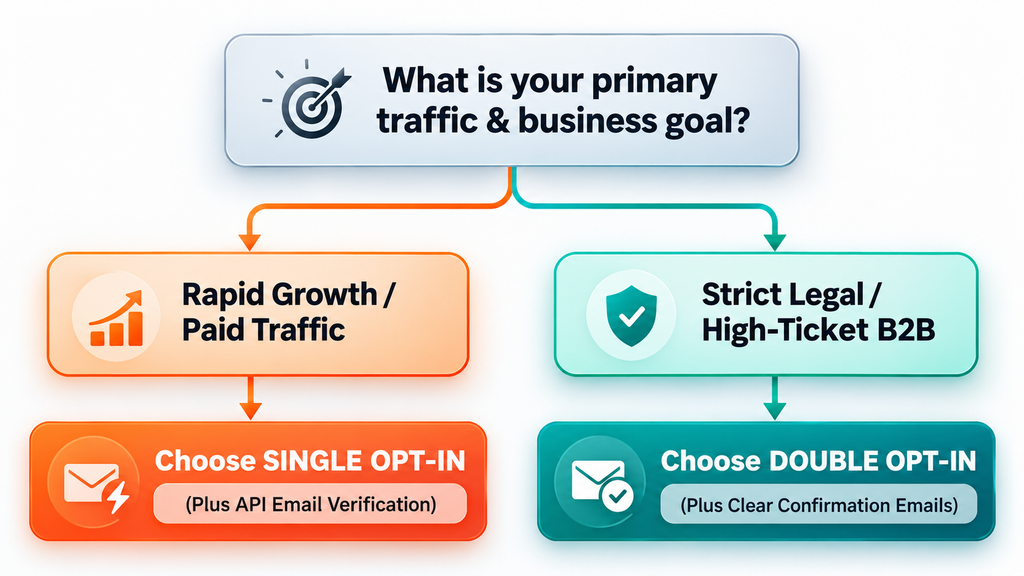
Scenario A: Choose Single Opt-In If…
- You Are Scaling with Paid Traffic and Solo Ads: If you are running paid campaigns through trusted networks like Optinsoload, your priority is capturing leads rapidly and driving them straight to your sales page or welcome sequence. When evaluating single opt in vs double opt in for rapid customer acquisition, single opt-in offers superior momentum. Optinsoload delivers premium, human buyer traffic, and pairing this high-intent traffic with a single opt-in funnel minimizes loss and maximizes your conversion efficiency.
- You Have a Fast Monetization Funnel: If your funnel features an immediate thank-you page offer, low-ticket tripwire, or affiliate bridge page, single opt-in delivers maximum eyeballs to your offer immediately upon signup.
- Your Primary Goal Is Rapid Audience Growth: For new brands, product launches, or viral giveaways where scaling subscriber numbers quickly is essential.
- You Use Real-Time API Email Verification: If your tech stack includes API validation that checks email syntax and MX records at the exact moment of form submission, you get the speed of single opt-in without the risk of dirty data.
Scenario B: Choose Double Opt-In If…
- You Target Regions with Strict Enforcement: If the vast majority of your target market is located in Germany, Austria, or Switzerland where legal precedents strongly favor double proof of consent.
- You Send High-Volume Cold Prospecting or B2B Newsletters: Where keeping bounce rates under 1% is non-negotiable to maintain enterprise SMTP server relationships.
- You Do Not Want to Manage List Cleaning: If you lack the time or technical setup to run automated list pruning routines or integration software, double opt-in manages list hygiene passively for you.
Advanced Hybrid Strategies: Best of Both Worlds
Why limit yourself strictly to a binary single opt in vs double opt in choice when modern marketing automation allows for smarter, hybrid approaches? Forward-thinking marketers frequently combine elements of both models to achieve maximum list growth alongside pristine deliverability.
Strategy 1: Single Opt-In with Real-Time API Verification
This is widely considered the ultimate modern setup for performance marketers. You use a single opt-in subscription form to keep user friction at zero. However, behind the scenes, your website form connects to an automated verification service (such as ZeroBounce, NeverBounce, or Kickbox).
This advanced strategy effectively resolves the classic single opt in vs double opt in debate by giving you speed and list cleanliness simultaneously. The moment a user types their email and hits submit, the verification service checks the address in under half a second. If the email is invalid or a known spam trap, the form prompts the user to correct their typing. If the email is valid, the user is instantly subscribed without ever having to click a confirmation link in their inbox.
Strategy 2: Conditional or Smart Double Opt-In
With smart double opt-in, your system dynamically decides whether to enforce double confirmation based on the traffic source or lead score:
- Organic / High-Trust Traffic: Visitors coming from organic search or internal site pages are processed via single opt-in.
- Unverified / High-Risk Traffic Sources: Form submissions coming from unverified public channels or high-risk geographic locations are automatically routed through a double opt-in confirmation sequence.
Strategy 3: The “Soft Double Opt-In” / Immediate Value Sequence
In this approach, you treat the initial submission as a single opt-in by immediately displaying the promised free download on the thank-you page. However, inside your autoresponder, you label the lead as “unconfirmed” until they open or click a link inside your first welcome email. If the lead fails to open any of your first three emails over a 14-day window, your system automatically removes or archives them.
This hybrid approach preserves the instant user satisfaction of single opt-in while safeguarding your long-term sender reputation just like double opt-in does.
Leveraging High-Quality Traffic Partners Like Optinsoload
No matter which technical model you select in the single opt in vs double opt in decision matrix, your funnel is only as healthy as the traffic feeding into it. Low-quality traffic providers often flood forms with recycled clicks, bot traffic, or disengaged leads, which ruins deliverability regardless of whether you use single or double opt-in.
This is where working with a dedicated traffic partner like Optinsoload makes a world of difference. Optinsoload generates fresh, genuine buyer traffic across multi-channel paid sources including Facebook, Google, Bing PPC, YouTube, Banner Ads, and CPA networks. By filtering every contact by engagement and capturing full verified contact details (name, email, and phone number), Optinsoload provides high-intent real human visitors. When you run Optinsoload traffic into a well-optimized single opt-in funnel supported by simple verification, you achieve high conversion rates (up to 50–85%) while maintaining strong email list hygiene.
Step-by-Step Guide: Optimizing Your Opt-In Funnel for Maximum Conversions
Whether you choose single opt in or double opt in, optimizing every element of your subscription funnel is key to turning visitors into loyal, long-term customers and improving your single opt in vs double opt in strategy.
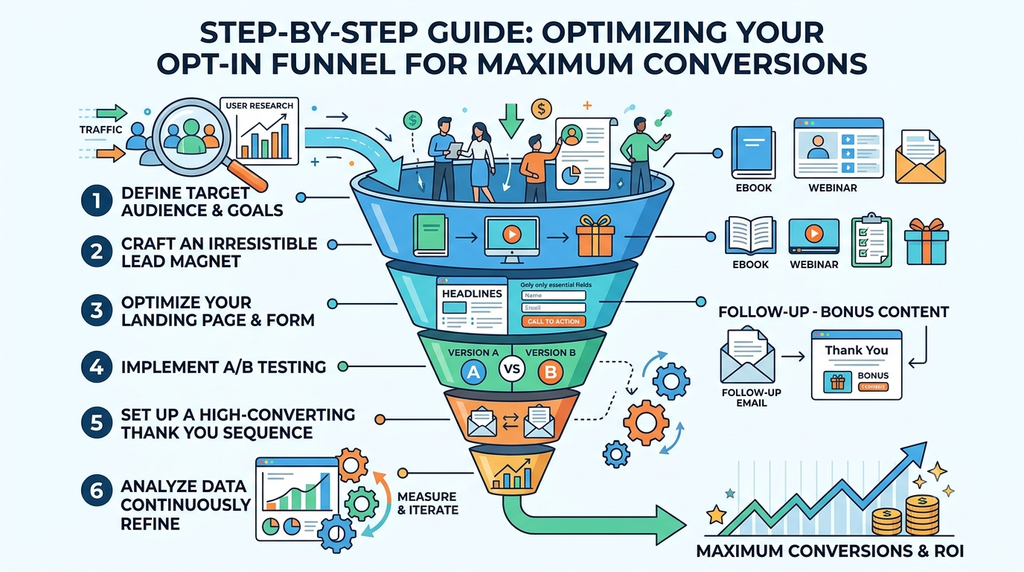
Step 1: Design High-Converting Capture Pages
- Keep Fields Minimal: Ask only for essential information. Requesting just an email address yields the highest conversion rates. If personalization is necessary, ask for a first name only.
- Craft a Compelling Value Proposition: Clearly state what the subscriber will gain. Instead of “Subscribe to my newsletter,” use “Get Our Free Step-by-Step Email Marketing Checklist.”
- Use Clear, Action-Oriented CTA Buttons: Buttons reading “Send Me the Free Guide Now” perform significantly better than generic “Submit” buttons.
Step 2: Implement Technical Authentication Protocols
To maintain top-tier deliverability regardless of your choice, technical sender verification is mandatory. Set up proper domain authentication on your domain DNS settings:
- SPF (Sender Policy Framework): Authorizes your email service provider to send messages on behalf of your domain.
- DKIM (DomainKeys Identified Mail): Attaches a cryptographic signature to your emails to verify authenticity.
- DMARC (Domain-based Message Authentication, Reporting, and Conformance): Tells receiving mail servers how to handle emails that fail SPF or DKIM checks.
Step 3: Write an Irresistible First Welcome Email
Your welcome email is the most important email you will ever send. It consistently enjoys the highest open and click rates of any campaign.
- Deliver promised download links immediately.
- Ask subscribers a simple question and encourage them to reply directly to your email. Replies send strong positive engagement signals to inbox providers like Gmail, boosting your primary inbox placement.
- Remind subscribers to add your sender address to their contacts or VIP list.
Step 4: Maintain Regular List Hygiene
If you utilize single opt-in, conduct routine list pruning every 60 to 90 days. Segment out subscribers who have not opened or clicked an email in the past 90 days, send them a short re-engagement campaign, and unsubscribe any contacts who remain inactive. Keeping a lean, highly engaged list ensures high deliverability and minimizes email hosting costs.
Ready to Turn Clicks into Active Subscribers?
Launch your next high-converting traffic campaign in minutes. Get premium Tier-1 buyer traffic delivered directly to your funnel with guaranteed over-delivery on every order today.
Conclusion: Making the Final Decision
When choosing between single opt in vs double opt in, there is no single “correct” answer that applies universally to every business. Both methodologies are effective tools designed for distinct marketing strategies and operating requirements.
- Choose single opt-in if your goal is rapid list growth, seamless user experience, and getting the absolute maximum lead conversion volume from your paid buyer traffic campaigns. When combined with real-time email verification tools and high-quality traffic sources like Optinsoload, single opt-in delivers unmatched speed, ROI, and scale.
- Choose double opt-in if you operate in strict regulatory jurisdictions like Germany, prioritize ultra-high individual engagement metrics over total list volume, or prefer a passive, hands-off approach to bot protection and list hygiene.
Navigating the single opt in vs double opt in choice ultimately comes down to your primary business objective and marketing ecosystem. Ultimately, your success in email marketing relies not just on whether you select single opt in vs double opt in, but on the overall quality of your traffic, the value of your content, and the consistency of your follow-up sequence. By feeding your sales funnels with verified human buyer traffic from Optinsoload and applying the optimization strategies detailed in this guide, you will build a healthy, highly profitable email list that powers your business growth for years to come.
FAQs
1. What is the main difference in the single opt in vs double opt in debate?
The fundamental difference lies in the number of steps required to become an active subscriber. Single opt-in adds subscribers to your mailing list immediately after they fill out a signup form. Double opt-in requires subscribers to open a confirmation email in their inbox and click a verification link before they are activated on your list.
2. Does single opt-in hurt my email deliverability?
Single opt-in can potentially hurt deliverability if your forms accumulate invalid email addresses, typos, or spam bot signups that lead to high bounce rates. However, if you use real-time email validation tools and clean inactive subscribers regularly, single opt-in deliverability can easily rival double opt-in rates.
3. What is the average confirmation drop-off rate for double opt-in?
Across various industries, double opt-in experiences an average drop-off rate of 15% to 35%. This means that out of every 100 people who fill out your signup form, between 15 and 35 users will never click the verification link and will be lost as potential leads.
4. Is double opt in required under the EU GDPR privacy law?
No, GDPR does not explicitly mandate double opt-in. GDPR requires freely given, specific, and unambiguous consent, which can be legally achieved with single opt-in as long as clear notice is provided and explicit consent records are maintained. However, double opt-in provides stronger legal proof of consent if challenged in court.
5. Why do marketers in Germany almost always use double opt-in?
German courts and legal authorities enforce strict interpretation of consent regulations. In legal disputes, courts place the burden of proof on email senders to prove that the inbox owner personally consented. Because anyone can type someone else’s email into a single opt-in form, German courts routinely reject single opt-in records, making double opt-in the de facto legal requirement in Germany.
6. Can I switch my email list from single opt-in to double opt-in later?
Yes, most email marketing service providers (such as ActiveCampaign, Mailchimp, AWeber, or GetResponse) allow you to switch your account or specific form settings between single opt-in and double opt-in at any time with a simple setting toggle.
7. How does traffic quality affect my single opt in vs double opt in performance?
Traffic quality is critical to list health. High-quality, real-human buyer traffic, such as that provided by Optinsoload, converts cleanly and safely with single opt-in funnels. Low-quality traffic filled with bots or recycled clicks can damage single opt-in lists, making double opt-in or pre-screening mandatory.
8. What is the best way to prevent bot signups on single opt-in forms?
To defend single opt-in forms against automated bots, you can implement Google reCAPTCHA, Cloudflare Turnstile, invisible honeypot fields in your HTML forms, or use real-time email validation APIs that block fake submission attempts instantly.
9. Which option gives a better Return on Investment (ROI) for paid ads?
For paid ad campaigns and solo ads, single opt-in usually delivers a higher ROI because it captures 100% of converting visitors into your funnel without losing 20-30% of leads to unclicked confirmation emails. This enables immediate monetization through thank-you page offers and follow-up sequences.
10. Can I use single opt-in for lead magnets like free e-books?
Yes! Single opt-in is ideal for lead magnets because users receive immediate gratification. You can redirect them directly to the e-book download page right after form submission, satisfying their demand for instant access while capturing their contact details for future email communications.
1 thought on “Single Opt In vs Double Opt In: Which Is Better for Email Lists?”