
Imagine publishing an excellent affiliate product review, adding your affiliate links, and waiting for commissions to arrive. You check your dashboard the next morning, but there are no clicks, no visitors, and certainly no sales. What went wrong? The problem might not be your product or your content. It might simply be that nobody is seeing it.
Traffic is the foundation of affiliate marketing. Without visitors, even the most attractive offers and helpful product recommendations struggle to generate results. However, you don’t necessarily need a large advertising budget to get people to your website. There are several ways to attract potential customers through search engines, social media platforms, online communities, and other digital channels.
That’s where free traffic sources for affiliate marketing become valuable. They allow beginners and experienced marketers to reach potential customers without paying for every click. You will still need to invest time, effort, and consistency, but you can gradually build an audience without depending entirely on advertising.
The challenge is choosing the right platforms. Posting random links everywhere rarely produces meaningful results. Instead, you need to understand where your target audience spends time, what information they are looking for, and how you can provide something genuinely useful.
In this guide, we’ll explore 12 practical methods, explain how to use each one, discuss their advantages and limitations, and show you how to turn visitors into subscribers and potential buyers.
Key Takeaways
- Google SEO can bring visitors who are actively searching for information, solutions, and product recommendations.
- YouTube, Pinterest, and social media help you reach people through useful and engaging content.
- Online communities can introduce your expertise to people who already have an interest in your niche.
- Email marketing helps you build relationships with visitors instead of losing contact after their first visit.
- Combining organic methods with carefully measured paid traffic can help you expand your reach when your budget allows.
What Are Free Traffic Sources for Affiliate Marketing?
Free traffic sources are online platforms, communities, and marketing channels that allow you to attract visitors without directly paying for each visitor or click.
For example, when someone discovers your article through Google Search, watches your YouTube tutorial, or finds your Pinterest post, they may visit your website without you purchasing an advertisement.
However, free doesn’t mean completely cost-free. You may spend money on website hosting, software, design tools, or content creation. You also invest your time in researching topics, publishing content, and interacting with audiences.
The important difference is that you aren’t paying an advertising platform for every visitor.
For affiliate marketers, Free traffic sources for affiliate marketing can provide several benefits:
- Help beginners start with limited budgets.
- Create opportunities to attract relevant audiences.
- Build trust through educational content.
- Generate visitors over an extended period.
- Support email list growth and audience engagement.
- Reduce dependence on a single advertising channel.
For example, imagine you promote an email marketing tool. Instead of immediately sharing an affiliate link, you publish a helpful guide explaining how beginners can build their first email list. People searching for that information may discover your article, read your recommendations, and explore the tool through your affiliate link.
That’s the basic idea: attract the right audience first, provide value, and introduce relevant products when they genuinely solve a problem.
12 Best Free Traffic Sources for Affiliate Marketing
Not every platform will work equally well for every affiliate marketer. Your results depend on your niche, audience, content quality, and consistency.
Here are 12 channels worth exploring.
1. Google Organic Search: Attract Visitors Who Are Already Looking for Solutions
Google is one of the most useful channels for affiliate marketers because people often use search engines when researching a problem, comparing products, or looking for recommendations.
Unlike some social media platforms, where users may discover content while casually browsing, search visitors often have a specific question or requirement.
For example, someone searching for “best email marketing software for small businesses” may be closer to making a purchasing decision than someone casually scrolling through social media.
This makes search engine optimization (SEO) an important part of your strategy.
How to get started with Google SEO
Step 1: Find relevant keywords.
Start by identifying questions and phrases your potential customers search for. You can use Google Keyword Planner, Google Trends, and search suggestions to discover topic ideas.
For example, if you promote website hosting services, consider topics such as:
- How to choose website hosting.
- Shared hosting vs. managed hosting.
- What features should a beginner look for in web hosting?
- Common website hosting mistakes.
Step 2: Create genuinely helpful content.
Write articles that answer the searcher’s question completely. Include practical examples, comparisons, advantages, disadvantages, and useful recommendations.
Step 3: Organize your website.
Use descriptive headings, logical categories, relevant internal links, and clear navigation. Make sure your website works properly on mobile devices.
Step 4: Update your articles.
Review older content and update outdated information, broken links, product details, and screenshots.
Why Google is worth your attention
SEO can take time, and ranking is never guaranteed. However, a useful article can continue attracting visitors long after publication.
This makes Google one of the strongest Free traffic sources for affiliate marketing for people willing to build a long-term content strategy.
Practical tip: Don’t create articles only because a keyword has search volume. Make sure your article answers the actual question behind that keyword.
2. YouTube: Turn Helpful Videos Into Consistent Website Visitors
YouTube is more than an entertainment platform. It’s also a search and discovery platform where people look for tutorials, product demonstrations, reviews, and solutions.
Affiliate marketers can use this opportunity to introduce products through educational videos.
For instance, if you promote website-building software, you could publish a video showing beginners how to create a simple website. During the tutorial, you can explain which tools you used and provide relevant resources in the description.
How to attract visitors through YouTube
Create tutorial videos.
Teach something your audience wants to learn. Examples include:
- How to start affiliate marketing as a beginner.
- How to create a landing page.
- How to build an email list.
- How to choose the right affiliate marketing tools.
Publish honest product reviews.
Demonstrate how a product works. Discuss its useful features, limitations, pricing considerations, and who might benefit from it.
Avoid presenting every product as perfect. Honest explanations help viewers make better decisions.
Optimize video titles and descriptions.
Use clear titles that describe the video accurately. Include relevant terms naturally in the description and provide links to related resources.
Use a clear call to action.
Invite viewers to visit your website for a detailed tutorial, comparison, checklist, or additional information.
What makes YouTube useful?
Video helps people understand complicated products and processes more easily. It also gives you an opportunity to demonstrate your knowledge rather than simply describing it.
YouTube is one of the best Free traffic sources for affiliate marketing if you are comfortable explaining concepts on camera or creating screen-recorded tutorials.
Practical tip: You don’t need expensive equipment to begin. A clear screen recording, understandable explanation, and useful demonstration can be more valuable than complicated production.
3. Pinterest: Reach People Through Visual Discovery
Pinterest works differently from platforms focused primarily on conversations and short-lived social updates. People use it to discover ideas, save resources, and find inspiration.
This makes it particularly useful for niches such as:
- Home improvement.
- Fashion and beauty.
- Cooking and recipes.
- Personal finance.
- Travel.
- Blogging and online business.
- Digital products.
For example, an affiliate marketer promoting productivity software could create a pin titled “7 Tools to Organize Your Workday.”
The pin could link to a detailed article containing useful recommendations and relevant affiliate disclosures.
How to use Pinterest effectively
Create a business account.
A Pinterest business account provides access to analytics and business-related features.
Design attractive pins.
Use clear images, readable text, and mobile-friendly layouts. Your pin should communicate its main benefit quickly.
Write descriptive titles and descriptions.
Use relevant keywords naturally so Pinterest users can understand what your content offers.
Organize your boards.
Create boards around specific subjects rather than mixing unrelated topics.
For example, a digital marketing website could have separate boards for email marketing, affiliate marketing, SEO, and website design.
Publish consistently.
Create original pins for useful articles and resources. Review analytics to identify which topics generate saves, impressions, and outbound clicks.
Pinterest recommends high-quality creative, relevant descriptions, and consistent publishing. Its official guidance also encourages creators to avoid repeatedly uploading duplicate pins.
Why choose Pinterest?
A useful visual resource may continue being discovered after its publication date. However, results depend on your topic, audience, and how people use Pinterest in your target market.
For visually oriented niches, Pinterest deserves a place among the Free traffic sources for affiliate marketing worth testing.
Practical tip: Don’t simply place an affiliate link on every pin. Send people to a helpful resource that explains the topic and gives them a reason to explore further.
4. Instagram Reels: Reach Audiences Through Short Educational Videos
Instagram Reels provides an opportunity to introduce your content to people who may not already follow your account.
Short videos can work particularly well for demonstrating products, sharing quick tips, and explaining common mistakes.
For example, an affiliate marketer promoting graphic design software could create a Reel showing three simple design improvements.
The goal is to provide a useful takeaway within a short period.
How to attract Instagram visitors
Choose a specific content theme.
If your niche is affiliate marketing, avoid posting unrelated lifestyle content alongside marketing tutorials unless it supports your brand.
Create short educational videos.
Try topics such as:
- Three mistakes new affiliate marketers make.
- How to choose an affiliate product.
- One useful feature of an email marketing tool.
- How to improve a landing page headline.
Use clear opening lines.
Your first few seconds should tell viewers what they will learn.
Add a relevant next step.
Invite viewers to read your complete guide, visit your profile, or explore a useful resource.
Interact with your audience.
Respond to genuine questions and use recurring questions to plan future videos.
What should you avoid?
Don’t copy other creators’ content or post repetitive videos simply to increase activity. Focus on original explanations and useful demonstrations.
Instagram can become one of the Free traffic sources for affiliate marketing that helps you build familiarity with your brand and introduce people to your website.
Practical tip: Turn one detailed blog post into several short videos. Each video can explain one point and direct interested viewers to the complete article.
5. Facebook Groups: Build Relationships Within Relevant Communities
Facebook Groups bring together people with shared interests, problems, and goals.
For affiliate marketers, these communities can provide opportunities to understand audience questions and share helpful information.
Suppose you promote accounting software. Joining communities for freelancers and small business owners may help you understand their bookkeeping challenges.
You can then create content that addresses those problems.
How to use Facebook Groups
Find relevant groups.
Search for communities related to your niche, target audience, or industry.
Read the group rules.
Some groups allow educational links, while others prohibit promotional posts. Always respect their policies.
Participate in discussions.
Answer questions, share useful suggestions, and provide explanations without immediately pushing products.
Publish original resources.
When appropriate, share a helpful checklist, tutorial, or article that directly answers a question raised by members.
Build credibility over time.
People are more likely to value your recommendations when they have already seen you contribute useful information.
Why Facebook Groups can work
They provide access to people who have already gathered around a particular interest.
However, not every group has an active audience, and membership numbers alone don’t indicate quality.
Facebook Groups can be useful Free traffic sources for affiliate marketing when you focus on meaningful participation instead of repeated self-promotion.
Practical tip: Before sharing a link, ask yourself whether the post would still be useful if nobody clicked it. If the answer is no, improve the post.
6. Reddit: Answer Real Questions and Demonstrate Your Knowledge
Reddit contains communities covering almost every major interest, from technology and personal finance to business, education, and hobbies.
People often visit Reddit to ask questions and learn from others who have experience with a particular subject.
This creates opportunities for affiliate marketers who genuinely understand their niche.
How to attract relevant visitors from Reddit
Find suitable subreddits.
Search for communities where your target audience discusses relevant problems.
Understand community expectations.
Read the rules and observe how members communicate before contributing.
Provide complete answers.
If someone asks how to choose an email marketing platform, explain the important features they should compare instead of immediately recommending your affiliate product.
Share resources only when appropriate.
If your article genuinely adds value to a discussion and the community permits links, you can share it.
Build a helpful participation history.
Contribute to conversations even when you have no link to promote.
A common Reddit mistake
Treating Reddit as a free advertising platform is a poor strategy.
Reddit’s spam policy warns against repeated promotional activity, mass posting, and unsolicited engagement. Some communities also have strict rules about self-promotion.
You should participate authentically and respect each community’s guidelines.
Reddit is one of the Free traffic sources for affiliate marketing where trust matters more than the number of links you publish.
Practical tip: Use recurring questions from Reddit as inspiration for your own blog content. You can answer the question on your website in greater detail and share that resource only where appropriate.
7. LinkedIn: Reach Professionals and Business Decision-Makers
LinkedIn is particularly useful for affiliate marketers working in business-focused niches.
If you promote CRM platforms, project management software, business tools, online courses, or professional services, LinkedIn may help you reach people interested in those products.
Unlike entertainment-focused social content, LinkedIn often provides opportunities to discuss professional challenges and practical business solutions.
How to use LinkedIn for affiliate marketing
Optimize your profile.
Explain what you do, which audience you help, and what subjects you regularly discuss.
Publish educational posts.
Share insights about productivity, business software, marketing strategies, and industry challenges.
Write practical comparisons.
For example, compare different project management approaches or explain how businesses can organize their customer information.
Join relevant conversations.
Comment thoughtfully on posts from professionals and businesses in your industry.
Share detailed resources.
Link to useful articles when they genuinely add context to your discussion.
Why LinkedIn deserves attention
LinkedIn can help you reach a more professionally oriented audience, especially when your affiliate offers solve business problems.
However, don’t assume that every follower is a potential customer. Focus on attracting people who actually need the solutions you discuss.
LinkedIn can be among the best Free traffic sources for affiliate marketers who operate in B2B and professional software niches.
Practical tip: Publish a practical lesson from your blog as a LinkedIn post and link to the complete article for readers who want more detail.
8. Quora: Answer Questions Your Potential Customers Are Asking
Quora is a question-and-answer platform where people seek explanations, opinions, and practical advice.
For affiliate marketers, it can be useful because questions often reveal exactly what people want to understand.
For example:
- Which email marketing tool is suitable for beginners?
- How does affiliate marketing work?
- What should I look for in website hosting?
- How can a small business generate more leads?
These questions can help you understand your audience’s interests.

How to use Quora effectively
Search for questions in your niche.
Look for questions that are relevant to the products and services you promote.
Write useful answers.
Explain the topic in simple language and include examples where appropriate.
Avoid generic responses.
A short answer such as “Use this product” doesn’t help someone make an informed decision.
Link to relevant resources.
If your website contains a detailed guide that expands on your answer, include it only when appropriate and permitted.
Maintain consistency.
Answer questions regularly instead of publishing dozens of low-quality responses in one day.
What makes Quora valuable?
It allows you to understand what your audience is confused about and create content around real questions.
It is another potential Free traffic source for affiliate marketing, although traffic volume and visibility can vary considerably between topics.
Practical tip: Turn popular questions into blog headings, tutorials, and short videos. This allows one useful idea to reach people through multiple channels.
9. Email Newsletters: Bring Visitors Back and Build Long-Term Relationships
Getting someone to visit your website once is useful. Building a relationship that encourages them to return is even better.
Email marketing helps you stay connected with people who voluntarily subscribe to your newsletter.
Unlike social media followers, your email list is a contact channel you manage through your email marketing provider, subject to applicable privacy and marketing laws.
How to build an email list
Offer a useful reason to subscribe.
Create a lead magnet that solves a specific problem.
Examples include:
- An affiliate marketing starter checklist.
- A website launch guide.
- An email marketing template collection.
- A product comparison worksheet.
- A beginner’s SEO checklist.
Create a simple signup page.
Explain what subscribers will receive and how often you plan to email them.
Send a welcome email.
Thank subscribers for joining and deliver the promised resource.
Share useful information regularly.
Send tutorials, practical tips, product comparisons, and relevant recommendations.
Segment your subscribers.
Where possible, organize your audience based on their interests so they receive relevant information.
How does email marketing support affiliate sales?
Imagine someone downloads your beginner’s affiliate marketing checklist.
You can follow up with educational emails about selecting products, building a website, and attracting visitors. Later, you can recommend relevant tools that help them complete those tasks.
Always disclose affiliate relationships and follow the rules applicable to your subscribers’ locations.
Email marketing is one of the most valuable Free traffic sources for affiliate marketing in the broader sense of audience development because it helps you bring existing subscribers back to your website.
Practical tip: Don’t make every email a sales message. Give subscribers useful information even when you aren’t promoting a product.
10. Guest Blogging: Introduce Your Expertise to Another Website’s Audience
Guest blogging involves writing an article for another website or publication in your niche.
It can help you reach readers who may never have discovered your own website.
For example, if you run an affiliate marketing blog, you could contribute an article to a website covering entrepreneurship, digital marketing, or small business growth.
How to get started with guest blogging
Find relevant websites.
Look for publications that serve an audience similar to yours.
Review their existing content.
Understand the topics they publish, the writing style they prefer, and the questions their readers ask.
Pitch a specific topic.
Avoid sending generic messages. Explain what you want to contribute and why their audience would find it useful.
Write original content.
Provide practical information, examples, and insights rather than rewriting something already available on your website.
Include an appropriate author link.
If the publisher allows it, include a relevant author bio or resource link.
What are the benefits?
Guest blogging can introduce your brand to a new audience and help you develop professional relationships.
It may also provide referral traffic when readers follow your author link.
However, guest posting purely to manipulate search rankings is not a sound strategy. Prioritize editorial quality and audience relevance.
Guest blogging can complement other Free traffic sources for affiliate marketing, especially when you contribute to established websites that attract your ideal readers.
Practical tip: Focus on the relevance and quality of a publication rather than simply chasing websites with high domain metrics.
11. Niche Forums and Online Communities: Find People With Specific Interests
Apart from major social media platforms, many industries have dedicated forums and online communities.
These communities can be especially valuable when you promote specialized products.
For example:
- Photography forums for camera accessories and editing software.
- Gaming communities for gaming-related products.
- Web development communities for hosting and developer tools.
- Small business forums for accounting and CRM software.
- Fitness communities for relevant fitness products.
The advantage is that discussions are often focused on specific interests.
How to use forums effectively
Find communities related to your niche.
Look for active forums where people regularly discuss problems and ask questions.
Observe the rules.
Some forums allow resource links, while others restrict commercial activity.
Answer questions thoroughly.
Share useful information based on your knowledge and experience.
Create helpful resources.
You can publish tutorials, checklists, and comparison guides on your own website.
Participate consistently.
Build familiarity by contributing to discussions without turning every conversation into a promotion.
Why forums can be useful
Forum discussions often reveal the practical challenges people face before purchasing a product.
You can use these insights to create better affiliate content.
For niche businesses, forums can be free traffic sources for affiliate marketing that connect you with a more focused audience than broad social networks.
Practical tip: Keep a list of repeated questions you encounter. These can become future blog topics, FAQ sections, and product comparison articles.
12. TikTok: Use Short Videos to Introduce Your Content
TikTok has become an important short-form video platform for creators and businesses.
It can help affiliate marketers introduce products, explain concepts, and share practical advice through engaging videos.
For example, someone promoting productivity software could create a short demonstration showing how to organize daily tasks using a particular tool.
How to get started with TikTok
Choose a clear niche.
Build your content around a subject your target audience cares about.
Create short tutorials.
Explain one problem and one practical solution in each video.
Demonstrate products honestly.
Show useful features and explain limitations where relevant.
Use clear captions and descriptions.
Help viewers understand what your video covers.
Invite viewers to explore more.
Direct interested people to your profile or a relevant website resource.
What should you remember?
A viral video doesn’t automatically generate affiliate sales.
You need a relevant audience, a suitable offer, and a clear next step. TikTok’s content discovery system also considers viewer interests and video performance, so there is no guaranteed reach.
Among the Free traffic sources for affiliate marketing, TikTok can be particularly useful for marketers who enjoy creating short, educational videos.
Practical tip: Test several video formats, such as tutorials, product demonstrations, common mistakes, and quick comparisons. Review which ones attract relevant viewers rather than judging success only by views.
Which Traffic Source Should You Choose First?
Trying all 12 methods simultaneously can become overwhelming, especially if you’re working alone.
A better approach is to choose two or three channels based on your audience, skills, and available time.
Here’s a simple comparison.
| Traffic source | Best suited for | Main challenge |
|---|---|---|
| Google SEO | Search-driven audiences | Takes time to rank |
| YouTube | Tutorials and demonstrations | Video creation effort |
| Visual and evergreen topics | Consistent pin creation | |
| Short-form educational content | Regular engagement | |
| Facebook Groups | Community-based niches | Group restrictions |
| Specialized discussions | Strict community rules | |
| B2B and professional products | Building credibility | |
| Quora | Question-based content | Maintaining answer quality |
| Email newsletters | Subscriber relationships | Consistent email value |
| Guest blogging | Established niche audiences | Finding publishing opportunities |
| Forums | Specialized communities | Time-intensive participation |
| TikTok | Short educational videos | Audience relevance |
Best choices for different affiliate marketers
If you’re a beginner: Start with SEO and one social platform. You can build useful content without trying to maintain accounts everywhere.
If you enjoy making videos: Choose YouTube or short-form video platforms.
If you promote B2B products: Consider LinkedIn, Google SEO, and professional communities.
If your niche is highly visual: Pinterest and Instagram may be worth testing.
If you already have subscribers: Focus on email marketing and create content that brings them back to your website.
The best approach is not necessarily to use the most platforms. It is to build a repeatable process around channels that attract the right people.
How to Convert Free Website Traffic Into Affiliate Leads and Sales
Getting visitors is only one part of affiliate marketing. You also need to give them a clear reason to take the next step.
Someone may read your article, find it helpful, and leave without clicking your affiliate link. That doesn’t necessarily mean your content failed. They might need more information or may not be ready to purchase.
Here are practical ways to improve your chances of turning visitors into leads and customers.
1. Create a Focused Landing Page
Don’t send every visitor to a generic homepage.
Create a landing page that matches the topic or offer they clicked on.
For example, if your article discusses email marketing software, the landing page should explain how the recommended solution helps users manage their email campaigns.
Keep the message clear and make the next step easy to understand.
2. Offer a Relevant Lead Magnet
A lead magnet is a free resource offered in exchange for someone’s email address.
It could be a checklist, template, short guide, or worksheet.
Make sure the resource directly relates to the content visitors are reading.
For example, someone reading about SEO could receive a keyword research checklist.
3. Build a Welcome Email Sequence
After someone subscribes, introduce yourself and deliver the promised resource.
You can then send a short sequence covering:
- The most common beginner mistakes.
- Helpful tutorials.
- Useful tools and resources.
- Relevant product comparisons.
- Answers to frequently asked questions.
Avoid sending promotional emails without considering the subscriber’s interests and consent.
4. Recommend Products Naturally
Affiliate recommendations should make sense within the content.
Explain what the product does, who may benefit from it, and where it might not be the right choice.
Include a clear affiliate disclosure near your recommendations. For example:
“Some links in this article are affiliate links. If you purchase through them, we may earn a commission at no additional cost to you.”
Transparency helps readers understand your relationship with the product.
5. Track Your Results
Don’t measure success using visitor numbers alone.
Monitor important metrics such as:
- Website sessions.
- Landing page conversion rate.
- Email signup rate.
- Affiliate link clicks.
- Sales and commissions.
- Revenue per visitor.
Use analytics tools and tracking parameters to understand which channels bring relevant visitors.
A channel sending 100 interested visitors may be more valuable than one sending 1,000 people who immediately leave.
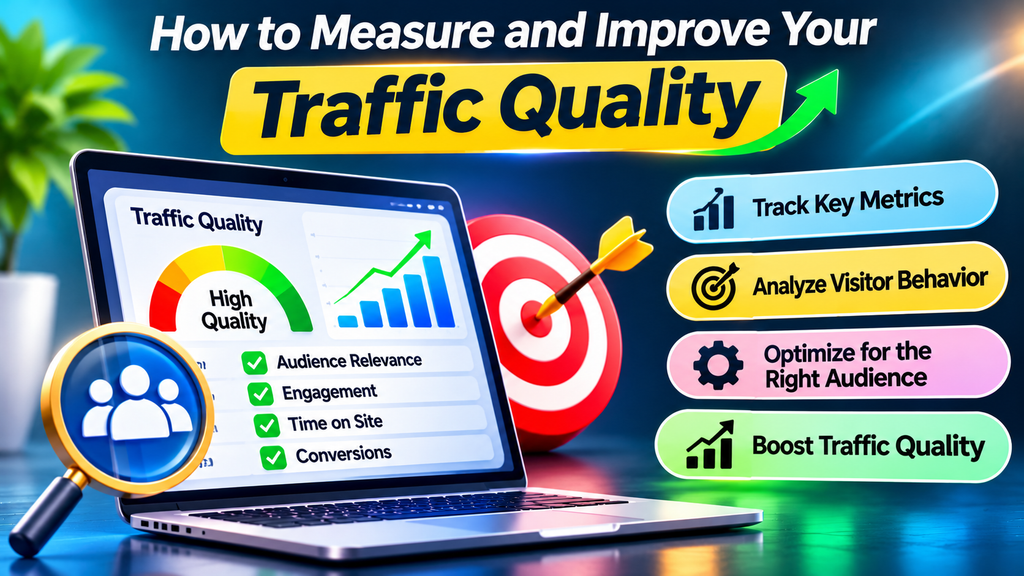
How to Measure and Improve Your Traffic Quality
Not all visitors behave the same way.
Some people read your article carefully, subscribe to your newsletter, and explore recommended products. Others leave immediately because the content doesn’t match what they expected.
This is why tracking matters.
Use Google Analytics 4
Google Analytics 4 can help you understand website activity, acquisition channels, and important events.
Set up relevant events for actions such as:
- Newsletter subscriptions.
- Lead form submissions.
- Important button clicks.
- Registration completions.
- Other meaningful website actions.
Make sure tracking is configured correctly and respects applicable privacy requirements.
Use UTM Parameters
UTM parameters help identify where website visits originate.
For example, you could add campaign parameters to links shared through different social platforms.
This allows you to compare traffic from your YouTube description, LinkedIn post, or newsletter.
Review Conversion Rates
A useful measurement is the percentage of visitors who complete a desired action.
For example:
If 200 people visit a landing page and 30 subscribe, the opt-in rate is 15%.
This doesn’t mean every campaign should achieve the same percentage. Results depend on the audience, offer, page design, and traffic source.
Improve Based on Actual Data
If a particular article attracts visitors but very few people click your affiliate links, review whether your recommendations match the search intent.
If people click your links but don’t purchase, examine the offer, product information, and visitor expectations.
The goal is to identify where potential customers lose interest and make meaningful improvements.
Can Paid Traffic Complement Free Traffic Strategies?
Yes. Organic and paid methods can work together.
Organic methods help you build a long-term audience, while paid advertising can provide additional reach when you want to test an offer or attract visitors within a shorter period.
For example, imagine you publish an article about email marketing tools.
You can attract visitors through Google, Pinterest, and YouTube. Once you understand which content attracts relevant people, you may decide to test a paid traffic campaign for a related landing page.
However, paid traffic requires careful budgeting and tracking. Paying for visitors doesn’t guarantee subscribers or sales.
Where Does OptinSoloAd Fit Into This Strategy?
OptinSoloAd provides solo ad traffic for marketers who want to reach potential subscribers through email-based traffic campaigns.
According to its website, OptinSoloAd sources traffic through multiple channels, including Facebook, YouTube, Google and Bing PPC, banner advertising, Warrior Plus, CPA marketing, and selected solo ad sources.
Its service is designed around delivering visitors to marketers’ offers and landing pages.
The website currently lists traffic packages with different geographic targeting options, including Tier 1 traffic and US-only traffic. It also explains a three-step process: selecting a traffic package, campaign review, and launching the campaign.
For affiliate marketers, this may be worth considering when organic growth is taking time and you want to test another source of potential subscribers.
However, it is important to understand what you’re purchasing.
A delivered click is not the same as a qualified lead, and a qualified lead is not the same as a customer. Your landing page, offer, audience match, and follow-up emails all influence the final outcome.
Before ordering, consider these questions:
- Does the traffic match your target audience?
- Is your landing page ready to receive visitors?
- Do you have an email follow-up sequence?
- Can you track opt-ins and conversions?
- Does the campaign fit your available budget?
- Are your affiliate offers permitted under the traffic provider’s and affiliate program’s policies?
You can explore the available options directly at OptinSoloAd.
The goal is not to abandon organic methods. Instead, use a balanced approach where free channels build your audience and paid campaigns provide an additional opportunity to test and expand your reach.
Common Mistakes to Avoid When Using Free Traffic Channels
Even the best strategy can produce disappointing results if you make avoidable mistakes.
Here are some common problems to watch out for.
1. Promoting Too Many Products
Promoting dozens of unrelated products can confuse your audience.
Choose products that genuinely fit your niche and the problems your readers want to solve.
2. Posting Links Without Providing Value
Simply sharing affiliate links across social media and online communities rarely builds trust.
Explain the problem, provide useful information, and recommend products only when they are relevant.
3. Expecting Immediate Results
SEO, community participation, and content creation require consistency.
Don’t abandon a channel after publishing two articles or three videos. Give your strategy enough time to produce useful data.
4. Ignoring Your Landing Page
A visitor may be interested in your content but leave because your page is confusing or difficult to use.
Check page speed, mobile usability, readability, and the clarity of your signup form.
5. Focusing Only on Views and Clicks
High traffic numbers don’t automatically translate into revenue.
Measure meaningful actions such as subscriptions, qualified leads, affiliate clicks, and purchases.
6. Ignoring Platform Policies
Every platform has its own rules about promotions, affiliate links, and commercial activity.
Read those policies before sharing links or publishing promotional content.
7. Forgetting Affiliate Disclosures
Always make your financial relationship with recommended products clear. Readers should know when you may earn a commission.
Conclusion
Building a successful affiliate marketing business doesn’t always require a large advertising budget. What you need is a clear understanding of your audience, helpful content, and a consistent approach to attracting relevant visitors.
The 12 methods discussed in this guide offer different ways to reach potential customers. Google SEO can help you attract people searching for solutions. YouTube and social media can introduce your content to new audiences. Online communities allow you to participate in relevant discussions, while email marketing helps you maintain relationships with interested subscribers.
The most effective approach is to avoid spreading yourself too thin. Choose two or three channels that suit your niche, create useful content consistently, and measure the results.
Remember that free traffic sources for affiliate marketing are valuable because they help you build an audience without paying for every click. But they still require time, patience, and effort. There is no guaranteed shortcut to affiliate commissions.
As your website grows, you can also explore additional traffic options. If you want to test email-based paid traffic alongside your organic efforts, OptinSoloAd is one option worth exploring. Make sure you have a suitable landing page and tracking system before investing.
Ultimately, focus on helping people first. When your content answers real questions and your recommendations solve genuine problems, you give visitors a much better reason to trust your website and return.
FAQs
1. What are the best free traffic sources for affiliate marketing?
Some of the most useful options include Google organic search, YouTube, Pinterest, Instagram, Facebook Groups, Reddit, LinkedIn, Quora, and email newsletters. The right choice depends on your niche and audience. Start with a few channels rather than trying to manage everything simultaneously.
2. How can beginners get affiliate marketing traffic without spending money?
Beginners can start by creating helpful blog articles, publishing educational videos, answering relevant questions on Quora, and participating in niche communities. Building an email list is also useful. These approaches require time and consistency, but they don’t require purchasing every visitor.
3. Can I do affiliate marketing without paid advertising?
Yes. You can promote affiliate products through organic search, social media, videos, email newsletters, and online communities. Paid advertising is optional, although it may help expand reach when you have a suitable budget and a properly tested campaign.
4. Which social media platform is best for affiliate marketing?
There isn’t one platform that works best for everyone. YouTube is useful for tutorials and product demonstrations, Pinterest can suit visual niches, Instagram and TikTok support short-form videos, and LinkedIn can work well for professional and B2B products. Choose the platform where your intended customers are active.
5. How long does it take to get free traffic for affiliate marketing?
There is no fixed timeline. Some social media posts may attract visitors quickly, while SEO articles can take weeks or months to gain meaningful search visibility. Your niche, competition, content quality, website authority, and publishing consistency all influence the results.
6. How do I get targeted visitors to my affiliate website?
Start by understanding your ideal customer. Research their questions, problems, interests, and purchasing needs. Create content that addresses those topics and distribute it through relevant channels. Avoid attracting visitors who have no connection to the products you promote.
7. Is SEO better than social media for affiliate marketing?
Both can be effective, but they serve slightly different purposes. SEO can attract visitors who are actively searching for information, while social media can help you introduce content to new audiences and build relationships. Using both can reduce your dependence on a single traffic channel.
8. Can I use email marketing as a free traffic source?
Email marketing can help you bring existing subscribers back to your website without purchasing an advertisement for every visit. However, you first need to attract subscribers, which may involve content creation, website costs, and an email marketing service. Always obtain appropriate consent and provide an unsubscribe option.
9. Are solo ads useful for affiliate marketers?
Solo ads can be an additional traffic option for affiliate marketers who want to test landing pages and build email lists. Their usefulness depends on audience relevance, traffic quality, offer suitability, and follow-up. Delivered clicks do not guarantee leads or sales. Always track campaign results before increasing your budget.
10. How can I combine free and paid traffic for better affiliate marketing results?
Start by building your organic presence through SEO, social media, and useful content. Create a landing page and email sequence to capture interested visitors. Once your tracking is working, consider testing paid traffic sources such as solo ads or other suitable advertising channels. Compare the cost of acquiring subscribers with their engagement and eventual conversions before scaling your campaigns.